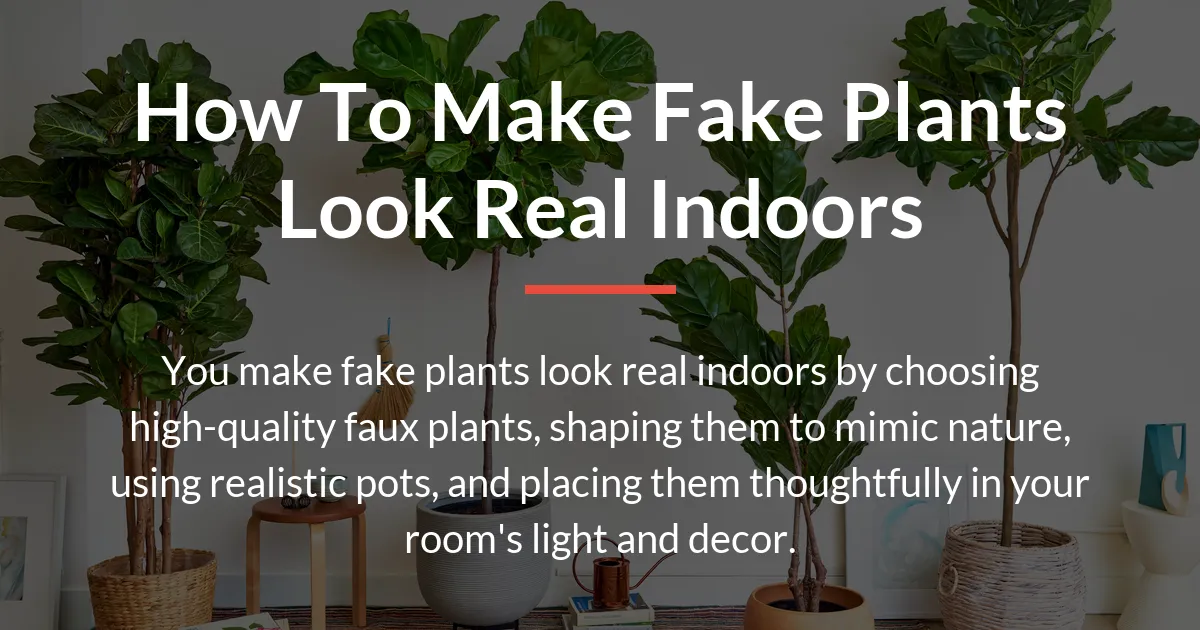
You want the life and color of houseplants without the worry of watering or sunlight. But so often, fake plants look exactly like what they are: plastic or silk imitations that suck the life out of a room instead of adding to it. The good news is that with a thoughtful approach, you can create an illusion so convincing that guests might have to take a second look. This guide is not just a list of quick tips. It is a complete method for choosing, transforming, and placing your artificial plants so they bring genuine warmth and realism to your indoor space.
Start with a Good Fake Plant
You cannot turn a bad fake plant into a great one. This is the most important step that most advice skips. Trying to make a cheap, poorly made plant look real is like trying to polish plastic to look like glass. Your effort is better spent finding one with real potential.
A high-quality artificial plant will have specific traits. Look for color variation on the leaves and flowers. Real plants are never one flat shade of green. They have lighter veins, darker edges, or subtle yellow undertones. Touch is also a giveaway. Materials like silk and latex feel more realistic than stiff plastic. Bend a leaf gently. It should have some give and not snap back perfectly.
Pay close attention to the stem and how the leaves connect. The best fake plants have stems that look woody or textured, not just a smooth, painted wire. The leaves should attach in a way that mimics natural growth, not all coming from the same perfect point on the stem. Avoid any plant that is perfectly symmetrical or has leaves that are all the exact same size and shape. Nature is wonderfully messy and irregular.
Finding Realistic Shapes and Sizes
Think about the scale of the plant compared to where it will live. A tiny fiddle leaf fig tree will always look like a toy. A giant succulent in a small pot will seem odd. Research what the real plant looks like when it is healthy and mature. Choose an artificial version that matches that natural size and shape. Plants that trail, like ivy or pothos, often look more believable than stiff, upright ones because their flowing shapes are harder to scrutinize.
Transforming Your Fake Plant
Once you have a good candidate, it is time for the hands-on work. This is where you directly answer the question of how to make fake plants look real indoors. The goal here is to break the factory perfection and introduce the randomness of life.
First, remove the plant from its cheap plastic nursery pot. This pot is often thin, shiny, and a dead giveaway. Gently take the plant out. You will usually find a foam or plastic base holding the stems. Be careful not to break anything, but do not be afraid to manipulate it.
Shaping Branches and Leaves
This step is often called “fluffing,” but that word does not do it justice. Do not just pull everything out randomly. Observe how a real plant grows. Branches reach for light, creating a natural, uneven spread. Leaves turn to face different directions and often have a gentle curve or droop.
Start from the bottom of the plant and work up. Gently bend each main branch to create a more open, asymmetrical shape. Then, focus on each individual leaf or frond. Twist their stems, curl their edges slightly, and angle them away from each other. Create gaps and layers. The aim is to eliminate that dense, “just unwrapped” look and allow light and shadow to play through the plant, which adds incredible depth.
Fixing the Shine and Color
Plastic shine is the enemy of realism. If your plant has a glossy finish, you can tone it down. A very light dusting with matte finish spray paint from a distance can work. A safer method is to use a dry, soft makeup brush to apply a tiny amount of matte eyeshadow or artist’s pastel in a similar green or brown hue onto the shiniest parts. This adds a dusty, natural patina.
For an aged look, you can use diluted brown or gray acrylic paint. Water it down significantly and use a cloth to dab it lightly onto the stems and into the crevices of leaves, then immediately wipe most of it off. This technique, called a “wash,” leaves paint only in the recesses, mimicking dirt and shadow. Always test on a small, hidden part first.
Choosing the Perfect Container
The pot is the plant’s home, and a bad one ruins the effect. The right container grounds your plant, both literally and visually. It adds weight and a sense of permanence.
Choose a pot that is the right scale for your plant. It should be large enough that the plant does not look top-heavy or like it just grew out of a thimble. The material matters. Terracotta, ceramic, concrete, and woven baskets feel more authentic than shiny plastic or metal. Match the style of the plant to the pot. A modern snake plant looks great in a clean, concrete planter, while a fern might suit a rustic ceramic pot.
The Repotting Process
Place some heavy stones or gravel in the bottom of your new, nicer pot. This gives the plant stability so it does not tip over easily. Then, place the plant’s plastic base inside. Now, cover that base completely. This is a crucial step.
Use real materials to hide the fake world. Pour real potting soil, decorative moss, small pebbles, or bark chips over the plastic base. Pack it in so no plastic shows. You can even add a few dried leaves or small twigs on top for extra realism. This layer of real material at the soil line is what makes the brain believe the whole thing is alive.
Placing and Staging for Belief
Your plant looks great and is in a beautiful pot. Now, where do you put it? Poor placement can undo all your hard work. You need to integrate the plant into your room’s environment.
Light is your best friend and your worst enemy. Harsh, direct light will hit a fake plant and highlight any plastic shine or uniform color. Instead, use soft, indirect light. Place your plant where it would naturally get light from a window, but perhaps slightly to the side. This creates soft shadows among the leaves, which adds incredible depth and realism.
Do not leave your plant sitting alone on a bare shelf. Integrate it. Place it next to a stack of books, partially behind a decorative object, or in a corner. This makes it look like part of the room’s ecosystem, not a decoration just plopped down. Group it with other items that have natural texture, like a wooden bowl, a wool throw, or a stone sculpture. These textures support the plant’s natural story.
For larger trees or floor plants, make sure they touch the ground convincingly. Fluff the lower leaves so some gently brush the floor or the rim of the pot. Nothing in nature hovers perfectly. Creating this contact point seals the illusion.
Sustaining the Illusion and Conscious Choices
Realism is not a one-time task. A real plant grows and changes, but a fake one collects dust and fades. To keep up the illusion, you need a maintenance routine.
Dust is the fastest way to make a fake plant look dead and forgotten. But do not just wipe it with a cloth. Use a hairdryer on a cool, low setting to blow dust out of dense foliage. For more delicate plants, use a soft paintbrush or makeup brush to gently sweep each leaf. Do this every couple of weeks.
Keep your plant out of direct sunlight. Just like fabric, the colors in artificial plants can fade over time from strong UV rays. If you notice a plant becoming faded or dusty beyond repair, do not be afraid to give it a refresh with the shaping and color techniques mentioned earlier, or even retire it.
Thinking Beyond the Look
Why do we want fake plants to look real? It is because of biophilia, our innate human desire to connect with nature. A convincing fake plant can positively impact your mental wellbeing by bringing that natural element indoors.
It is worth considering the ethics of your purchase. Seek out companies that are transparent about their materials and manufacturing. Avoid the very cheapest options, as they may not last and their production can be questionable. Sometimes, finding a higher-quality fake plant at a thrift store is a great, sustainable option.
Know that a great faux plant is a design choice. It provides greenery without stress. When done well, it adds life, color, and texture to your home for years, no watering required.
Frequently Asked Questions
Can you mix fake plants with real ones successfully?
Yes, you can mix them very successfully. The key is to use your most realistic fake plants and place them next to real ones with similar light and care needs. The real plants help sell the illusion of the fake ones. Use real pots and soil for both, and group them together in a natural-looking arrangement.
How often should you clean a fake plant to keep it looking real?
You should dust your fake plants about every two to three weeks to prevent buildup. Use a cool hairdryer, a soft brush, or a slightly damp cloth, depending on the material. Regular light cleaning is much easier than dealing with a thick layer of dust that makes the plant look dead.
What is the best way to make cheap fake plants look more expensive?
The best way is to repot them immediately. Remove the plant from its cheap plastic pot, put it in a heavier, nicer planter with real rocks or soil covering the base, and spend time meticulously shaping and bending every leaf and branch to break the perfect, factory-made symmetry.
Do fake plants actually improve a room’s feel?
Good-quality, realistic fake plants can absolutely improve a room’s feel. They add color, texture, and a sense of life and nature, which can make a space feel more calming, welcoming, and designed. This taps into the biophilic design principle that connects humans to nature.
How can I stop my fake plant from looking shiny and plastic?
You can dull the shine by lightly applying a matte finish spray sealant from a distance. A safer, simpler method is to use a dry makeup brush to dust the leaves with a tiny amount of matte green or brown eyeshadow, which gives them a more natural, matte, slightly dusty texture.
Is it okay to put fake plants in a bathroom?
Fake plants are excellent for bathrooms where real plants might struggle with low light or humidity swings. Ensure they are made of a material that can handle moisture without rusting or molding, and you will have evergreen greenery that thrives without any care.
What type of artificial plant looks the most real?
Artificial plants made from silk or high-quality plastic with latex coating often look the most real. Species that are naturally glossy, like succulents or certain tropical plants, or ones with complex, dense foliage like ferns or ivy, are often easier to replicate convincingly than large-leafed plants like monsteras.
How do you anchor a large fake tree so it looks natural?
Place the tree’s base in a large, heavy planter, like concrete or ceramic. Fill the bottom third with heavy rocks or sand for weight. Then, use a foam block around the base stem and cover everything with real potting soil, moss, and bark. Fluff the lower branches so they gently rest on or near the soil line, hiding the transition.
Can you use real plant food or fertilizer on fake plants?
No, you should never use real plant food or fertilizer on fake plants. It does nothing for the plant and will only create a mess, potentially staining the leaves or attracting insects. The “food” a fake plant needs is regular dusting and occasional reshaping.
Where is the best place in a room to put a fake plant?
The best place is where a real plant would realistically thrive and where it integrates with your decor. This is usually in a corner near a window (but not in direct sun), on a side table next to furniture, or on a shelf among books and other objects. Use lighting to create believable shadows.
Making fake plants look real indoors is a satisfying design project. It combines selection, crafting, and styling. By understanding what makes real plants believable and applying those principles to your artificial ones, you can enjoy lush, green interiors that are beautiful, practical, and convincingly alive.