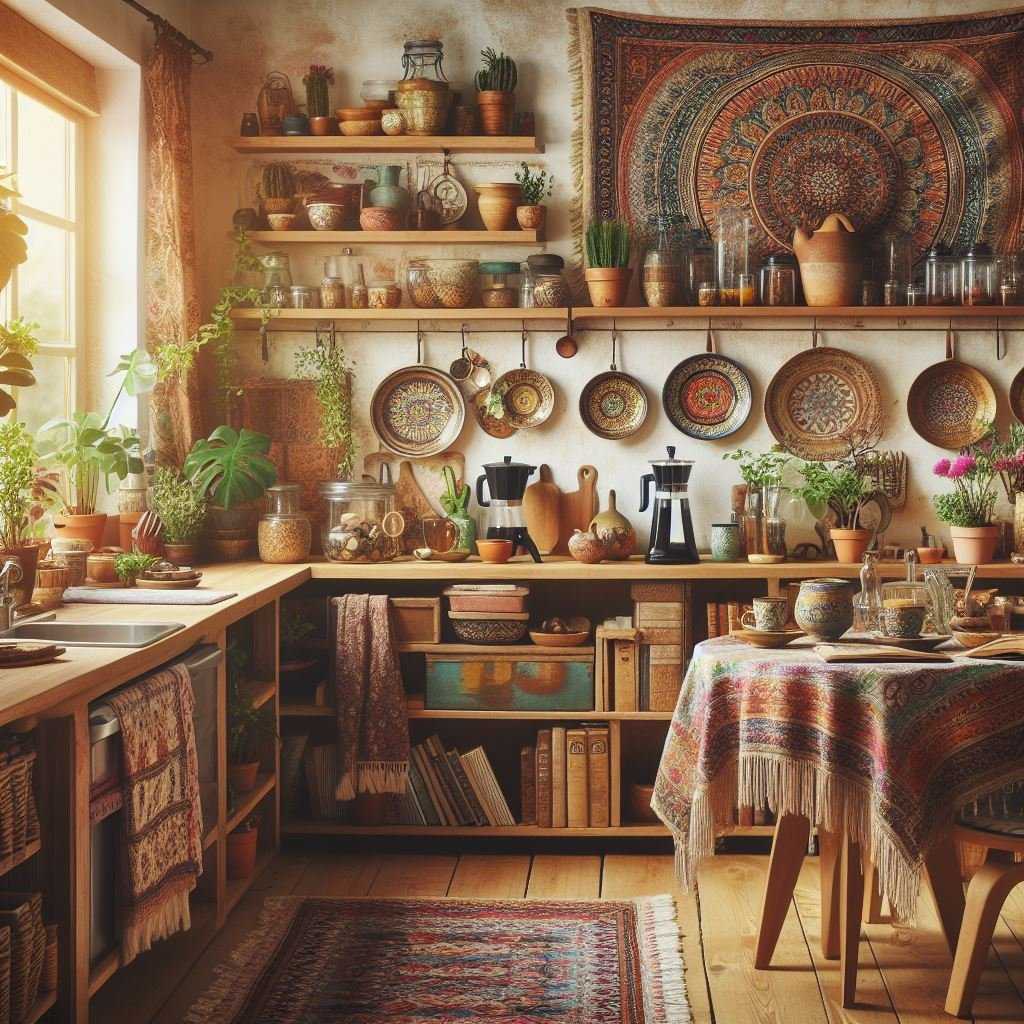
To effortlessly mix patterns in boho kitchen decor, start by choosing a unifying color palette and varying pattern scales. Combine different textures and patterns thoughtfully, balancing bold with subtle for an inviting, eclectic vibe. Don’t be afraid to experiment—layering and overlapping can create a lively, personalized space that feels cozy and vibrant.
Mixing patterns in boho kitchen decor can seem tricky, but with a few simple tips, you can achieve a harmonious and lively space. The key is to stick to a cohesive color scheme while playing with different textures, scales, and styles. This approach allows your unique personality to shine through while maintaining visual balance. Whether it’s mixing floral, geometric, or tribal patterns, the goal is to create an inviting and dynamic kitchen that feels both curated and lived-in.
Jumping right into boho kitchen decor means embracing an eclectic mix of patterns that reflect your personality. Imagine vibrant textiles, patterned tiles, and layered accessories seamlessly working together—this is the essence of boho style. The trick is to start with a base color or theme and layer different patterns in a way that feels natural and balanced. With a little confidence and a keen eye, you’ll craft a warm, inviting kitchen that’s full of character and charm.

How to Mix Patterns in Boho Kitchen Decor
Creating a boho kitchen that feels lively and inviting often involves combining different patterns. Mixing patterns might seem tricky at first, but with some simple tips, you can craft a space that’s both stylish and cozy. This guide will walk you through how to blend patterns seamlessly into your boho kitchen design.
Understanding the Basics of Pattern Mixing
Before jumping into mixing patterns, it’s important to grasp some key concepts. Patterns come in many forms like stripes, florals, geometric shapes, and paisleys. The goal is to combine these *without* overwhelming the space.
Start with a *focal pattern*. This could be a large floral wallpaper or a bold tiled backsplash. Then, introduce *complementary patterns* that share colors or styles. Keep the overall palette cohesive to ensure harmony.
Choose a Color Palette as Your Foundation
Selecting a unified color palette helps your patterns work together. Think of colors that mesh well, such as warm earth tones or cool blues and greens. Use these colors across different patterns to tie everything together.
For example, if your focal pattern has shades of coral and teal, incorporate smaller accents with these same colors. This consistent use of color makes even diverse patterns look part of a single, unified design.
Tips for Selecting Colors
- Use a dominant color as the base for your patterns.
- Include secondary colors for contrast and interest.
- Avoid using too many different colors to prevent visual chaos.
Mixing Patterns with Different Scales
One key to successful pattern mixing is varying the *scale* or size of patterns. Large patterns, such as big florals or wide stripes, work well as statement pieces. Smaller patterns like tiny dots or delicate geometry can fill in gaps and add nuance.
When combining large and small patterns, space them out. For example, a big floral curtain paired with small patterned dish towels creates visual balance.
Examples of Pattern Scales
| Large Scale Patterns | Small Scale Patterns |
|---|---|
| Big florals on wallpaper | Mini polka dots on placemats |
| Wide striped rugs | Tiny geometric tiles |
Balancing Pattern Types and Textures
Mix different types of patterns to add depth and interest. Combine organic motifs like florals and paisleys with structured geometric shapes. This creates a relaxed yet cohesive look typical of boho decor.
Textures also matter. Pair smooth printed fabrics with rough woven baskets or wooden accents. These variations enrich the overall feel without making it look busy.
Popular Pattern Combinations
- Florals with geometrics
- Stripes with tribal patterns
- Paisleys with tile-like designs
Using Neutral and Solid Backdrops
Break up busy patterns with neutral or solid color backgrounds. For example, paint walls in a warm beige or pale white to let patterned accessories shine.
Solid-colored furniture or cabinets can serve as breathing space, preventing the room from feeling cluttered. This visual balance makes your patterns pop without overwhelming the senses.
Incorporating Patterned Accessories and Textiles
Adding patterned textiles like curtains, rugs, and chair cushions is an easy way to introduce variety. Layer different fabrics with diverse patterns to create a cozy, eclectic vibe.
Mix and match different textiles but keep the color scheme consistent. For instance, pair a floral curtain with a striped rug, both sharing the same color tones.
Patterned Accessories List
- Decorative pillows
- Tablecloths and placemats
- Wall art and ceramics
- Upholstered chairs
Creating Focal Points with Patterns
Identify a statement piece to serve as a focal point. This might be a bold backsplash, a patterned kitchen island, or a vibrant set of curtains.
Build around this focal with smaller, subtler patterns elsewhere. This ensures your eye is drawn to the main feature while still enjoying the mix of patterns throughout.
Maintaining Cohesion in Pattern Mixing
To keep your decor cohesive, stick to a few core patterns rather than overwhelming the space. Repeat some patterns in different areas to create visual rhythm.
Use accessories as *anchors* to tie everything together. For example, matching a floral dish towel with a floral wallpaper creates harmony.
Pattern Repetition Tips
- Repeat a favorite pattern in different areas
- Use similar color accents in multiple patterns
- Balance busy patterns with calmer, solid surfaces
Adding Unexpected Pattern Elements
Don’t hesitate to introduce unexpected patterns for a playful feel. Mixing vintage floral rugs with modern geometric tiles adds personality. The surprise element keeps the space lively and unique.
Use small patterned items like patterned mugs or spice racks to introduce variety without overwhelming the room.
Final Tips for Pattern Success
– Trust your instincts—if it looks good to you, it probably works.
– Take your time to plan your layout before committing.
– Use mood boards or sample fabrics to visualize patterns together.
– Remember, less is sometimes more—avoid overcrowding.
By carefully selecting, balancing, and layering patterns, you can create a boho kitchen that reflects your personality and style. Play with colors, textures, and scales to craft a space that’s vibrant, warm, and uniquely yours.
HOW TO DECORATE BOHO STYLE – 11 tips to get you started!
Frequently Asked Questions
How can I balance different patterns without overwhelming my kitchen space?
To keep your boho kitchen inviting and harmonious, mix large, bold patterns with smaller, subtler ones. Use a neutral background to allow statement patterns to shine, and limit the number of different patterns to three or four. Incorporate solids or plain textures between patterned pieces to give the eye space to rest, ensuring the overall look feels cohesive and not cluttered.
What color schemes work best when combining multiple patterns in a boho kitchen?
Stick to a consistent color palette that includes a few complementary or harmonizing tones. Neutral base colors, like whites, beiges, and soft earth tones, serve as a great backdrop, allowing colorful patterns to stand out without clashing. Introduce accent colors through accessories and textiles to tie different patterns together seamlessly.
How should I choose which patterns to mix for a cohesive boho look?
Select patterns that vary in scale and style to create visual interest. For example, pair geometric prints with floral or tribal motifs, ensuring they share a common color or tone. Consider the vibe you’re aiming for—mixing traditional patterns with modern ones can add an eclectic, boho charm. Keep the patterns balanced in placement to avoid visual chaos.
What are some tips for layering patterns effectively in a small kitchen?
Begin with a neutral or lightly patterned base like a backsplash or countertop. Add patterned textiles such as curtains, rugs, or dish towels in varied scales. Use different textures to add depth, like woven baskets or ceramic tiles. Avoid overcrowding by spacing out patterned elements and maintaining a clear focal point for balance.
Is it better to use patterns on specific elements or spread them throughout the kitchen?
Distribute patterns thoughtfully across key elements like textiles, wall art, and accessories. Focus on creating visual points of interest rather than covering every surface with patterns. Using patterned textiles on cabinets, tablecloths, or cushions can add personality without overwhelming the space, maintaining a harmonious overall look.
Final Thoughts
Mixing patterns in boho kitchen decor creates a vibrant, personalized space that reflects your style. Start with a neutral base to balance busy patterns and avoid overwhelming the eye. Combine bold prints with subtler designs to achieve harmony.
Use a consistent color palette to unify diverse patterns and maintain coherence. Experiment with different textures and prints, but keep the overall look playful and inviting.
In conclusion, understanding how to mix patterns in boho kitchen decor helps you craft a lively, cohesive environment that feels uniquely yours.