
Create an amazing, fun kids’ playroom with these easy design ideas! We’ll show you how to maximize space, boost creativity, and build a safe, inspiring haven for your little ones, all on a budget.
Having a dedicated space for your kids to play, learn, and imagine is a dream for many parents. But sometimes, turning that dream into reality feels like a huge puzzle. Where do you even begin? It’s easy to feel overwhelmed by all the possibilities and the pressure to create something perfect.
Don’t worry! Designing a fantastic kids’ playroom doesn’t need to be complicated or expensive. We’re here to break it down into simple, fun steps. You can create a space that sparks joy and fosters creativity without breaking the bank.
Get ready to transform a room into your child’s ultimate happy place! We’ll cover everything from smart storage to colorful decor that will make playtime even more exciting.
Frequently Asked Questions About Kids’ Playroom Design
What is the most important element in a kids’ playroom?
The most important element is safety, followed closely by encouraging imaginative play. Ensure all furniture is stable, cords are out of reach, and toys are age-appropriate and in good condition. The space should also be inviting and stimulating for creativity.
How can I make a small playroom feel bigger?
Use light colors on walls and furniture, incorporate vertical storage solutions, and choose multi-functional pieces. Mirrors can also create an illusion of more space. Keep clutter to a minimum by having a good organization system.
What are some budget-friendly kids’ playroom ideas?
Repurpose furniture, use affordable DIY decor like painted accents or homemade art displays, shop secondhand for toys and storage, and utilize fabric bins and baskets instead of expensive custom shelving. Open-plan layouts can also be cost-effective.
How do I incorporate different types of play into one room?
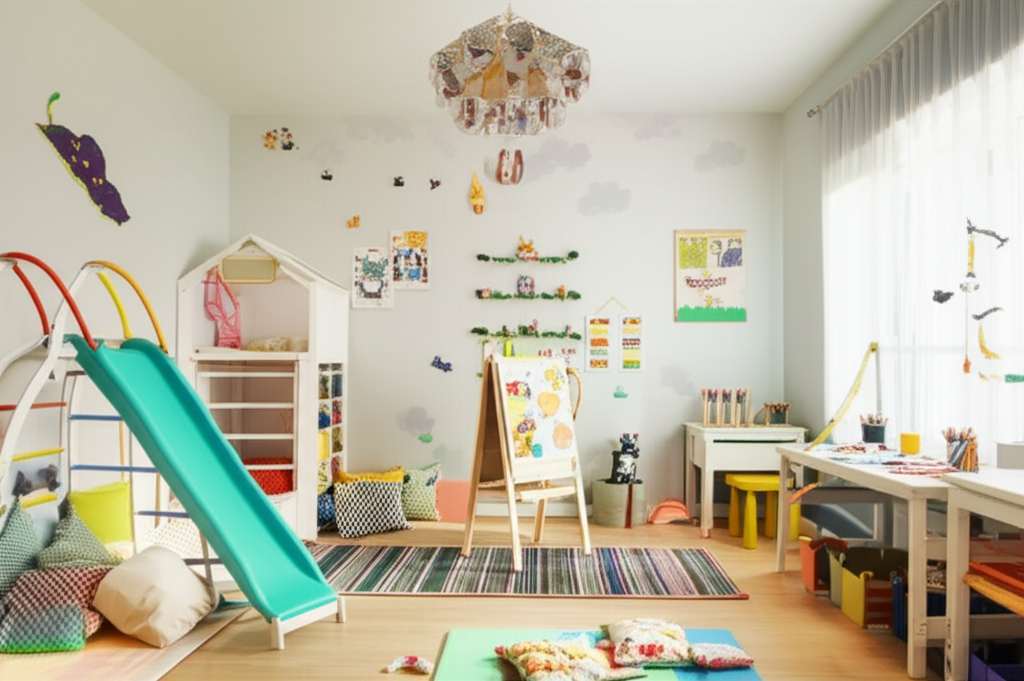
Designate zones within the playroom for different activities. You can have a quiet reading nook, an art station, a building zone with blocks, and an active play area. Use rugs or furniture placement to subtly define these areas.
What kind of flooring is best for a kids’ playroom?
Soft, durable, and easy-to-clean flooring is ideal. Options include large area rugs over hardwood or laminate, foam play mats, or linoleum. Avoid carpets that can stain easily and be hard to sanitize. Check out resources from the U.S. Consumer Product Safety Commission for safety guidelines on play areas.
How much storage do I really need?
It’s better to have a little more storage than not enough! Kids accumulate toys quickly. Aim for a mix of open shelving for displaying favorite items and closed storage (bins, baskets, cabinets) to hide clutter. Adjustable shelving is a great long-term investment.
Step 1: Define Your Playroom’s Purpose & Style
Before you buy a single toy bin, think about what you want this room to be. Is it a place for quiet reading and crafts? A bustling hub for energetic games? Or a mix of everything? Knowing its main purpose will guide all your design choices.
Consider your child’s age and interests. Toddlers might need soft, safe spaces, while older kids might want areas for art projects or building forts. Also, think about the overall style you’d like. Do you prefer bright and bold colors, or a more calming, neutral palette with pops of color?
Key Considerations:
- Age of Children: Safety needs and play types vary greatly.
- Main Activities: Reading, art, active play, building, imaginative games?
- Desired Vibe: Energetic and colorful, or calm and creative?
- Budget: How much can you realistically spend?
- Room Size: Small spaces need smart solutions.
Step 2: Smart Layout & Zoning
Even in a small room, a good layout makes a huge difference. Think about creating different “zones” for various activities. This helps keep things organized and makes the space feel more intentional.
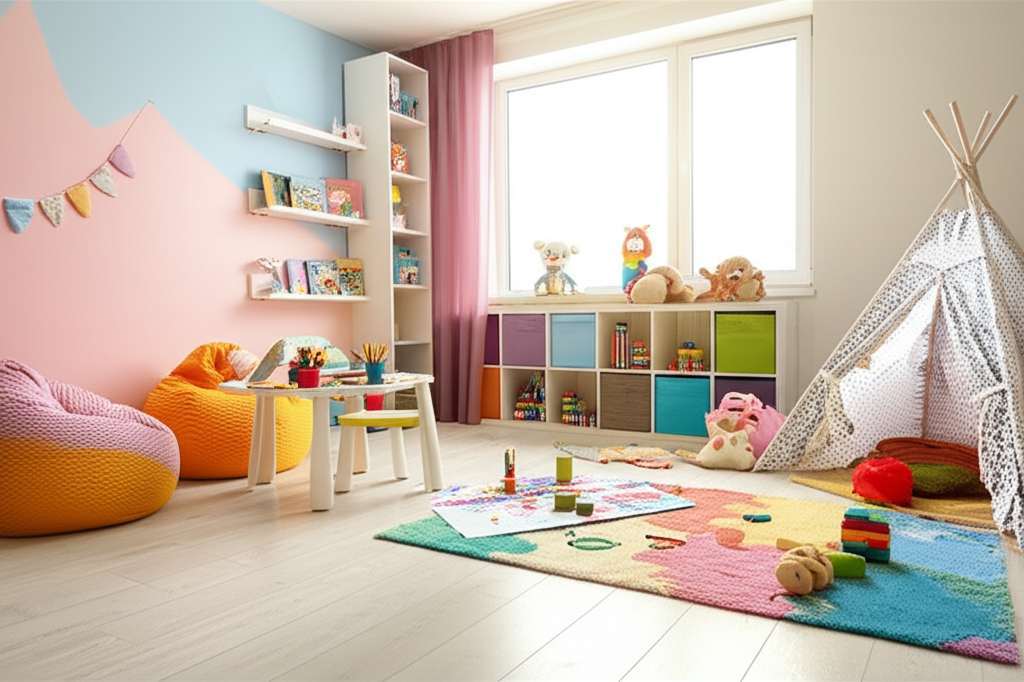
For example, you could have a cozy reading nook with a comfy beanbag and a small bookshelf. Nearby, set up an art station with a small table and art supplies. Another area could be for building blocks or dramatic play. Using rugs or furniture placement can help define these zones without needing walls.
Example Playroom Zones:
- Creative Corner: Art supplies, a small easel, or a craft table.
- Reading Nook: Comfy seating, good lighting, and bookshelves.
- Building Zone: Open floor space for blocks, LEGOs, or train sets.
- Active Play Area: Space for dancing, bouncing balls (if appropriate), or a small play structure.
- Quiet Zone: A calm space for puzzles or quiet reflection.
Step 3: Storage Solutions That Spark Joy (Not Clutter!)
Storage is king in any kids’ playroom! The goal is to make it easy for kids to access their toys and, importantly, to help them put them away. Think about a mix of open and closed storage.
Open shelves are great for displaying favorite books or special toys, encouraging kids to interact with them. Closed storage, like bins, baskets, or cabinets, is perfect for hiding away clutter and making the room look tidy. Labeling bins can help kids (and you!) know exactly where everything goes.
Clever Storage Ideas:
- Cube Storage Units: Versatile and can be used with fabric bins or baskets.
- Wall Shelves: Great for maximizing vertical space.
- Toy Chests/Ottomans: Double as seating and storage.
- Pegboards: Perfect for hanging art supplies, small toys, or even dress-up clothes.
- Rolling Carts: Ideal for art supplies or craft materials, easy to move around.
When choosing storage, consider durability and ease of use for little hands. Avoid anything with sharp edges or small parts that could be a hazard. For more ideas on organization, check out the EPA’s tips on reducing waste at home, which can extend to toy management.
Step 4: Color & Decor That Inspires
Now for the fun part – making the room look amazing! Color can dramatically change the feel of a space. Bright, cheerful colors can boost energy, while softer tones can create a calming atmosphere.
Don’t be afraid to use paint! You can paint an accent wall in a vibrant hue, or use stencils for playful patterns. Consider how the colors of the toys and furniture will work together. You can also use artwork, rugs, and curtains to add personality and color.
Playful Decor Tips:
- Paint a Mural: A simple geometric pattern or a friendly character.
- Display Kids’ Art: Create a gallery wall with their masterpieces.
- Themed Elements: Incorporate themes like space, jungle, or superheroes subtly.
- Comfortable Seating: Beanbags, floor cushions, or a small sofa make it cozy.
- Soft Lighting: String lights or a fun lamp can create a magical ambiance.
Step 5: Flooring & Safety First!
The right flooring is crucial for a kids’ playroom. It needs to be safe, comfortable, and easy to clean. Hardwood or laminate floors are durable, but adding a large, soft rug can make them much cozier and safer for playtime.
Foam play mats are another excellent option, especially for younger children, as they provide cushioning for tumbles. If you have carpet, ensure it’s stain-resistant and consider a good rug pad underneath. Always check that any rugs are securely fastened to prevent tripping hazards.
Playroom Safety Checklist:
- Secure Furniture: Anchor bookshelves and storage units to the wall.
- Cord Management: Hide or secure electrical cords.
- Non-Toxic Materials: Ensure paints, toys, and furniture are child-safe.
- Rounded Corners: Opt for furniture with rounded edges where possible.
- Clear Pathways: Keep the floor clear of tripping hazards.
- Window Safety: Use cordless blinds or window guards.
For detailed safety standards, consult resources from organizations like the Consumer Product Safety Commission (CPSC).
Step 6: Lighting Matters
Good lighting can transform a playroom. Natural light is always best, so maximize it by keeping windows unobstructed. For artificial light, a combination of overhead lighting and task lighting is ideal.
A bright overhead light ensures the whole room is visible, while a softer lamp in a reading nook or a desk lamp at an art station provides focused light for specific activities. Fun, decorative lights like string lights or a novelty lamp can add a touch of magic and whimsy.
Lighting Ideas:
- Overhead Fixture: A bright, flush-mount or semi-flush light.
- Task Lamps: For art tables or reading corners.
- String Lights: Add a cozy, whimsical feel.
- Night Light: For comfort during nap times or for younger children.
- Dimmer Switch: Allows for adjustable light levels.
Step 7: Furnishing for Fun & Function
Choosing the right furniture is key to a functional and fun playroom. Think about pieces that are durable, child-sized, and versatile.
A small table and chairs are perfect for art, crafts, and snacks. Consider modular seating that can be reconfigured, or comfortable floor cushions for a relaxed vibe. If space is tight, furniture that doubles as storage, like an ottoman with a lift-off lid, is a lifesaver.
Essential Playroom Furniture:
- Table & Chairs: For activities and meals.
- Comfortable Seating: Beanbags, floor cushions, a small sofa.
- Storage Units: Shelving, bins, cabinets.
- Play Kitchen/Workbench: For imaginative play.
- Easels or Chalkboards: To encourage creativity.
When buying furniture, look for sturdy, non-toxic materials. Secondhand finds can be a great budget-friendly option, just make sure they are in good condition and safe. You can often update older pieces with a fresh coat of paint.
Step 8: Incorporate Interactive Elements
To make your playroom truly amazing, add elements that encourage interaction and engagement. These don’t have to be expensive or complicated.
Think about a chalkboard or whiteboard wall for drawing and messages. A small climbing structure or a reading tent can provide imaginative play opportunities. Even a simple sensory bin filled with rice or beans can offer hours of fun and learning for younger children. Remember to always supervise when children are using interactive elements.
Interactive Play Ideas:
- Chalkboard/Whiteboard Wall: Great for drawing and learning.
- Reading Tent or Teepee: Creates a cozy, imaginative space.
- Sensory Bins: Filled with materials like rice, beans, or water beads (with supervision).
- Dress-Up Corner: With costumes and accessories.
- Map or Globe: For budding explorers.
Step 9: Making it Personal & Inspiring
A playroom should reflect the personality of the child who uses it! Involve your kids in the design process where appropriate. Let them choose some of the colors, artwork, or even the theme.
Displaying their artwork is a fantastic way to make the space personal and boost their confidence. You can also add elements related to their favorite characters, animals, or hobbies. The goal is to create a space that feels welcoming, exciting, and uniquely theirs.
Personalization Ideas:
- Artwork Gallery: Frame or clip their drawings and paintings.
- Personalized Decor: Alphabet letters, name signs.
- Themed Accessories: Cushions, rugs, or wall decals related to their interests.
- Photo Display: Pictures of family and fun memories.
Step 10: Regular Tidy-Up Routine
Even the best-designed playroom will get messy! Establishing a regular tidy-up routine is essential for keeping the space functional and enjoyable. Make it a fun activity rather than a chore.
Set aside a few minutes each day for a quick tidy. You can turn it into a game, like “who can put away the most blocks?” Involving kids in cleanup teaches them responsibility and helps them appreciate their play space. Regularly decluttering and donating unused toys also makes a big difference.
Tidy-Up Tips:
- Daily Quick Clean: A 5-10 minute tidy before bed or after playtime.
- Weekly Deeper Clean: Organize shelves, wipe down surfaces.
- Toy Rotation: Store some toys away and swap them out periodically to keep things fresh.
- Involve the Kids: Make cleanup a team effort.
- Declutter Regularly: Donate or discard broken or outgrown toys.
Budget-Friendly Playroom Design Examples
Creating an amazing playroom doesn’t require a huge budget. Here are some ideas to get you started without overspending.
| Area | Budget-Friendly Option | Why It Works |
|---|---|---|
| Paint | Sample pots or a single accent wall | Adds color and personality without painting the whole room. |
| Flooring | Large, affordable area rug over existing floor | Adds comfort and defines a play zone affordably. |
| Storage | Cube shelving with fabric bins (IKEA Kallax or similar) | Versatile, affordable, and looks tidy when bins are used. |
| Decor | DIY art display, printed templates, secondhand finds | Personalizes the space without high costs. |
| Furniture | Repurposed items (e.g., old dresser for toy storage) or secondhand finds | Saves money and can be updated with paint. |
Consider visiting local thrift stores, Facebook Marketplace, or asking friends and family for unwanted items. You’d be surprised what treasures you can find! Even a fresh coat of paint can make an old piece of furniture look brand new.
Your Dream Playroom Awaits!
Designing a kids’ playroom is a wonderful opportunity to create a space that sparks imagination, fosters learning, and brings joy to your family. By focusing on safety, smart organization, and a touch of creativity, you can transform any room into a vibrant haven.
Remember, it’s not about perfection, but about creating a functional, fun, and inviting space for your children to explore and grow. Take it step by step, involve your kids when you can, and don’t be afraid to get a little creative. Happy designing!