Quick Summary:
Transform your small bedroom with smart TV placement! This guide offers genius layout ideas to integrate your television seamlessly, maximizing space and style without compromising comfort. Discover simple, budget-friendly solutions for any small room.
Is your small bedroom feeling a little cramped, especially when you want to add a TV? You’re not alone! Many of us struggle to find the perfect spot for our screens without making the room feel cluttered or awkward. It can feel like a design puzzle, but don’t worry, it’s totally solvable!
This guide is here to help you unlock the secrets to a stylish and functional small bedroom layout with a TV. We’ll walk through easy-to-follow tips and creative ideas that will make your space feel bigger and better.
Get ready to say goodbye to awkward TV placement and hello to a cozy, media-ready sanctuary! Let’s dive into some genius ways to make your small bedroom work for you.
Small Bedroom Layout Ideas With TV: Genius Tips to Maximize Your Space
Living in a small space doesn’t mean you have to sacrifice comfort or entertainment. Integrating a TV into a small bedroom can be a challenge, but with the right layout ideas, it can become a seamless and stylish addition. The key is to think smart about placement, storage, and multi-functional furniture—much like how smart kitchen storage accessories can transform a cramped cooking area.
We’ll explore creative solutions that make your TV blend in, disappear, or even become a focal point without overwhelming your room. Get ready to make your small bedroom feel more spacious and perfectly set up for relaxation and entertainment.
1. The Wall-Mounted Wonder: Sleek and Space-Saving
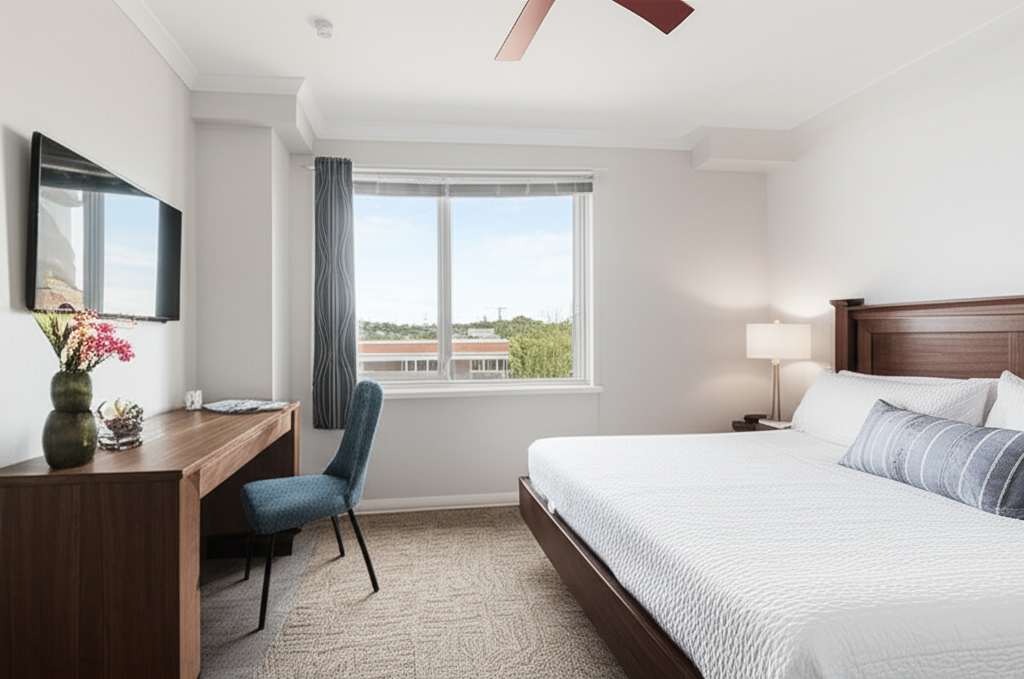
One of the most effective ways to save precious floor space in a small bedroom is by mounting your TV on the wall. This instantly frees up space that would otherwise be taken by a bulky TV stand or dresser.
Wall mounting is particularly great for smaller screens, but even larger TVs can look sleek and modern when mounted. It gives your room a clean, minimalist feel, making the space seem larger and more organized.
- Pros: Maximizes floor space, creates a modern look, easy to clean around.
- Cons: Requires drilling into walls, cable management needs careful planning, might limit future TV size upgrades if not planned for.
How to Mount Your TV Safely
Before you grab a drill, it’s important to ensure you’re mounting your TV safely. Always locate wall studs for secure attachment. Use a good quality TV mount designed for your TV’s size and weight. If you’re unsure, consider hiring a professional for peace of mind. Resources like The Home Depot’s guide can offer detailed step-by-step instructions for DIYers.
2. The Corner Cabinet Solution: Hidden and Tidy
If wall mounting isn’t an option or you prefer a more contained look, a corner cabinet is a fantastic idea. Corner units are designed to fit snugly into a room’s corner, utilizing often-unused space.
You can find cabinets with doors to hide the TV when not in use, keeping your room looking tidy and uncluttered. This also helps reduce glare and protects the screen.
- Pros: Hides the TV when not in use, utilizes awkward corner space, offers storage for media accessories.
- Cons: Can be bulky, might block natural light if placed in a window corner, requires careful measurement to ensure it fits.
Choosing the Right Corner Cabinet
Look for cabinets that are proportional to your room size. A massive corner unit can make a small room feel even smaller. Opt for lighter colors or designs with open shelving on the sides to maintain an airy feel. Measure your TV carefully to ensure it will fit comfortably inside, both when open and closed.
3. The Entertainment Center Upgrade: Compact and Functional
Forget bulky, traditional entertainment centers. Modern, compact entertainment units are designed specifically for smaller spaces. These often combine TV mounting capabilities with integrated shelving and storage.
Look for slim designs, floating shelves, or units that are narrower than standard dressers. Many come with built-in cable management systems, which are a lifesaver in small rooms.
- Pros: All-in-one solution for TV and storage, keeps cables organized, can be a stylish focal point.
- Cons: Can still take up significant wall space, may require assembly, might be more expensive than basic stands.
Multi-Functional Furniture is Your Best Friend
Consider entertainment units that also serve other purposes. Some have built-in desks, drawers for clothing, or even hidden compartments. This dual functionality is key to making the most of limited square footage—just like how minimalist kitchen essentials help streamline small cooking spaces.
4. The “Behind the Art” Illusion: Creative Concealment
Want your TV to practically disappear? Consider a TV that doubles as art or is hidden behind a piece of artwork. This is a more advanced, but incredibly chic, solution.
Specialized TVs like Samsung’s “The Frame” are designed to look like framed art when not in use, displaying digital artwork or personal photos. Alternatively, you can build a simple mechanism to slide a piece of art over a standard TV.
- Pros: Visually appealing, hides the TV completely, adds a decorative element to the room.
- Cons: Can be expensive (especially specialized TVs), requires DIY skills or custom building for the art-sliding method, potential for mechanism failure.
DIY Art Concealment Tips
For a DIY approach, you could use a sturdy sliding track system (similar to those used for barn doors, but scaled down) mounted above the TV. Attach a lightweight but large piece of art to a panel that slides horizontally. Ensure it’s easy to operate and doesn’t put stress on the TV.
5. The Swivel Mount Advantage: Flexible Viewing
If your bedroom layout is a bit unusual, or you want to be able to watch TV from different spots (like your bed and a small chair), a swivel mount is a brilliant solution. These mounts allow you to pull the TV out from the wall and angle it in various directions.
This is especially useful if your TV is mounted on a wall that isn’t directly opposite your bed, or if you want to angle it away when not in use to create a more relaxed atmosphere.
- Pros: Offers flexible viewing angles, can reduce glare by repositioning, useful for multi-purpose rooms.
- Cons: TV can look less streamlined when not pushed flat against the wall, requires careful installation to ensure stability when extended.
Considerations for Swivel Mounts
Ensure the swivel mount you choose can extend far enough to reach your desired viewing positions without straining. Also, check that it can support the weight of your TV securely, especially when fully extended. A good example of such mounts can be found from reputable electronics accessory brands.
6. The Floating Shelf & Minimalist Stand Combo: Light and Airy
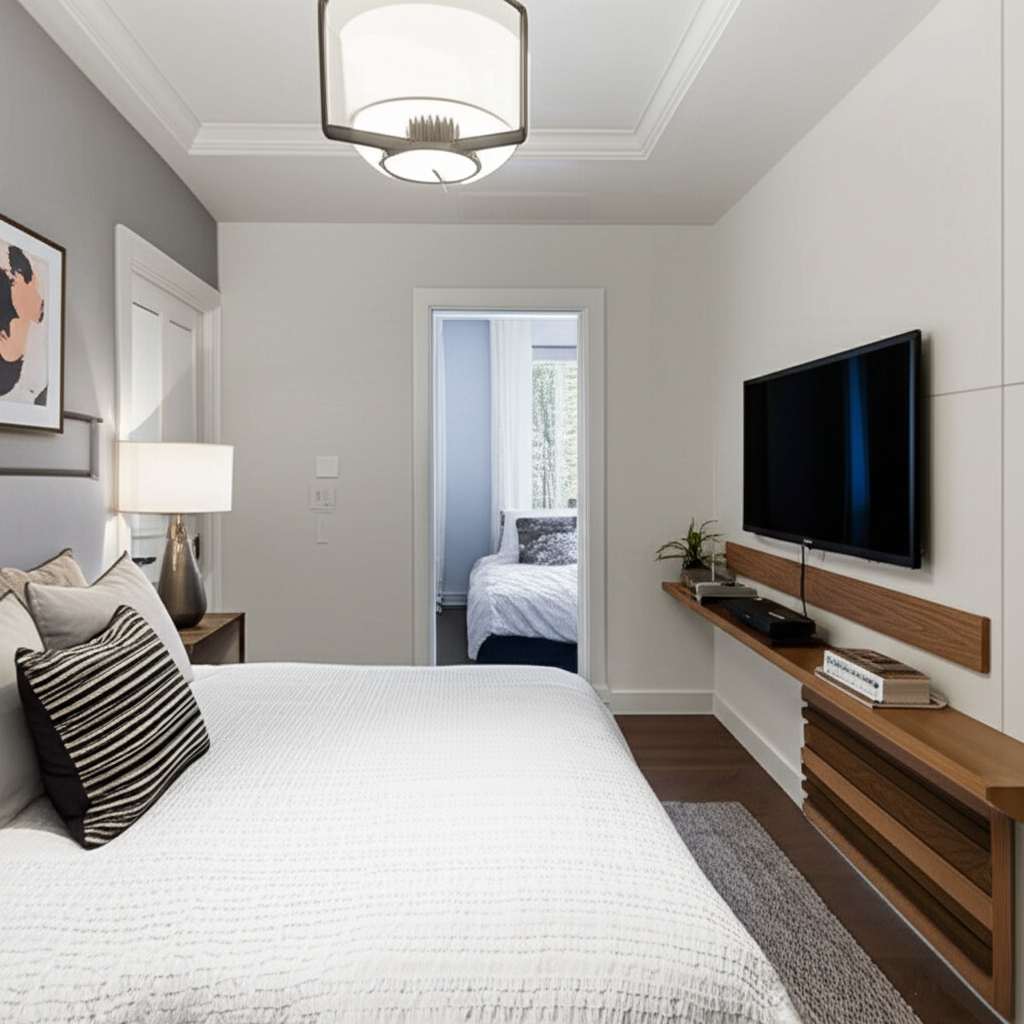
For a modern and minimalist look, combine a floating shelf beneath the TV with a slim, low-profile media stand. The floating shelf can house your cable box, gaming console, or decorative items, while the stand provides a clean base.
This approach feels less imposing than a full entertainment unit and keeps the visual weight low, making the room feel more open.
- Pros: Creates a light and airy feel, minimal footprint, easy to install shelves.
- Cons: Limited storage capacity, requires careful cable management to keep it looking neat, relies on wall strength for shelves.
Cable Management is Key
With floating shelves, visible cables can quickly ruin the minimalist aesthetic. Use cable raceways, clips, or sleeves to hide cords along the wall or behind furniture. Some floating shelves even have built-in channels for cable routing.
7. The Dresser Top Transformation: Smart Placement
If you already have a dresser in your bedroom for clothing storage, consider placing your TV on top of it. This is a practical and often budget-friendly solution, especially if your dresser is sturdy and wide enough.
Ensure the dresser is deep enough to accommodate the TV’s base and stable enough to prevent tipping. You’ll want to position it so it’s comfortable to view from your bed without straining your neck.
- Pros: Utilizes existing furniture, no extra purchases needed, easy setup.
- Cons: Can look cluttered if the dresser is too small, potential safety hazard if dresser is unstable or TV is too large, limited viewing angles.
Safety First!
Always secure your TV to the dresser with anti-tip straps, especially if you have children or pets. Check that the dresser itself is stable and won’t tip forward. Measure your dresser’s surface and your TV’s dimensions to ensure a good fit. For guidance on dresser stability and safety, resources from consumer product safety commissions can be very helpful (e.g., CPSC’s tip-over prevention).
8. Behind the Bed Placement: Cozy Nook Creation
In some layouts, placing the TV on a low console table or a slim media unit against the wall behind your bed can work well. This creates a cozy, almost den-like feel.
This works best if you have space between your headboard and the wall, or if you have a headboard that doesn’t obstruct the view. It can make your bedroom feel more like a private retreat.
- Pros: Creates a cozy, private viewing area, keeps TV out of direct sightlines when lying down.
- Cons: Requires adequate space behind the bed, can make the room feel smaller if the unit is too large, viewing angle might be limited.
Measuring is Crucial
Measure the depth of your bed and headboard. Ensure there’s enough space for a slim media console and that the TV screen will be visible at a comfortable angle when you’re sitting up or lying down. This layout often works well with smaller, flat-screen TVs.
9. The Sliding Door Wardrobe Integration: Hidden Gem
If your small bedroom has a wardrobe with sliding doors, consider integrating the TV within it. You can install a mount or a small shelf inside one of the wardrobe sections.
When the doors are closed, the TV is completely hidden, giving your room a clean, minimalist look. This is an excellent solution for renters who can’t drill into walls.
- Pros: Completely hides the TV, utilizes existing wardrobe space, no wall damage.
- Cons: Requires careful measurement to fit TV inside, needs ventilation, might limit wardrobe storage space.
Ventilation and Access
Ensure there’s adequate ventilation for the TV to prevent overheating. You might need to drill small holes in the back of the wardrobe or ensure there are gaps. Also, make sure you have easy access to ports and cables.
10. The Fold-Down or Retractable Option: Ultimate Space Saver
For the ultimate in space-saving, consider a fold-down TV mount or a retractable system. These allow the TV to be stored away neatly when not in use, often folding up against the wall or ceiling.
While these can be more expensive and complex to install, they offer unparalleled flexibility in small spaces. Think of it as a Murphy bed for your television!
- Pros: Maximizes space when TV is not in use, very discreet, high-tech solution.
- Cons: Expensive, complex installation, requires specific wall or ceiling support, might have weight limitations.
Installation Considerations
These systems often require professional installation due to their complexity and the need for secure mounting. Ensure the mounting surface can handle the weight and movement of the mechanism. Resources for specialized mounting hardware can be found from manufacturers directly.
Key Considerations for Small Bedroom TV Layouts
No matter which layout idea you choose, a few general principles will help you succeed in a small bedroom.
Viewing Distance and Height
This is crucial for comfort and eye strain. A good rule of thumb is to have the TV screen at eye level when you are in your primary viewing position (usually sitting up in bed). For a 32-inch TV, a good viewing distance is about 4-6 feet. For larger TVs, it’s a bit more. The American Optometric Association offers guidelines on eye comfort that can be applied to TV viewing.
Table: Ideal Viewing Distance for TV Size
| TV Size (Diagonal) | Minimum Viewing Distance | Maximum Viewing Distance |
|---|---|---|
| 24-32 inches | 3 feet | 6 feet |
| 40-43 inches | 5 feet | 8 feet |
| 50-55 inches | 6 feet | 10 feet |
| 60-65 inches | 7 feet | 11 feet |
Cable Management
Visible wires can make any room, especially a small one, look messy and cluttered. Invest in cable ties, sleeves, raceways, or entertainment units with built-in cable management solutions. This is a small detail that makes a huge difference.
Lighting and Glare
Consider the natural and artificial light sources in your room. Placing the TV directly opposite a window can cause glare, making it difficult to watch. If this is unavoidable, use blackout curtains or blinds, or consider a TV with an anti-glare screen.
Proportion and Scale
Always choose a TV and any accompanying furniture that is proportionate to the size of your room. A giant TV in a tiny bedroom will overwhelm the space. Opt for slimmer bezels and consider smaller screen sizes if necessary.
Multi-Purpose Furniture
In small spaces, every piece of furniture should ideally serve more than one purpose. A storage ottoman can be a footrest and provide hidden storage. A desk can double as a vanity. Look for ways your TV setup can integrate with other needs.
FAQ: Small Bedroom TV Layouts
Q1: What is the best way to put a TV in a very small bedroom?
A1: The best way is often to mount it on the wall to save floor space. Alternatively, a slim corner unit or placing it on an existing dresser can work well. The key is to keep it compact and well-organized.
Q2: Should the TV be across from the bed in a small bedroom?
A2: Ideally, yes, for comfortable viewing. However, if space is tight, a swivel mount can allow you to angle the TV from a side wall. Ensure it’s at a comfortable eye level to avoid neck strain.
Q3: How can I hide TV wires in a small bedroom?
A3: Use cable raceways that stick to the wall, decorative cable sleeves, or furniture with built-in cable management. For wall-mounted TVs, you can often run wires inside the wall (consult a professional for this) or use a paintable cord cover.
Q4: What size TV is appropriate for a small bedroom?
A4: For most small bedrooms, a TV between 24 and 43 inches is generally suitable. Consider the viewing distance – you don’t want a TV that’s too large and feels overwhelming or requires you to move your head constantly to see the whole screen.
Q5: Can I put a TV in a bedroom without a TV stand?
A5: Absolutely! Wall mounting is the most popular alternative. You can also place it on a sturdy dresser, a console table, or integrate it into a bookshelf or wardrobe.
Q6: How do I avoid glare on my bedroom TV?
A6: Position the TV so it’s not directly opposite windows or bright lights. If that’s not possible, use blackout curtains or blinds. Some TVs also have matte screens or anti-glare coatings.
Q7: What if I don’t want the TV to be the main focus of the room?
A7: Consider TVs that double as art, like “The Frame.” You can also place the TV in a corner cabinet with doors, or behind a sliding panel of art. Subtle integration is key.
Conclusion: Your Small Bedroom, Your Entertainment Hub
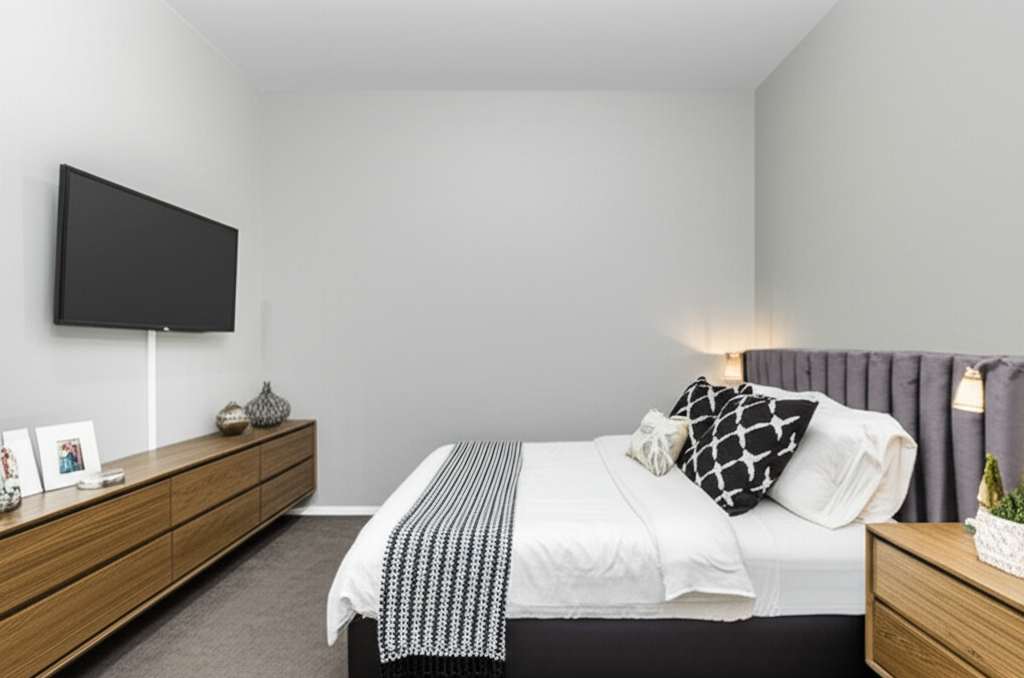
Creating a functional and stylish small bedroom layout with a TV is all about smart choices and creative solutions. By utilizing wall space, choosing multi-functional furniture, and paying attention to details like cable management and scale, you can transform even the tiniest room into a comfortable and enjoyable entertainment space.
Whether you opt for a sleek wall mount, a discreet corner cabinet, or a creative art-hiding trick, remember that your goal is to make the TV enhance your room, not dominate it. These ideas are designed to be adaptable, budget-friendly, and easy for beginners to implement.
Don’t let a small footprint limit your lifestyle. With these genius tips, you can enjoy your favorite shows and movies in your cozy bedroom sanctuary. Happy decorating!