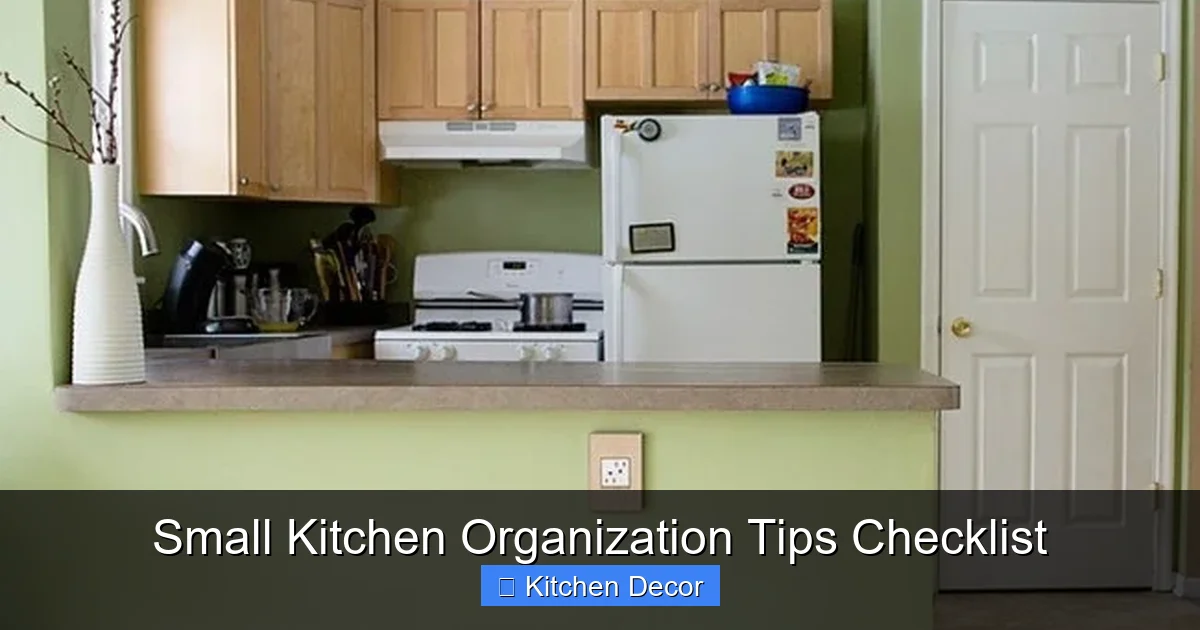
Transform your cramped cooking area into an efficient culinary haven with our ultimate Small Kitchen Organization Tips Checklist. This comprehensive guide provides actionable steps to declutter, maximize every inch of space, and implement smart storage solutions, ensuring your compact kitchen feels larger and more functional. Discover practical strategies to conquer clutter and make your small kitchen a joy to use.
Small Kitchen Organization Tips Checklist
Welcome to the ultimate guide for transforming your small kitchen! Do you often feel overwhelmed by clutter? Does finding a specific utensil feel like a treasure hunt? You’re not alone. Many small kitchens suffer from a lack of strategic planning. But even the tiniest culinary space can become a highly efficient and joyful area. This comprehensive “Small Kitchen Organization Tips Checklist” is designed to empower you. It will guide you step-by-step through decluttering, maximizing space, and implementing smart storage solutions. By following these practical tips, your small kitchen will not only look better but also function more smoothly than you ever thought possible. Let’s get started on creating the organized kitchen of your dreams!
Key Takeaways
- Declutter Ruthlessly First: Before organizing, remove everything you don’t use, need, or love to create a clean slate and free up valuable space.
- Maximize Vertical Space: Look up! Utilize walls, cabinet interiors, and stackable solutions to store items, freeing up precious counter and drawer space.
- Zone Your Kitchen Logically: Group similar items together in dedicated zones (prep, cook, store) to improve efficiency and make finding things easier.
- Invest in Smart Organizers: Use drawer dividers, adjustable shelving, pull-out baskets, and clear containers to optimize existing cabinets and drawers.
- Prioritize Clear Countertops: Keep only truly essential, frequently used items on your counters to create an illusion of space and ease of cleaning.
- Embrace Multi-Functional Items: Choose tools, appliances, and furniture that serve more than one purpose to reduce clutter and maximize utility.
- Establish Maintenance Habits: Implement daily and weekly routines to keep your small kitchen tidy and prevent clutter from accumulating again.
Step 1: The Essential Purge – Declutter Before You Organize
This is the most critical first step in any successful small kitchen organization project. You cannot truly organize clutter. You simply move it around. Before you buy a single organizer, you need to clear out what you don’t need, use, or love. Think of this as creating a blank canvas for your kitchen makeover.
Evaluate Every Item
Take everything out of your cabinets, drawers, and off your countertops. Yes, everything! Place it all on your dining table, a large island, or even the floor. This visual display can be shocking, but it’s vital. Pick up each item. Ask yourself:
- Do I use this regularly (at least once a month)?
- Does this item serve an important purpose?
- Do I love this item, or does it bring me joy?
- Do I have duplicates of this item?
- Is it broken, chipped, or past its prime?
Be honest with your answers. This brutal honesty is the foundation of effective small kitchen organization.
The “Three-Box” Method
As you evaluate, sort items into three categories (boxes or piles work well):
- Keep: These are the items you use often, cherish, or truly need. They will go back into your kitchen.
- Donate/Sell: Items that are still in good condition but you no longer use. Someone else could benefit from them.
- Discard: Broken items, expired food, or anything that truly belongs in the trash.
For items you’re unsure about, create a “maybe” box. Store it somewhere out of the kitchen for a month. If you don’t reach for anything in it during that time, it’s a strong sign it can be donated or discarded.
Address Duplicates and Seldom-Used Items
Small kitchens simply cannot afford duplicates. Do you have five spatulas when one or two would suffice? Are there three sets of measuring spoons? Keep only the best and most functional versions. For items used only once or twice a year (like a turkey roaster or specialty baking pans), consider if they can be stored elsewhere, perhaps in a less frequently accessed closet or garage, or if borrowing is a better option. This initial purge is a cornerstone of any effective small kitchen organization tips checklist.
Step 2: Maximize Vertical Real Estate
When horizontal space is limited, the only way to go is up! Thinking vertically is a game-changer for small kitchens. This means utilizing every inch of wall space, the insides of cabinets, and even the often-forgotten space above your existing shelves.

Visual guide about Small Kitchen Organization Tips Checklist
Image source: i.pinimg.com
Wall-Mounted Solutions
Your walls are prime real estate! Install:
- Open Shelving: Great for frequently used items, cookbooks, or decorative pieces that also serve a purpose (e.g., stacked dishes).
- Magnetic Knife Strips: Frees up drawer space and keeps knives safely accessible.
- Pot Racks: Hanging pots and pans from a ceiling or wall rack saves significant cabinet space. This also makes a design statement.
- Pegboards: A versatile solution where you can hang utensils, small pans, and even custom shelves.
- Spice Racks: Keep your spices off the counter and neatly organized on the wall.
Always consider the weight capacity of your walls and shelving units before installing heavy items.
Stackable Shelves and Risers
Inside your cabinets and pantry, often there’s a lot of unused vertical space between items and the next shelf. Stackable shelves or risers are perfect for:
- Plates and Bowls: Create an extra layer to store more dishes.
- Canned Goods: Stack cans neatly, allowing you to see everything.
- Mugs and Glasses: Double your storage capacity for drinkware.
These simple additions instantly create more usable surface area within your existing cabinetry. They are essential small kitchen organization tips.
Over-Door Organizers
Don’t forget the back of your pantry door, utility closet door, or even inside cabinet doors. Over-door organizers can hold:
- Spices, foils, and wraps: Keep these items easily accessible and off shelves.
- Cleaning supplies: Store sprays and sponges under the sink.
- Small pantry items: Snacks, packets, or small jars.
Measure your doors carefully to ensure a good fit and that the door can still close properly.
Step 3: Optimize Cabinet and Drawer Interiors
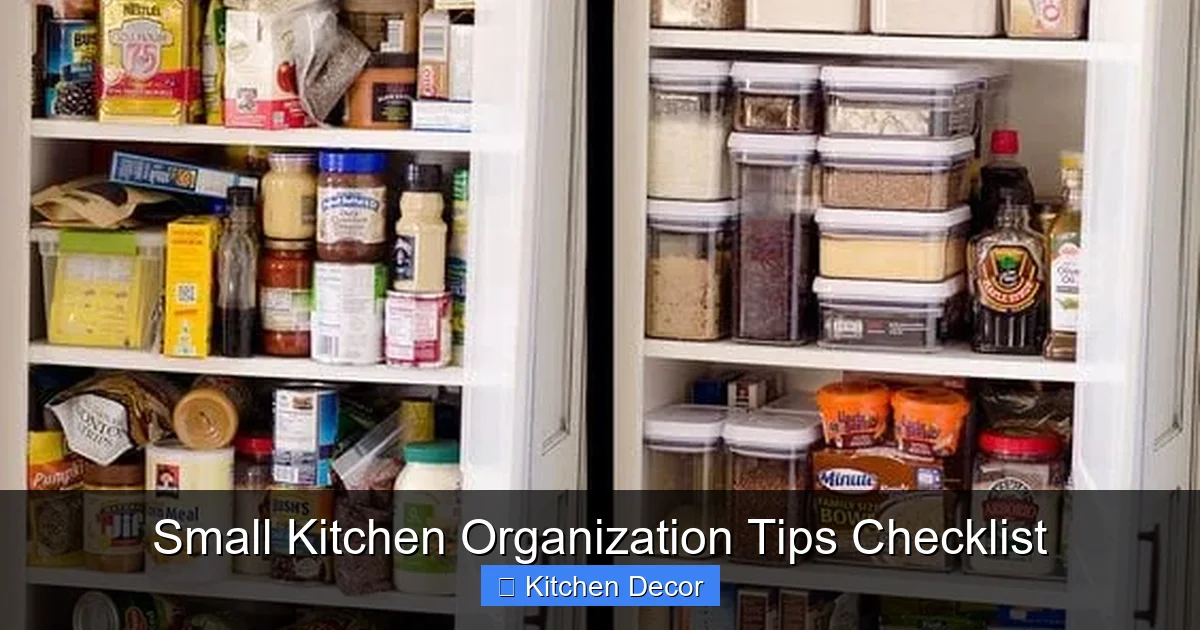
Once you’ve decluttered and thought vertically, it’s time to make the most of the enclosed spaces. Cabinets and drawers can quickly become black holes without proper internal organization. This section of our small kitchen organization tips checklist focuses on smart interior solutions.
Visual guide about Small Kitchen Organization Tips Checklist
Image source: funcheaporfree.com
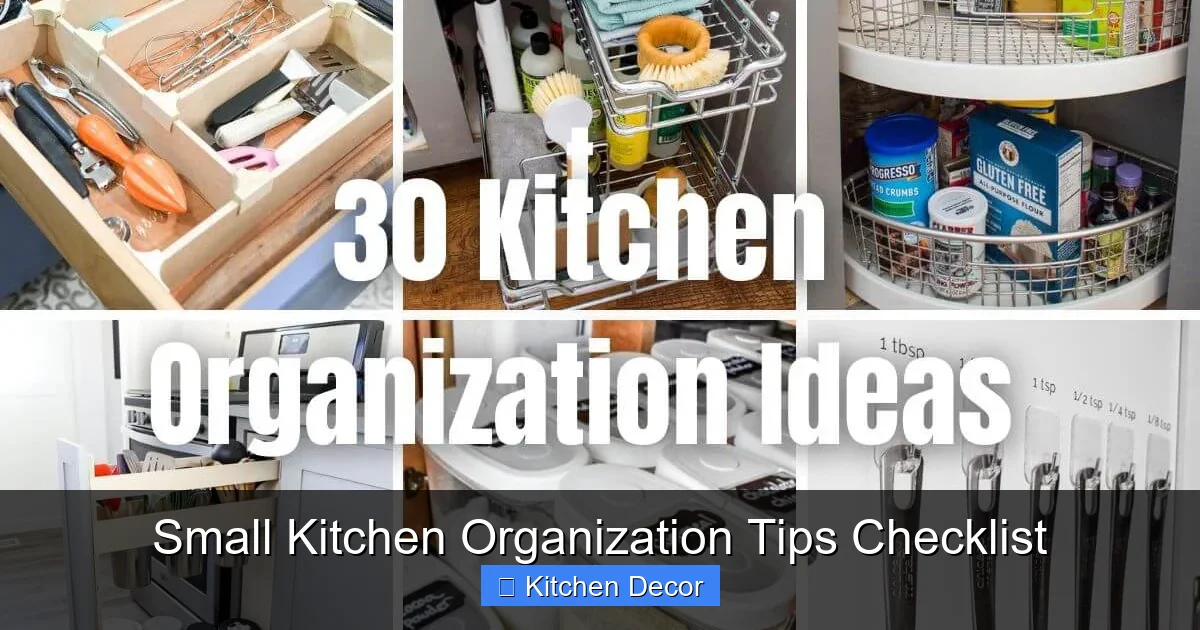
Drawer Dividers and Organizers
Untamed drawers lead to frustrating rummaging. Use:
- Adjustable Dividers: Perfect for customizing spaces for utensils, gadgets, and cutlery.
- Drawer Inserts: Pre-made trays for specific items like knives or spices.
- Tiered Spice Inserts: Angle your spice jars so you can see all labels at a glance.
Group similar items. All spatulas in one section, all ladles in another. This makes finding what you need effortless.
Pull-Out Shelves and Baskets
Deep cabinets, especially lower ones, can be difficult to access. Items get lost in the back. Pull-out solutions are a lifesaver:
- Sliding Shelves: These allow you to bring the contents of a deep cabinet to you.
- Roll-Out Bins: Ideal for storing heavier items like small appliances or bulk dry goods.
They prevent you from having to get on your hands and knees to find something, making your kitchen far more user-friendly.
Cabinet Door Storage
Just like over-door organizers, the insides of cabinet doors offer untapped potential:
- Hooks: Hang measuring cups, oven mitts, or even small towels.
- Magazine Holders: Repurpose these to store cutting boards or baking sheets vertically.
- Small Bins: Attach to store sponges, scrubbers, or recipe cards.
Ensure that whatever you attach allows the cabinet door to close completely without hitting interior shelves or items.
Under-Sink Solutions
The area under the sink is often a chaotic mess of cleaning supplies and plumbing. Tame it with:
- Tiered Sliding Shelves: Designed to fit around pipes, creating organized layers.
- Clear Bins: Group similar cleaning products together. Clear bins allow you to see contents easily.
- Tension Rod: Install a tension rod to hang spray bottles, freeing up the bottom of the cabinet.
This space can be highly functional if managed correctly within your small kitchen organization tips checklist.
Step 4: Create Functional Zones
Even in a small kitchen, creating dedicated zones dramatically improves efficiency. This is about storing items where they are most logically used. Think about your workflow. Where do you prep food? Where do you cook? Where do you clean?
Visual guide about Small Kitchen Organization Tips Checklist
Image source: 2thesunnyside.com
Prep Zone
This is usually near your cutting board and main work surface. Store:
- Knives: On a magnetic strip or in a knife block.
- Cutting Boards: In a narrow cabinet slot or against a wall.
- Measuring Cups & Spoons: In a nearby drawer.
- Mixing Bowls & Utensils: In a cabinet above or below.
- Basic Spices & Oils: Within easy reach on a small tray or shelf.
Everything you need to chop, mix, and measure should be at your fingertips.
Cooking Zone
This zone is around your stove and oven. Keep:
- Pots and Pans: In lower cabinets or hanging pot racks.
- Cooking Utensils: In a crock next to the stove or in a top drawer.
- Baking Sheets & Racks: In narrow vertical slots.
- Oven Mitts & Trivets: Hung on hooks or in a nearby drawer.
- Go-to Spices: A small selection close to the cooking surface.
Minimize steps between grabbing a pan and stirring with a spatula.
Pantry Zone
Whether it’s a dedicated pantry, a cabinet, or a shelf, this is where your food lives. Group similar items:
- Breakfast items: Cereal, oats, coffee.
- Baking supplies: Flour, sugar, leavening agents.
- Snacks: Chips, cookies, granola bars.
- Canned goods: Soups, vegetables, beans.
Use clear, airtight containers for dry goods to keep them fresh, visible, and pest-free. This is key for any effective small kitchen organization tips checklist.
Cleaning Zone
Usually under the sink or in a utility cabinet. Store:
- Dish Soap & Sponges: Easily accessible.
- Trash Bags: In a dispenser.
- All-Purpose Cleaner & Wipes: Ready for quick cleanups.
- Dish Towels: Folded neatly or hung.
A well-organized cleaning zone makes daily tidying much faster.
Step 5: Master Your Countertops
Countertops are precious real estate in a small kitchen. Clutter here makes the whole space feel smaller and more chaotic. The goal is to keep them as clear as possible.
The “Less Is More” Mantra
Ask yourself if an item absolutely needs to live on the countertop. If you use it daily (like a coffee maker or toaster), it might earn its spot. Otherwise, it should have a designated home elsewhere. A clear counter visually expands your kitchen.
Smart Appliance Storage
Small appliances can be big space hogs. Consider:
- Appliance Garage: If you have one, utilize it.
- Pull-Out Shelves: For appliances stored in lower cabinets, these make access easy.
- Multi-functional Appliances: A food processor that also blends, or an Instant Pot that does it all, reduces the need for multiple single-use gadgets.
If you only use an appliance weekly, it’s a candidate for cabinet storage. For rarely used ones, find an out-of-kitchen home if possible.
Decorative but Functional Items
A small kitchen doesn’t have to be sterile. Choose items that are both beautiful and useful for your counters:
- Fruit Bowl: Keep fresh fruit visible and inviting.
- Small Herb Garden: A few fresh herbs in pots add life and flavor.
- Aesthetic Canisters: For coffee, tea, or sugar.
Limit these to one or two well-chosen pieces to avoid clutter. This section is vital for your small kitchen organization tips checklist because clear counters boost visual space.
Step 6: Smart Food Storage Solutions
Food items, especially dry goods, can quickly become disorganized in a small kitchen. Proper storage extends shelf life, prevents waste, and makes meal prep easier.
Airtight Containers
These are a must for dry goods like flour, sugar, pasta, rice, and cereals. They offer several benefits:
- Freshness: Keeps food fresh longer.
- Visibility: Clear containers allow you to see what you have at a glance.
- Pest Control: Protects food from insects.
- Uniformity: Square or rectangular containers stack neatly, maximizing space.
Invest in a matching set for a cohesive, visually appealing pantry.
Vertical Pantry Storage
Whether it’s a dedicated pantry or just a few shelves, think vertically:
- Tiered Risers: For canned goods or spices, so everything is visible.
- Shelf Dividers: Keep stacks of items (like plates of paper goods) from toppling over.
- Over-Door Pantry Organizers: As mentioned before, excellent for slim items.
Label everything! Labels help you quickly find what you need and put things back in their proper place.
Refrigerator and Freezer Organization
Even cold storage can benefit from organization:
- Clear Bins & Trays: Group similar items (e.g., all dairy together, all produce in one bin).
- Designated Shelves: “Eat Me First” shelf for items nearing expiration.
- Vertical Freezer Storage: Flat-pack meals or use magazine files for bags of frozen vegetables.
Regularly clean out your fridge and freezer to remove expired items and prevent food waste. This is a key part of your small kitchen organization tips checklist for overall efficiency.
Step 7: Tackle Specialty Items
Some items always seem to defy organization. Let’s look at specific solutions for these trickier categories in your small kitchen.
Spices and Condiments
A well-organized spice collection saves time and prevents duplicate purchases:
- Drawer Inserts: Tiered inserts that lay flat in a drawer.
- Wall-Mounted Racks: Frees up counter or cabinet space.
- Magnetic Tins: Stick to the side of your fridge or a magnetic board.
- Spice Turntables (Lazy Susans): Great for corners or within deep cabinets.
Decant larger condiment bottles into smaller, uniform ones if you buy in bulk and have limited fridge space.
Knives and Utensils
Safety and accessibility are key here:
- Magnetic Knife Strips: Safe, visible, and frees up counter/drawer space.
- In-Drawer Knife Blocks: Keep knives safe and sharp without taking up counter space.
- Utensil Crocks: For frequently used cooking utensils next to the stove.
- Drawer Organizers: For less frequently used gadgets, keep them neatly separated.
Avoid a jumbled drawer of sharp objects; it’s dangerous and inefficient.
Pots, Pans, and Lids
These bulky items are often the biggest challenge in small kitchens:
- Nesting Sets: Invest in pots and pans that stack neatly inside each other.
- Vertical Organizers: Wire racks that store lids or pans vertically in a cabinet.
- Pot Rack: As mentioned, hanging them frees up cabinet space.
- Cabinet Door Racks: Specially designed for pot lids.
Always store pots and pans with their lids nearby or attached to streamline your cooking process. These specific solutions are invaluable for your small kitchen organization tips checklist.
Step 8: Implement Daily Habits and Routine Maintenance
Organization isn’t a one-time event; it’s an ongoing process. Establishing good habits is crucial for maintaining your beautifully organized small kitchen.
The “Clean As You Go” Rule
This simple habit makes a massive difference. As you cook, put away ingredients when you’re done with them. Wash utensils and bowls as they’re used. Wipe down surfaces immediately after spills. This prevents accumulation and makes post-meal cleanup a breeze.
Weekly Tidy-Up
Dedicate 15-30 minutes each week to a quick reset:
- Wipe down counters and appliances.
- Check and discard any expired items from the fridge or pantry.
- Straighten up drawers and cabinets.
- Run the dishwasher and put away clean dishes.
This prevents small messes from turning into overwhelming clutter.
Annual Deep Dive
Once a year, repeat Step 1. Take everything out, re-evaluate, and purge. This ensures that your small kitchen remains optimized for your current needs and lifestyle. It’s a full reset for your small kitchen organization tips checklist.
Troubleshooting Common Small Kitchen Challenges
Even with the best tips, small kitchens can present unique frustrations. Here are solutions to common hurdles:
“I don’t have enough cabinet space!”
This is a universal cry in small kitchens. The solution involves a multi-pronged approach:
- Re-evaluate the purge: Did you truly get rid of everything unnecessary? Be ruthless.
- Go vertical everywhere: Wall shelves, magnetic strips, pegboards, and pot racks are your best friends.
- Utilize under-cabinet space: Add hooks for mugs or a small under-cabinet shelf for frequently used spices.
- Consider mobile storage: A kitchen cart with shelves or drawers can add valuable storage that can be moved when not in use.
- Multi-functional furniture: An island that doubles as storage or a dining table with hidden compartments.
“My countertops are always cluttered!”
A cluttered counter is often a sign that items don’t have a designated home. To fix this:
- Assign a home for everything: Every single item should have a specific drawer, cabinet, or hook where it belongs.
- Prioritize: Only leave out items you use daily (e.g., coffee maker, toaster). Even then, ask if they could be stored away.
- Use trays: For the few items that must stay out (like oils and spices by the stove), group them neatly on a small tray. This contains clutter and makes cleaning easier.
- Get rid of decorative clutter: While charming, too many knick-knacks take up precious space and add to the visual noise. Choose one or two purposeful items.
“Things get lost in the back of my pantry/deep cabinets!”
This is a common issue with deep storage, leading to expired food and wasted money. To combat this:
- Implement pull-out solutions: As discussed, sliding shelves or roll-out baskets bring items to you.
- Use clear, labeled containers: You can see what you have and how much is left at a glance.
- Apply the “first-in, first-out” rule: When putting away new groceries, move older items to the front.
- Use tiered risers: For canned goods, making back rows visible.
- Regular inventory checks: Before grocery shopping, quickly scan your pantry and fridge to see what you need, reducing duplicates and ensuring nothing gets completely forgotten.
These troubleshooting tips reinforce the practical applications of our small kitchen organization tips checklist.
Conclusion
Congratulations! You’ve just walked through a comprehensive “Small Kitchen Organization Tips Checklist” designed to transform your compact cooking space. By thoughtfully decluttering, maximizing vertical space, optimizing cabinet interiors, creating functional zones, mastering your countertops, and implementing smart food storage, you can achieve a kitchen that feels much larger and significantly more efficient. Remember, organization is a journey, not a destination. Embrace the power of daily habits and routine maintenance to keep your kitchen tidy and functional. With a little effort and the right strategies, your small kitchen can become a beautifully organized, highly efficient, and truly enjoyable heart of your home. Happy organizing!