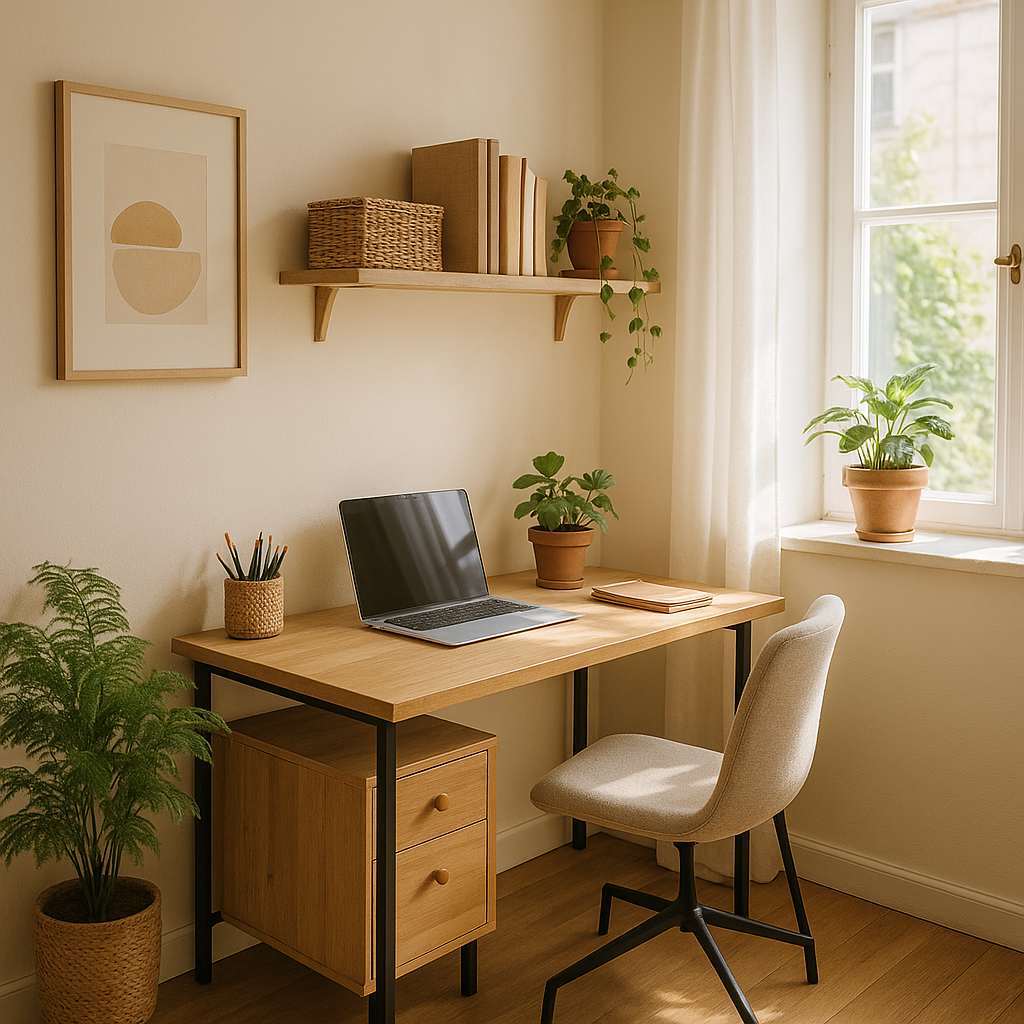
Quick Summary: Small office room design ideas on a budget: choose light colors, multi-use furniture, smart storage, layered lighting, and a clear layout. With a few DIY hacks and smart buys, you can create a cozy, productive space without spending much.
Welcome — let’s make your small office feel smart, cozy, and budget-friendly
Small office rooms can feel tight, cluttered, or uninspiring. That’s normal. You don’t need expensive furniture or a renovation to make a space that works and feels good.
I’ll walk you through easy, beginner-friendly steps to plan, style, and set up a small office room design on a budget. Expect simple layouts, thrifted finds, and DIY tips that save money and time.
Ready? Next I’ll show how to plan, pick furniture, improve light, add storage, decorate, and finish with a shopping and step-by-step checklist.
How to start: plan smart before you buy
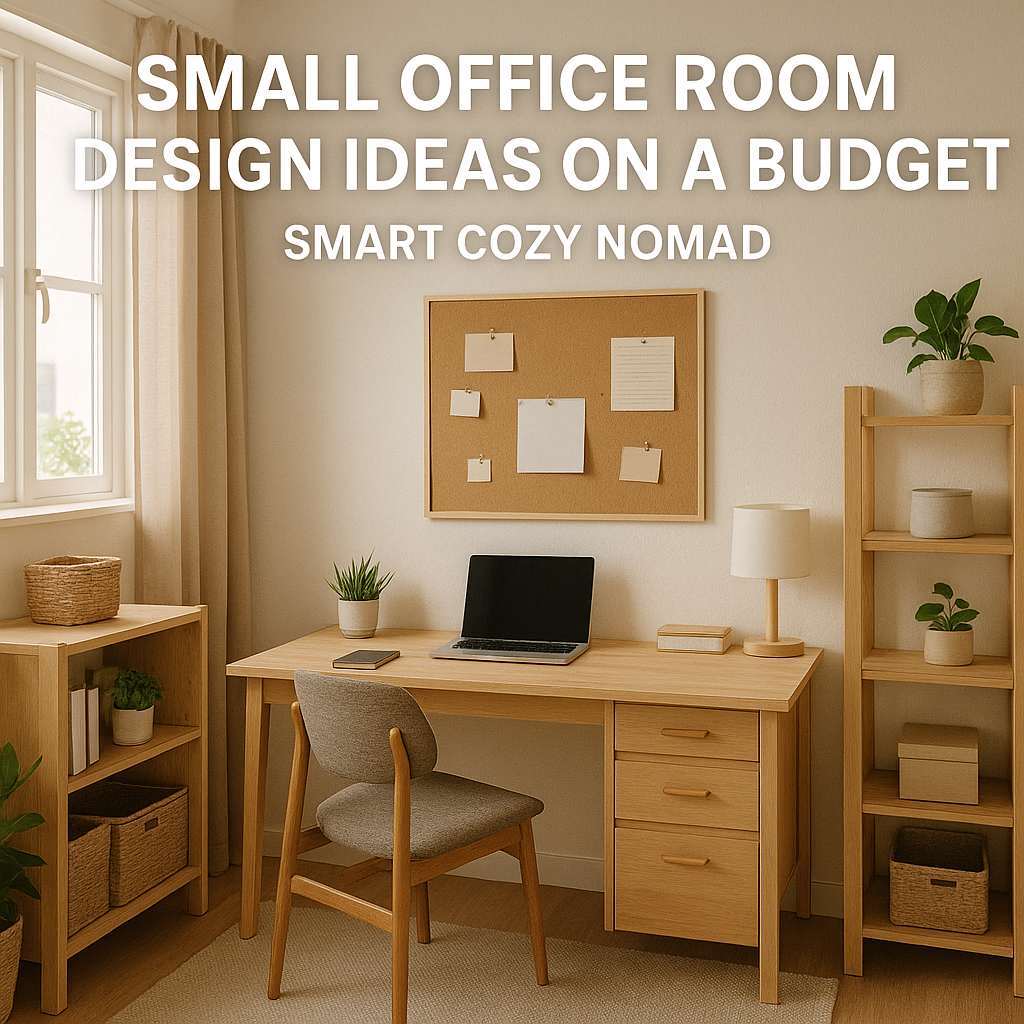
Planning saves money. Measure your room and think about how you use it each day. Do you need more desk space, storage, or a meeting corner?
- Measure the room: width, length, door swing, window placement.
- List daily tasks: calls, writing, drawing, storage needs.
- Set a budget: high, medium, or low — and stick to it.
Quick room audit
Use this simple checklist to clarify needs before shopping.
- Primary function (work, meetings, crafting)
- How much desk space?
- Storage needs (files, books, equipment)
- Natural light sources
- Electrical outlet placement
Layout ideas for small office rooms
Smart layouts make a room feel larger. Here are easy layouts that fit common small office shapes.
1. Wall-facing desk
Place the desk against a wall to free up floor space. Add shelves above for vertical storage.
2. Floating desk or narrow console
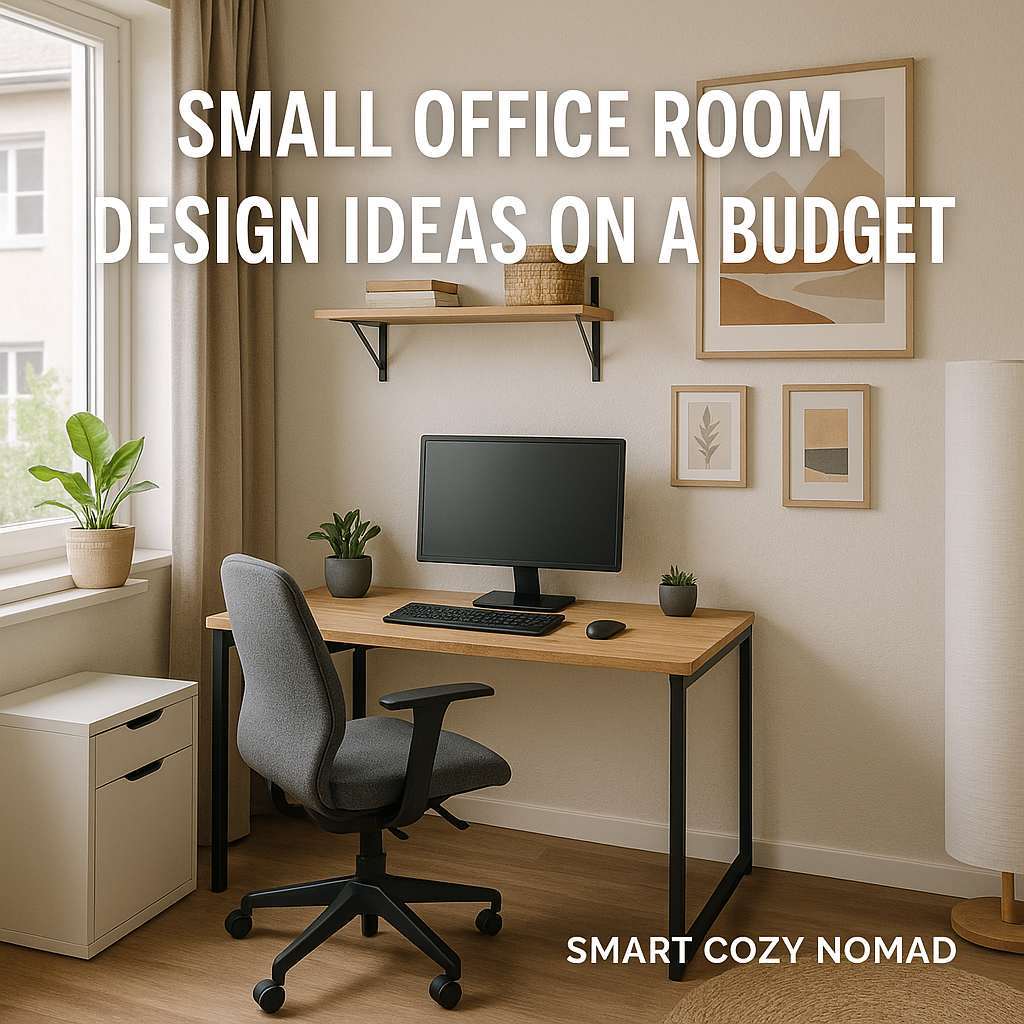
Use a slim desk that looks light in the room. Great for narrow rooms and shared spaces.
3. Corner L-shape
Use the corner with an L-shaped desk to create two work zones: computer on one side, paperwork on the other.
4. Multi-use foldable setup
Use a drop-leaf or fold-away desk for rooms that double as living spaces. Fold it down when not in use.
Furniture picks that save space and money
Choose pieces that do more than one thing. Mix new budget buys with thrifted or upcycled pieces.
- Compact desks: narrow depth, open legs to keep the room airy.
- Storage benches: sit and store files or supplies inside.
- Floating shelves: save floor space and add display room.
- Rolling carts: mobile storage you can tuck away.
- Secondhand desks and chairs: refinish or repaint to refresh them cheaply.
Lighting: small change, big impact
Good light improves mood and productivity. Layer three types of light: ambient, task, and accent.
- Ambient: overhead light or bright ceiling fixture.
- Task: desk lamp with adjustable arm for focused work.
- Accent: a small lamp, LED strip, or picture light to add warmth.
Choose LED bulbs to save energy and reduce heat. For official advice on lighting and energy efficiency, see Energy.gov’s lighting tips: energy.gov.
Color, texture, and decor on a budget
Light paint colors open up a small room. Add texture with rugs and textiles for a cozy feel.
- Paint: soft neutrals or a light pastel for calm and reflection.
- Accent wall: wallpaper or a removable mural for personality.
- Rug: a small area rug anchors the desk and softens echoes.
- Plants: one or two easy-care plants brighten the space and improve air quality.
Clever storage solutions
Declutter to create a calm space. Use vertical storage and hidden containers to maximize every inch.
- Floating shelves and pegboards above the desk.
- Baskets under the desk for supplies.
- Magazine files and vertical file holders to save shelf depth.
- Over-the-door organizers for small items.
Pegboard guide
Pegboards are cheap and flexible. Add baskets, hooks, and small shelves for tools, cords, and stationery.
Tech and cable management
Tidy cables make a small room feel ordered. Use basic cable channels or an under-desk tray to hide cords.
- Label cords with tags or colored tape.
- Use a power strip with surge protection and mount it under the desk.
- Shorten excess cable length with Velcro straps.
DIY projects that save money
Simple DIY updates add style and function for less.
- Paint an old desk or file cabinet for a fresh look.
- Make a simple shelf from pine boards and brackets.
- Create a desk organizer from wooden crates or cardboard boxes wrapped in fabric.
- Upcycle thrift frames for art or inspiration boards.
Where to shop smart
Look for deals at thrift stores, online marketplaces, and big-box budget stores. Sign up for newsletter discounts and check weekend sales.
- Thrift and consignment stores for unique furniture.
- Online marketplaces (local pickup can save delivery cost).
- Discount furniture stores and outlet sections.
- DIY stores for shelving, brackets, hooks, and hardware.
Small office room design ideas on a budget — step-by-step checklist
- Measure the room and take photos.
- Write down daily tasks and must-haves.
- Set a total budget and break it into categories.
- Choose a layout and basic color scheme.
- Find or buy a desk and chair that fit the plan.
- Add vertical storage (shelves or pegboard).
- Layer lighting: task lamp, overhead, and accent light.
- Declutter, organize cables, and add finishing textiles.
- Add a plant and a piece of art for warmth.
- Live in it for a week and tweak as needed.
Budget estimate table
Use this sample budget to plan. Prices are typical budget ranges and can vary by region.
| Item | Budget Range (USD) | Tips to Save |
|---|---|---|
| Desk | $40 – $200 | Buy secondhand or a simple console desk; refinish if needed. |
| Chair | $30 – $150 | Look for ergonomic used chairs or add lumbar cushions to thrift finds. |
| Storage (shelves, baskets) | $20 – $120 | Use DIY shelves and inexpensive baskets or bins. |
| Lighting | $15 – $100 | Choose LED desk lamp plus a simple overhead fixture. |
| Paint + supplies | $25 – $80 | Paint one accent wall or touch up trim rather than whole room. |
| Decor (rug, plant, art) | $20 – $120 | Use prints, thrift rugs, and low-cost plants like pothos. |
| Total (typical) | $150 – $770 | Many rooms can be refreshed under $300 with thrift finds and DIY. |
Materials and tools quick reference
| Item | Why you need it |
|---|---|
| Measuring tape | To measure furniture and room dimensions accurately. |
| Paint roller and brush | Quickly update walls or furniture with minimal skill. |
| Screwdriver and drill | Install shelves and mount power strips securely. |
| Velcro straps and cable clips | Organize cords and keep the desk tidy. |
| Level and studs finder | Hang shelves and heavy items safely. |
Lighting and ergonomics: basics that matter
Good posture and proper light keep you comfortable and focused. Small changes help a lot.
- Monitor at eye level to avoid neck strain.
- Desk height should let your elbows rest at 90 degrees.
- Use a desk lamp on the side opposite your writing hand to limit glare.
- Keep the keyboard and mouse close to avoid leaning forward.
For workplace safety and ergonomics guidance, reputable sources like the U.S. Occupational Safety and Health Administration provide useful tips: osha.gov/ergonomics.
Design ideas by style — quick inspiration
Pick one style and keep it simple. Mixing too many looks can feel chaotic in a small room.
Scandi minimal
- Light wood desk, white walls, minimal accessories.
- One plant and clean lines.
Cozy boho
- Warm rug, layered textiles, rattan baskets, soft lighting.
- Mix thrifted art for personality.
Modern industrial
- Dark metal accents, reclaimed wood, open shelves.
- Keep colors simple: black, gray, and natural wood tones.
Before-and-after mini plan (example)
Here is a small makeover you can replicate over a weekend.
- Clear the room and deep clean surfaces.
- Paint one accent wall a soft pastel or warm neutral.
- Place a compact desk against the window or wall.
- Install a pegboard and one floating shelf above the desk.
- Add a desk lamp, rug, and plant.
- Organize supplies in baskets and label them.
Common mistakes and how to avoid them
- Buying too-large furniture — measure before you buy.
- Over-accessorizing — less is more in small rooms.
- Poor lighting — skimping on task lighting reduces comfort.
- No cable plan — tangled cords make a room look messy.
Resources and helpful links
Need more technical or safety info? These trusted sources help:
- Lighting and energy efficiency: energy.gov
- Ergonomics and workplace setup: osha.gov
- Design tips and research articles from universities: try design departments at local universities (look for .edu guides) for research on light, color, and productivity.
FAQ — Small office room design ideas on a budget
These quick answers help beginners move forward with confidence.
1. How can I make a tiny office feel larger?
Use light paint, keep furniture low and slim, add mirrors, and focus on vertical storage. Clear floor space helps the eye travel and makes the room feel bigger.
2. What’s the most important piece of furniture for a small home office?
A comfortable chair is the best investment. If you have to save, choose a chair that supports your back and offers good posture. You can pair a simple desk with a great chair.
3. Can I set up a good workspace in a shared room or studio apartment?
Yes. Use a fold-down desk, room divider, or tall bookcase to create a distinct work zone. Keep the work area tidy so the whole room feels calm.
4. How do I pick lighting if I have limited outlets?
Use plug-in LED desk lamps and clamp lights. A power strip with surge protection gives more outlets. Consider battery-powered LED lights for accent lighting.
5. Which storage ideas are best for renters?
Use freestanding shelves, tension rods, and removable hooks. Pegboards mounted with anchors that don’t damage walls are another renter-friendly option if allowed.
6. Where can I find cheap desks and chairs that still look good?
Check thrift stores, Facebook Marketplace, Craigslist, and local buy-and-sell groups. Often a little sanding and paint make secondhand items look new and stylish.
7. How do I stay within a tight budget while still getting a professional look?
Choose two or three focal pieces (desk, chair, light). Keep the rest simple and neutral. Add personality with low-cost items like a plant, rug, or framed prints.
Final checklist before you start
- Room measured and layout chosen
- Budget set and shopping list ready
- Essential tools and paint on hand
- Key furniture and lighting bought or sourced
- Storage plan to declutter and organize
Conclusion — small changes, big comfort
Designing a small office room on a budget is about choices, not limits. Pick smart furniture, use vertical space, and layer light. Little DIYs and thrifted finds give big style for low cost.
Start with a clear plan, one focal piece, and a small budget for lighting and storage. Make changes slowly and live with the space for a week — you’ll know what really needs to change. You can create a smart, cozy nomad office that feels personal and productive without overspending.
Need help with a layout or shopping list? Tell me your room size and budget, and I’ll give a simple plan you can follow step by step.