
Transform your cooking space into a serene and functional area by understanding what you truly need in a minimalist kitchen. This guide helps you declutter ruthlessly, identify essential tools, and embrace multi-functional items. Learn how to create an efficient, stress-free environment that supports your culinary habits without excess.
What Do I Need in a Minimalist Kitchen?
Ever dream of a kitchen that feels calm, organized, and inspiring instead of cluttered and overwhelming? You’re not alone! The concept of a minimalist kitchen is gaining popularity, and for good reason. It’s about more than just having fewer things; it’s about having the right things – items that serve a purpose, bring joy, and truly support your cooking and dining habits.
Imagine effortlessly finding what you need, cooking with ease, and enjoying a sparkling clean space without a mountain of forgotten gadgets. This isn’t just a fantasy; it’s an achievable reality! A minimalist kitchen can reduce stress, save time, and even encourage healthier eating by simplifying your cooking process.
In this comprehensive guide, we’ll walk you through everything you need to know about creating your ideal minimalist kitchen. We’ll help you assess your current setup, declutter wisely, and thoughtfully select essential tools, appliances, and pantry staples. By the end, you’ll have a clear roadmap to transform your kitchen into a functional, beautiful, and peaceful hub of your home.
Key Takeaways
- Assess Your Lifestyle First: Before decluttering, understand your unique cooking habits, favorite recipes, and entertaining needs to truly determine what kitchen items are essential for you.
- Embrace Multi-Functionality: Prioritize tools and appliances that can serve multiple purposes, like a single versatile pot or an immersion blender that can chop and blend, reducing clutter significantly.
- Quality Over Quantity: Invest in high-quality, durable items that will last, rather than accumulating many cheap, single-use gadgets that break easily and take up valuable space.
- Declutter Ruthlessly: Be honest about what you use. Employ the “one in, one out” rule, remove duplicates, and get rid of items you haven’t touched in a year to streamline your minimalist kitchen.
- Curate a Minimalist Pantry: Focus on versatile staple ingredients that form the basis of many meals, reducing food waste and making meal planning simpler and more efficient.
- Organize for Accessibility: Once decluttered, arrange your essential items logically and visibly. Easy access means less frustration and a more enjoyable cooking experience in your simplified kitchen.
Step 1: Understand Your Cooking Style and Needs
Before you even think about tossing things out or buying new items for your minimalist kitchen, the most critical step is introspection. What kind of cook are you? What do you actually do in your kitchen? Skipping this step often leads to decluttering regret or an inability to maintain a minimalist space.
Assess Your Current Habits
Take a week or two to observe yourself. What do you cook most often? Do you bake regularly? Are you a quick weeknight meal kind of person, or do you enjoy elaborate weekend projects? Pay attention to the tools you reach for instinctively. Are there items you use every day, weekly, monthly, or hardly ever? Be brutally honest. If that fancy juicer has been gathering dust for six months, it’s probably not a core part of your routine.
Practical Tip: Keep a small notebook in your kitchen and jot down every item you use for a few days. You might be surprised by how few items are truly essential.
Identify Your Go-To Meals
Think about your top 5-10 regular meals. What specific pots, pans, and utensils are absolutely necessary to prepare these dishes? If your family lives on pasta, stir-fries, and roasted vegetables, you’ll need a good pasta pot, a wok or large skillet, and a sturdy baking sheet. You won’t need a specialized sushi-making kit unless that’s a frequent, staple meal for you. Your goal is to support your actual eating habits, not aspirational ones.
Consider Entertaining Habits
Do you frequently host dinner parties? If so, you might need a few more place settings, serving dishes, or a larger pot than someone who rarely entertains. However, even for entertaining, a minimalist approach is possible. Focus on versatile serving pieces rather than single-use items. Can your large mixing bowl double as a salad bowl? Can your baking sheet serve as a platter for appetizers? Thoughtful selection is key for a truly minimalist kitchen.
Step 2: Declutter Ruthlessly
With a clear understanding of your needs, it’s time to confront the clutter. This step is often the most daunting but also the most liberating. Remember, the goal of a minimalist kitchen is functionality and peace, not deprivation.
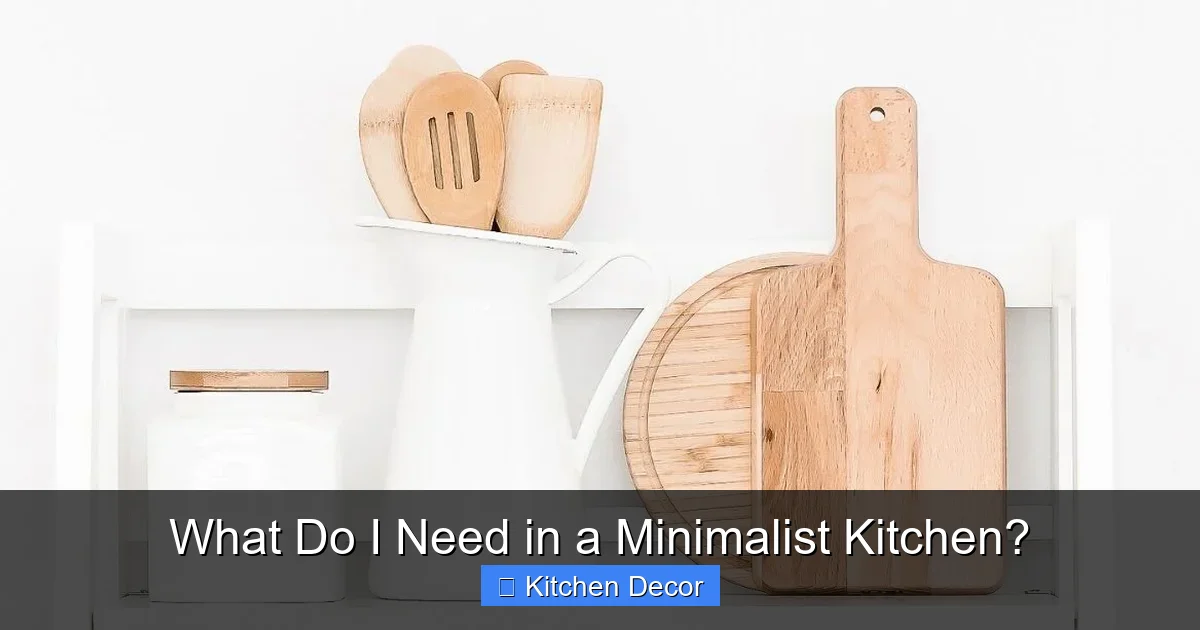
Visual guide about What Do I Need in a Minimalist Kitchen?
Image source: organisemyhouse.com
The “Keep, Donate, Toss” Method
Go through every single item in your kitchen – yes, every spoon, every container, every appliance. Create three piles:
- Keep: Items you use regularly (at least weekly/monthly) and that are in good condition. These are your true essentials for a minimalist kitchen.
- Donate/Sell: Items that are still functional and in good condition but you no longer use or need. Someone else can benefit from them.
- Toss/Recycle: Broken items, expired food, things that are too far gone to be useful to anyone.
Be honest with yourself. If you haven’t used something in over a year, chances are you won’t. Sentimental items can be tricky; consider if they truly belong in a functional kitchen or perhaps in a memory box elsewhere.
Remove Duplicates
Do you have three spatulas, four vegetable peelers, or five pizza cutters? Most kitchens accumulate duplicates over time. Identify your favorite, most functional version of each tool and let the others go. A minimalist kitchen thrives on having just one or two high-quality versions of essential items.
Ditch Single-Use Gadgets
This is a big one for decluttering. Think about garlic presses, avocado slicers, corn cob holders, or specialized egg cookers. Can a good chef’s knife and your hands perform the same function? Almost always, the answer is yes. These gadgets often take up valuable drawer space and offer minimal real benefit over a versatile knife or general utensil. Embrace multi-functional tools instead.
Step 3: The Absolute Essentials (Cooking & Prep)
Once you’ve cleared the clutter, it’s time to focus on the core items that truly belong in a well-equipped minimalist kitchen. These are the workhorses that will enable you to cook a wide variety of meals efficiently.
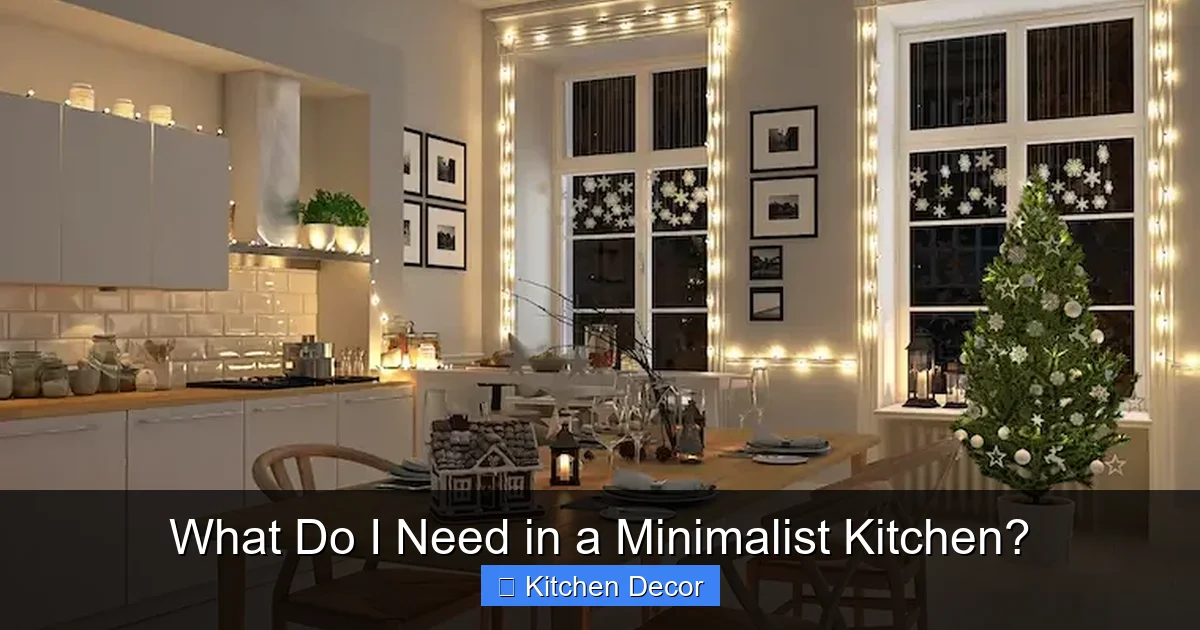
Visual guide about What Do I Need in a Minimalist Kitchen?
Image source: frugalminimalistkitchen.com
Cookware
- One Large Pot (5-7 quarts): Perfect for pasta, soups, stews, boiling water, and batch cooking. A Dutch oven is a fantastic multi-purpose option.
- One Medium Saucepan (2-3 quarts): Ideal for smaller portions, sauces, grains, or reheating.
- One Large Skillet/Frying Pan (10-12 inches): Essential for sautéing, searing, frying, and stir-fries. A non-stick or cast iron pan offers versatility.
- Optional: One Smaller Skillet (7-8 inches): Useful for eggs or single servings if you frequently cook for one or two.
Practical Tip: Look for sets where lids are interchangeable between pots and pans to minimize storage needs.
Bakeware
- One Sturdy Baking Sheet: For roasting vegetables, baking cookies, sheet pan dinners, and even reheating. Look for a half-sheet size.
- One Versatile Baking Dish (9×13 inch): Great for casseroles, lasagna, brownies, and roasting. Glass or ceramic options are generally good.
Cutting & Prep
- One High-Quality Chef’s Knife (8-inch): Your most important tool. Invest in a good one and learn how to maintain it. It handles most cutting tasks.
- One Paring Knife: For smaller, more delicate tasks.
- One Serrated Knife (bread knife): Excellent for bread, tomatoes, and anything with a tough exterior and soft interior.
- One Large Cutting Board: A sturdy, non-slip board is crucial for safety and efficiency. Consider wood or a high-quality composite.
- Vegetable Peeler: For fruits and vegetables.
- Box Grater: For cheese, vegetables, and zest.
- Measuring Cups and Spoons: A basic set of dry measuring cups, liquid measuring cup, and measuring spoons.
- Colander: For draining pasta, washing produce.
Mixing & Serving Utensils
- 2-3 Mixing Bowls: A set of nesting bowls (small, medium, large) saves space and is incredibly useful for food prep. Stainless steel or glass are durable choices.
- Spatula (Heat-Resistant): For flipping and stirring.
- Wooden Spoon(s): Versatile for stirring, tasting.
- Tongs: Great for flipping, serving, and grabbing hot items.
- Whisk: For blending ingredients.
- Can Opener: A manual one is simple and reliable.
- Bottle Opener/Corkscrew: For beverages.
Step 4: Dining & Drinking Essentials
For your minimalist kitchen, dining essentials should be chosen with your household size and occasional entertaining in mind. The goal is enough for daily use, plus a few extras for guests, without excess.
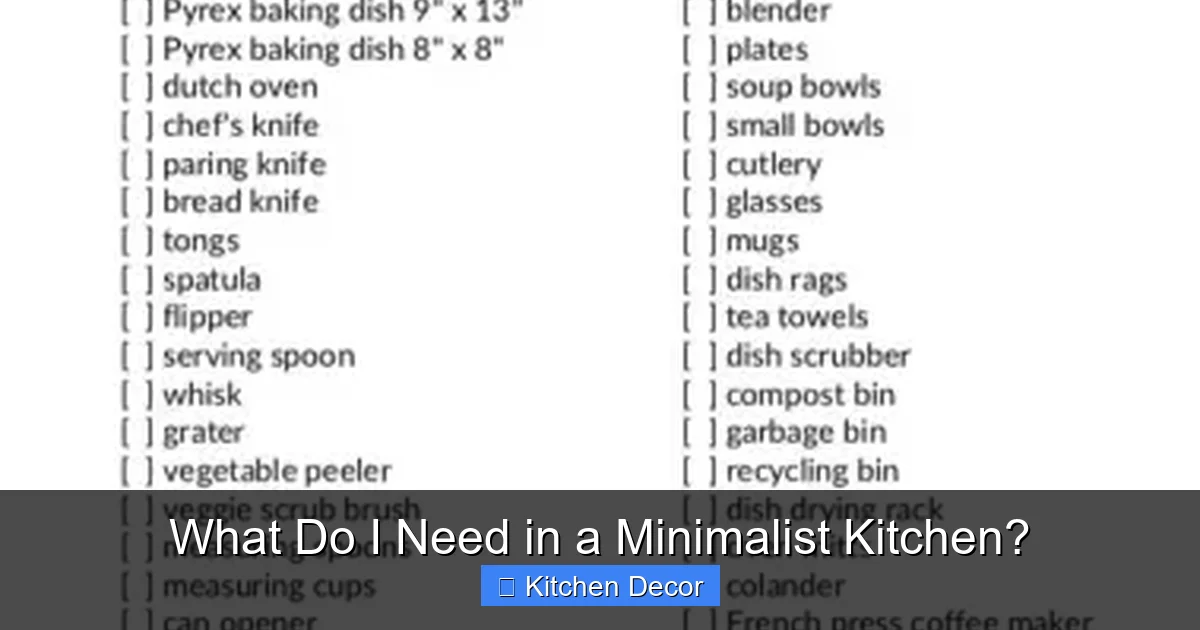
Visual guide about What Do I Need in a Minimalist Kitchen?
Image source: frugalminimalistkitchen.com
Plates, Bowls, and Glasses
Aim for a set of dishes that matches the number of people in your household, plus two to four extra settings. Choose neutral colors and simple designs that are timeless and durable.
- Dinner Plates: 4-6 (depending on household size).
- Small/Salad Plates: 4-6.
- Bowls: 4-6 (versatile for cereal, soup, salad).
- Drinking Glasses: 4-6 (all-purpose for water, juice).
Cutlery
Similar to dishes, have enough forks, knives, and spoons for your household plus a couple of guests. A basic set of 4-6 place settings is usually sufficient for a minimalist kitchen.
- Forks: 4-6.
- Knives (table knives): 4-6.
- Spoons (teaspoons and tablespoons): 4-6 of each.
Mugs/Cups
If you enjoy coffee or tea, a couple of mugs per person is a good target. Again, choose simple, durable options. For a truly minimalist kitchen, consider if your drinking glasses can double as hot beverage cups if they are heat-safe.
- Mugs: 2 per person in the household.
Step 5: Storage & Organization
A minimalist kitchen isn’t just about what you don’t have; it’s also about how well you manage what you do have. Smart storage and organization are key to keeping your streamlined space functional and tidy.
Food Storage Containers
Invest in a matching set of good quality, stackable food storage containers. Glass containers with airtight lids are excellent as they are durable, easy to clean, and can go from fridge to oven (without the lid) to microwave. Aim for a variety of sizes that nest within each other when empty. Ditch any mismatched plastic containers without lids.
- Glass Food Storage Containers: A set of 3-5 varying sizes.
Pantry Organization
For dry goods like pasta, rice, flour, and sugar, consider using airtight glass jars or clear containers. This keeps your pantry looking cohesive, makes it easy to see what you have, and protects food from pests. Label everything clearly. A well-organized pantry is a core element of a functional minimalist kitchen.
- Airtight Jars/Containers: For essential dry goods.
- Labels: For clear identification.
Cleaning Supplies
Keep your cleaning supplies minimal and multi-purpose. You don’t need a specific cleaner for every surface. A good all-purpose cleaner, dish soap, a scrub brush or sponge, and a few reusable cloths (microfiber or cotton) are usually all you need to keep your minimalist kitchen sparkling.
- All-Purpose Cleaner: One good quality, versatile cleaner.
- Dish Soap: For handwashing.
- Reusable Cleaning Cloths/Sponges: A small supply.
Step 6: Smart Appliances for a Minimalist Kitchen
Appliances can quickly become clutter if not chosen carefully. For a minimalist kitchen, the emphasis is on utility, frequency of use, and multi-functionality. Only keep or acquire appliances that you genuinely use several times a week, or that significantly streamline a task you perform regularly.
Coffee Maker (if essential)
If coffee is a daily ritual, a simple and reliable coffee maker is a must. Options range from a basic drip machine to a French press or pour-over system. Choose one that fits your brewing preference and takes up minimal counter space. A French press or Aeropress are compact, minimalist options.
Toaster (if essential)
If toast is a regular part of your breakfast or snack routine, a simple two-slice toaster is efficient. If you only make toast occasionally, consider if your oven’s broiler can suffice, eliminating the need for a separate appliance.
Immersion Blender/Food Processor (Multi-functional)
Instead of a bulky stand blender and a separate food processor, consider an immersion blender with chopper attachments. These often come with whisk attachments too, making them incredibly versatile for soups, sauces, smoothies, and chopping. This is a prime example of a multi-functional tool perfect for a minimalist kitchen.
Electric Kettle
If you drink a lot of tea, instant coffee, or regularly need hot water for cooking, an electric kettle is a highly efficient and justifiable appliance. If not, a stovetop kettle or simply boiling water in a pot will do.
Consider these “optional but smart” for a minimalist kitchen:
- Slow Cooker/Instant Pot: If you frequently cook hands-off meals or batch cook. An Instant Pot combines several functions into one.
- Hand Mixer: If you bake regularly but don’t want a stand mixer.
Remember, the best appliances for your minimalist kitchen are the ones you will use consistently and that bring true value to your daily routine.
Step 7: Minimalist Pantry Staples
A minimalist kitchen extends beyond physical tools to what you stock in your pantry. A well-curated pantry means less food waste, easier meal planning, and fewer last-minute grocery runs. Focus on versatile ingredients that can be used in multiple dishes.
Basic Oils, Vinegars, Salt, Pepper
These are the foundation of almost any dish.
- Olive Oil: For cooking and finishing.
- Vegetable Oil (or another neutral oil like avocado/canola): For high-heat cooking.
- Apple Cider Vinegar / Red Wine Vinegar: For dressings, marinades, deglazing.
- Salt: Kosher or sea salt for cooking, fine salt for finishing.
- Black Pepper: Whole peppercorns with a grinder are ideal for fresh flavor.
Grains, Pasta, Legumes
These are filling, affordable, and form the base of countless meals.
- Rice: White or brown rice.
- Pasta: A couple of versatile shapes (e.g., spaghetti, penne).
- Oats: For breakfast or baking.
- Dried Lentils/Beans: (or canned for convenience) excellent source of protein and fiber.
Canned Goods
Essential for quick meals and when fresh produce isn’t available.
- Canned Tomatoes: Diced, crushed, or whole peeled for sauces, stews.
- Canned Beans: Black beans, chickpeas, kidney beans.
- Canned Tuna/Salmon: For quick protein.
Spices (A Curated Selection)
Instead of a huge rack of rarely used spices, focus on the ones you genuinely use.
- Everyday Spices: Garlic powder, onion powder, paprika, cumin, oregano, chili powder.
- Herbs: Dried parsley, basil, thyme.
- Optional: Your favorite unique spice blends for specific cuisines you love.
Other Essentials
- Flour: All-purpose.
- Sugar: Granulated.
- Honey/Maple Syrup: Sweetener.
- Broth/Stock: Chicken, vegetable, or beef for soups and sauces.
- Garlic & Onions: Aromatic foundations for many dishes.
- Potatoes: Versatile vegetable.
- Eggs: Quick protein.
The goal is to have a functional collection that allows you to improvise and create a variety of meals, making your minimalist kitchen truly efficient.
Tips for Maintaining a Minimalist Kitchen
Achieving a minimalist kitchen is a great accomplishment, but maintaining it requires ongoing effort and mindful habits. Here are some strategies to keep your space clutter-free and functional.
The “One In, One Out” Rule
This is perhaps the most effective rule for preventing clutter creep. If you buy a new item for your kitchen, commit to getting rid of an existing, similar item. For instance, if you get a new coffee mug, an old one must go. This ensures your collection of items remains stable and purposeful.
Regular Decluttering Checks
Make it a habit to do a quick decluttering sweep every few months. Open drawers, peer into cupboards, and assess your pantry. Are there items you haven’t used? Expired foods? Broken gadgets? Don’t let things accumulate. A quick, regular check prevents overwhelming clean-ups later, keeping your minimalist kitchen tidy.
Focus on Quality Over Quantity
When you do need to replace an item or purchase something new, invest in high-quality, durable pieces. A good quality chef’s knife will last for years and perform better than several cheaper knives. This mindset reduces waste, saves money in the long run, and ensures your minimalist kitchen is equipped with reliable tools.
Embrace Multi-Functional Items
Continuously seek out tools that serve multiple purposes. A Dutch oven can be a soup pot, a bread baker, and a frying vessel. An immersion blender can chop, blend, and whisk. The more uses an item has, the more value it brings to your minimalist kitchen and the less dedicated space it demands.
Everything Has a Home
Once you’ve decided what to keep, designate a specific home for every single item. When you’re done using something, put it back immediately. This simple habit keeps your counters clear and your drawers organized. It removes decision fatigue and ensures your minimalist kitchen always looks tidy.
Troubleshooting Your Minimalist Kitchen Journey
Transitioning to a minimalist kitchen can present its challenges. Here are some common hurdles and how to overcome them.
“I feel like I don’t have enough!”
This is a common sentiment after an initial declutter. First, distinguish between “need” and “want.” Do you genuinely *need* that specific gadget for a meal you regularly make, or do you just miss the *option* of having it? Give yourself time to adjust. If, after a few weeks, you find yourself consistently needing a specific item you got rid of, reacquire it thoughtfully. The goal is a functional kitchen, not an empty one.
“My family isn’t on board.”
Minimalism works best when everyone in the household understands and supports the vision. Start small and involve them in the process. Explain the benefits: less cleaning, easier finding of items, less stress. Let them choose a few items they truly can’t live without. Focus on shared spaces first, like dishes and general tools, and be flexible with personal items. Lead by example and let them experience the positive changes in your minimalist kitchen.
“I keep buying new things.”
This often stems from impulse purchases or not having a clear idea of what you already own. Before buying anything new, ask yourself: “Do I already have something that can do this job?” “How often will I truly use this?” “Where will it live in my kitchen?” Make a rule to wait 24-48 hours before purchasing a non-essential item. This pause can help you distinguish between a fleeting desire and a genuine need for your minimalist kitchen.
Conclusion: Embrace Your Functional, Minimalist Kitchen
Creating a minimalist kitchen is a journey, not a destination. It’s a continuous process of mindful consumption, thoughtful organization, and honest self-assessment about what truly supports your lifestyle. By following these steps, you’ll not only declutter your physical space but also free up mental space, reducing stress and enhancing your enjoyment of cooking and dining.
Imagine a kitchen where every item has a purpose, every drawer is organized, and every surface is easy to clean. This isn’t just about aesthetics; it’s about creating a more efficient, peaceful, and joyful environment. A minimalist kitchen empowers you to focus on what truly matters: nourishing yourself and your loved ones, and savoring the simple pleasures of home.
Start small, be patient with yourself, and celebrate each step you take towards your ideal minimalist kitchen. You’ll soon discover the profound benefits of living with less, where quality triumphs over quantity, and functionality reigns supreme.