
Navigating appliance placement in a small kitchen can feel like a puzzle, but with strategic planning, you can create a highly functional and beautiful space. This guide empowers you to assess your unique kitchen, prioritize essential appliances, and discover innovative solutions for everything from your refrigerator to your coffee maker, ensuring every inch works harder for you.
Where to Put Appliances in a Small Kitchen
Ever feel like your small kitchen is playing a game of Tetris with your appliances? You’re not alone! Many homeowners with compact cooking spaces struggle with finding the perfect spot for everything, from the mighty refrigerator to the humble toaster. The challenge isn’t just about fitting things in; it’s about creating a kitchen that’s functional, efficient, and enjoyable to cook in. In a small kitchen, every inch counts, and smart appliance placement can transform a cramped space into a culinary haven.
This comprehensive guide will walk you through everything you need to know about where to put appliances in a small kitchen. We’ll cover strategic planning, clever placement ideas for both large and small appliances, and tips for maximizing every bit of available space. By the end, you’ll have the tools and inspiration to design a small kitchen that works beautifully for you.
Key Takeaways
- Measure Twice, Plan Once: Before moving anything, meticulously measure your kitchen space and all appliances to ensure proper fit and clearance, preventing costly mistakes.
- Define Workflow Zones: Organize your kitchen into distinct zones for prep, cooking, and cleaning. Placing appliances according to these zones streamlines your tasks, even in a compact area.
- Prioritize Major Appliances Wisely: Position your refrigerator, range, and dishwasher first, as they dictate the overall layout. Consider the “kitchen triangle” adapted for small spaces to maintain efficiency.
- Embrace Vertical & Hidden Storage: For small appliances, look upwards to wall shelves and racks, or outwards to appliance garages and pull-out shelves to keep countertops clear and maximize space.
- Invest in Multi-Functional & Compact Appliances: Opt for appliances that serve multiple purposes or come in smaller, space-saving designs to reduce clutter and increase versatility.
- Optimize Power and Ventilation: Ensure major appliances have proper electrical outlets and ventilation. Planning these aspects early prevents safety hazards and functionality issues.
- Regular Decluttering is Essential: A small kitchen quickly feels overwhelmed. Regularly remove non-essential items and store less frequently used appliances out of sight to maintain a tidy and spacious feel.
Step 1: Assess Your Kitchen’s Layout and Your Needs
Before you even think about moving an appliance, take a moment to understand your kitchen’s existing structure and how you actually use it. This foundational step is crucial for making informed decisions about where to put appliances in a small kitchen.
Measure Everything Meticulously (Space, Appliances, Door Swings)
Grab your tape measure and a notepad. This isn’t just about measuring the big stuff; it’s about precision. Write down the dimensions of your entire kitchen space: length, width, and ceiling height. Then, measure all your appliances – height, width, and depth. Don’t forget to measure the swing radius of refrigerator doors, oven doors, and cabinet doors. In a small kitchen, a door that can’t open fully can completely derail your workflow. Also, measure the available wall space, counter space, and inside cabinets.
Define Your Workflow Zones (Prep, Cook, Clean)
Even a small kitchen can benefit from distinct zones. Think about the natural flow of cooking: prepping ingredients, cooking them, and then cleaning up. Imagine yourself moving through these tasks. Where do you chop vegetables? Where do you mix ingredients? Where do you typically stand to stir a pot? Identifying these zones will guide your appliance placement, ensuring that related items are close together. This makes the kitchen more intuitive and efficient, even when space is tight.
Identify Essential vs. Non-Essential Appliances
Be honest with yourself. Which appliances do you use every single day? Which ones do you use once a week? Once a month? And which ones are gathering dust? In a small kitchen, every item competes for valuable space. Categorize your appliances: “Must-Haves,” “Frequently Used,” and “Rarely Used.” This will help you decide what gets prime placement, what can be stored away, and what might even be donated or sold. Don’t let sentimental attachment dictate practical decisions when figuring out where to put appliances in a small kitchen.
Step 2: Prioritize Your Major Appliances
Your major appliances – the refrigerator, range/oven, and dishwasher – are the anchors of your kitchen. Their placement often dictates the entire layout of a small kitchen, so getting these right is paramount.

Visual guide about Where to Put Appliances in a Small Kitchen
Image source: plusmood.com
Refrigerator Placement: The Cold Zone
The refrigerator is often the largest appliance and needs to be accessible from multiple points. Ideally, it should be placed near an entrance to the kitchen and close to your prep area. This allows easy access for grabbing ingredients without disrupting the main cooking workflow. Consider a counter-depth refrigerator to avoid it protruding too far into a narrow walkway. Also, ensure there’s enough clearance for the door to open fully, especially if it’s against a wall. A good rule of thumb for where to put appliances in a small kitchen, specifically the fridge, is at the edge of the kitchen triangle.
Range/Cooktop and Oven: The Hot Zone
Your cooking appliance is the heart of the “hot zone.” It needs to be placed on an exterior wall if possible for proper ventilation, or at least with adequate clearance from flammable materials. Ensure there’s enough counter space on either side of the range for placing hot pans and preparing food. Avoid placing the range directly next to the refrigerator, as the heat can make the fridge work harder. Safety is key here – don’t compromise on proper spacing. In a small kitchen, an all-in-one range (cooktop and oven combined) is often the most space-efficient choice.
Dishwasher: The Clean-Up Zone
The dishwasher should be located near the sink for easy plumbing access and seamless loading/unloading. It’s best placed to the right or left of the sink, depending on your dominant hand and the direction of your workflow. Ensure there’s enough space in front of the dishwasher for its door to open fully without blocking main pathways or other essential appliances. Compact dishwashers or drawer dishwashers are fantastic solutions for a small kitchen where every inch for appliance placement truly matters.
The “Kitchen Triangle” in a Small Space
The traditional kitchen triangle (refrigerator, sink, range) is a golden rule for efficiency. In a small kitchen, you might not achieve a perfect triangle, but the *principle* remains: keep these three primary workstations within easy reach of each other. Aim for a layout where you can move between them with minimal steps and without obstacles. This intelligent appliance placement ensures a smooth workflow even in a compact area.
Step 3: Smart Placement for Small Appliances
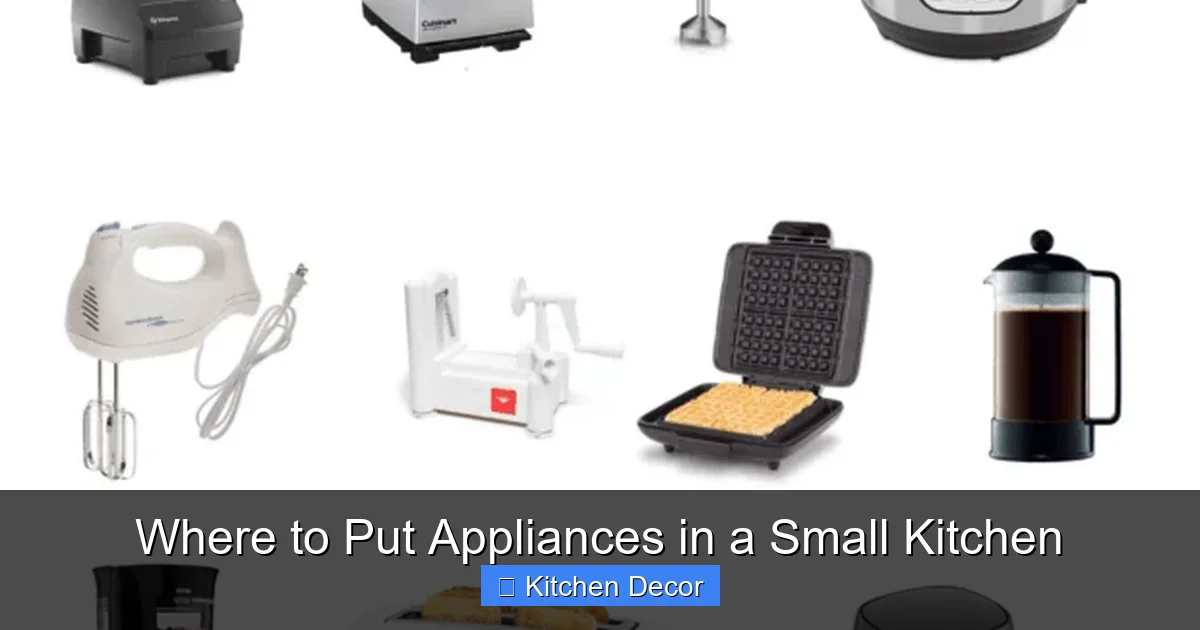
Small appliances can quickly clutter countertops in any kitchen, but especially in a small one. Strategic placement is vital to maintain functionality and visual appeal.
Visual guide about Where to Put Appliances in a Small Kitchen
Image source: tasteslovely.com
Countertop Solutions: Grouping and Zones
For frequently used small appliances like your coffee maker, toaster, or blender, designate specific “zones” on your countertop. Grouping similar items (e.g., a “breakfast station” with the coffee maker and toaster) can make the area feel more organized. However, the ultimate goal in a small kitchen is often to keep countertops as clear as possible. Only keep out what you use daily, and even then, consider compact models.
Vertical Storage: Shelves, Racks, and Wall Mounts
When horizontal space is limited, look up! Vertical storage is a game-changer for where to put appliances in a small kitchen. Install floating shelves above your counter for a microwave or other small appliances. Wall-mounted racks can hold blenders or stand mixers. Even magnetic knife strips can free up drawer space. Think about pegboards with hooks for hanging tools, freeing up counter real estate.
Inside Cabinets: Slide-Outs and Organizers
Cabinets aren’t just for dishes. Equip lower cabinets with pull-out shelves or rollout trays to easily access less frequently used small appliances without having to bend and dig. Use shelf risers in upper cabinets to create two levels of storage for smaller items like immersion blenders or hand mixers. Clear bins and drawer dividers can keep smaller accessories organized, preventing them from becoming a tangled mess.
The Hidden Appliance: Appliance Garages and Pull-Out Shelves
For a truly clutter-free look, consider an appliance garage. This is a dedicated cabinet or corner unit on your countertop with a door that hides appliances when not in use. You simply slide them out when needed. Another fantastic solution for a small kitchen is a heavy-duty pull-out shelf within a base cabinet, specifically designed to hold a stand mixer or a food processor. These can be pulled out and even lifted to counter height for easy use, then tucked away. This is a clever answer to where to put appliances in a small kitchen when you want them out of sight.
Step 4: Embrace Multi-Functional and Compact Appliances
In a small kitchen, smart choices about the appliances themselves can make a huge difference in placement and overall efficiency.

Visual guide about Where to Put Appliances in a Small Kitchen
Image source: sweetandsavorybyshinee.com
Two-in-One Wonders
Look for appliances that can do double duty. A toaster oven that also air-fries, a microwave that doubles as a convection oven, or an instant pot that pressure cooks, slow cooks, and sautés. These multi-functional units reduce the number of individual items you need, freeing up precious counter or cabinet space. This is a smart approach to appliance placement and optimization for a small kitchen.
Miniaturized Versions
Many major appliance brands now offer compact or apartment-sized versions of their products. Think 18-inch dishwashers, 24-inch wide refrigerators, or two-burner cooktops. These smaller footprints can fit into tight spaces where full-sized appliances simply wouldn’t work, making them ideal for a small kitchen. Even small appliance versions, like mini food processors or hand blenders, can save space compared to their larger counterparts.
Portable and Storable Options
Consider appliances that can be easily moved and stored away when not in use. A high-quality portable induction cooktop can be stored in a drawer and brought out only when extra burners are needed. A hand mixer takes up far less space than a stand mixer if you don’t bake frequently. Foldable cutting boards, collapsible colanders, and nesting bowls also contribute to a clutter-free small kitchen.
Step 5: Optimize Storage and Workflow
Beyond individual appliance placement, consider how the overall storage and flow of your small kitchen can be improved.
Utilize Every Inch: Corners, Above Cabinets, Toe Kicks
Don’t let any space go to waste. Corner cabinets can be fitted with lazy Susans or pull-out shelves to make them more accessible. The space above your upper cabinets can be used for displaying less frequently used items or attractive decor. Even toe-kick drawers (drawers built into the base of your cabinets) can offer surprisingly useful storage for shallow items like platters or baking sheets. These often-overlooked spots are prime candidates for where to put appliances in a small kitchen that are not daily essentials.
Create Dedicated Zones
Even in a small kitchen, creating distinct zones for specific tasks can make a world of difference. A “baking zone” might have your mixer, measuring cups, and flour stored together. A “coffee station” can group your coffee maker, mugs, and beans. This cuts down on unnecessary movement and makes finding what you need much easier.
Think About Access and Ergonomics
When deciding where to put appliances in a small kitchen, consider how easy it is to reach and use them. Heavy items like a stand mixer should be placed on a pull-out shelf or a sturdy countertop spot where they don’t require heavy lifting. Frequently used items should be at eye level or easily accessible without excessive bending or stretching. Good ergonomics prevent strain and make cooking more enjoyable.
Step 6: Consider Power and Ventilation
These practical considerations are often overlooked but are absolutely essential for a safe and functional small kitchen.
Electrical Outlets: Where You Need Them
Plan your electrical outlets carefully. You need enough outlets for your countertop small appliances, and they should be conveniently located where you intend to use those appliances. Avoid relying heavily on extension cords, as they can be a fire hazard and clutter your small space. For major appliances like refrigerators, ranges, and dishwashers, ensure dedicated circuits and proper wiring are in place, according to local codes.
Ventilation for Cooking Appliances
Proper ventilation is crucial, especially in a small kitchen where cooking odors and grease can quickly accumulate. Ensure your range or cooktop has an adequately sized range hood that vents to the outside. If external venting isn’t possible, opt for a high-quality recirculating hood with good filters. Good ventilation keeps your kitchen air clean, prevents grease buildup, and improves overall comfort.
Step 7: Aesthetic Considerations and Decluttering
Functionality is key, but don’t forget the visual impact of your appliance placement in a small kitchen. A cohesive and uncluttered look can make the space feel larger and more inviting.
Keep it Visually Light
In a small kitchen, visual clutter can make the space feel even smaller. Opt for appliances with a sleek design or a consistent color palette. Consider built-in appliances where possible, as they create a seamless look. If you have open shelving, arrange items neatly and avoid overcrowding. The goal is to create a sense of spaciousness, not chaos.
Regular Decluttering is Key
This isn’t a one-time project; it’s an ongoing habit. Regularly review your appliances and kitchen items. If something hasn’t been used in months, consider storing it elsewhere (like a pantry closet or garage) or letting it go. A small kitchen thrives on minimalism and only keeping what truly serves a purpose. This constant re-evaluation helps you maintain optimal appliance placement and an organized environment.
Troubleshooting Common Small Kitchen Challenges
Even with the best planning, small kitchens present unique hurdles. Here are solutions to common dilemmas:
Limited Counter Space
- Embrace Mobile Solutions: A kitchen island on wheels or a butcher block cart can provide extra prep space and storage, which can be moved out of the way when not needed.
- Over-the-Sink Solutions: Use cutting boards or dish drying racks that fit over your sink, turning it into temporary counter space.
- Appliance Garages & Pull-Outs: As mentioned, these are perfect for hiding appliances and freeing up valuable surface area.
Awkward Layouts
- Professional Help: Don’t hesitate to consult a kitchen designer. They specialize in optimizing challenging spaces and can offer creative solutions for where to put appliances in a small kitchen that you might not have considered.
- Custom Cabinetry: While more expensive, custom cabinets can be designed to fit awkward nooks and crannies perfectly, maximizing storage and appliance integration.
- Modular Units: Consider modular kitchen units that can be configured to fit your specific layout, offering flexibility.
Too Many Appliances
- Strict Prioritization: Revisit Step 1. If you truly have too many appliances for your space, you’ll need to make tough decisions. Keep only the most essential and frequently used items.
- Off-Site Storage: For seasonal items (like a large slow cooker used only for holiday meals) or special occasion appliances, consider storing them in a pantry, basement, or garage.
- Digital Alternatives: Can some functions be replaced by a smartphone app or a single multi-cooker? Think innovatively about reducing the sheer number of physical gadgets.
Conclusion
Tackling appliance placement in a small kitchen might seem daunting, but with a thoughtful approach, it’s entirely achievable. By starting with meticulous planning, prioritizing your major appliances, embracing clever storage solutions for smaller gadgets, and making smart choices about the appliances themselves, you can create a highly efficient and aesthetically pleasing culinary space. Remember, a small kitchen doesn’t mean sacrificing functionality or style; it simply means being more strategic and creative with every decision. Embrace these tips, and you’ll soon discover that your compact kitchen can be just as mighty and enjoyable as any large one.