
Feeling frustrated asking, “Why is my kitchen hard to organize?” You’re not alone! Many kitchens struggle with clutter, inefficient layouts, and a lack of proper systems. This guide will help you identify the root causes of disorganization, from too much stuff to poor storage. Learn practical strategies to declutter, optimize your space, and implement lasting organizational habits, transforming your kitchen into a functional, enjoyable hub for your home.
Why Is My Kitchen Hard to Organize?
Do you ever stare at your kitchen cabinets, drawers, and countertops, feeling a wave of frustration wash over you? You’re not alone if you constantly ask yourself, “Why is my kitchen hard to organize?” It’s a common dilemma in homes everywhere. The kitchen, often the heart of the home, quickly becomes a magnet for clutter, misplaced items, and general disarray. This can lead to stress, wasted time searching for things, and a less enjoyable cooking experience.
You might have tried to organize it before, only to find the chaos creeping back within weeks. This guide is here to help you understand the deep-seated reasons why your kitchen might be hard to organize. More importantly, we’ll provide practical, step-by-step strategies to tackle these challenges head-on. By the end, you’ll have a clear roadmap to create a functional, beautiful, and sustainable organizational system that truly works for you and your family.
Let’s dive in and transform your kitchen from a source of stress into a space of calm and efficiency.
Key Takeaways
- Identify the Root Causes: Understand that common issues like excess clutter, inefficient layouts, and lack of a clear system are often why your kitchen is hard to organize. Acknowledging these problems is the first step towards a solution.
- Embrace a Mindset Shift: Overcome overwhelm by breaking down the organizing process into small, manageable tasks. Focus on progress over perfection and visualize the functional kitchen you desire.
- Declutter Relentlessly: The most crucial step is to ruthlessly purge items you don’t use, need, or love. Categorize, use the “four-box method,” and tackle duplicates to significantly reduce visual and physical clutter.
- Optimize Your Space: Designate specific “zones” for different kitchen activities (prep, cooking, storage) and maximize vertical space with smart solutions. An optimized layout improves workflow and makes items easier to find.
- Invest in Smart Storage Solutions: Utilize tools like drawer organizers, pantry bins, shelf risers, and wall-mounted hooks to contain items, create order, and make the most of every inch of space.
- Establish and Maintain a System: Implement consistent habits like the “one in, one out” rule, regular mini-declutters, and clear labeling. Involve your family to ensure the system is sustainable and everyone contributes to maintaining order.
- Personalize Your Approach: Tailor your organization to your unique cooking style, family habits, and the specific architecture of your kitchen. A personalized system is far more likely to stick and feel natural.
Understanding the Root Causes of Kitchen Disorganization
Before we can fix the problem, we need to understand why your kitchen is hard to organize in the first place. It’s rarely just one thing; often, it’s a combination of factors. Identifying these underlying issues is the crucial first step toward lasting order.
Too Much Stuff, Too Little Space
This is arguably the most common culprit. Over time, we accumulate an incredible amount of kitchen items. From multiple sets of measuring spoons to specialty gadgets used once a year, and from endless plastic containers to a burgeoning collection of coffee mugs, our kitchens can become overstuffed. When every cabinet and drawer is crammed, it’s impossible to find things, let alone put them away neatly. This constant battle with overflowing spaces is a primary reason why your kitchen is hard to organize.
Inefficient Layout and Workflow
Sometimes, the problem isn’t just about how much you own, but where things are located. If your coffee mugs are on one side of the kitchen and your coffee maker on the other, or if your cutting boards are far from your prep area, your kitchen layout is working against you. An inefficient layout disrupts your natural workflow, making cooking and cleaning more cumbersome. When things aren’t stored logically near where they’re used, maintaining order becomes a constant uphill battle. This layout challenge is a significant factor in why your kitchen is hard to organize.
Lack of a Clear System
Without a designated “home” for every item, things inevitably end up scattered. If you don’t have a system for where specific items belong, or if that system isn’t communicated to everyone in the household, then organization is impossible to maintain. A system isn’t just about putting things away; it’s about thinking through how you use your kitchen and creating logical storage solutions around those habits. A missing system is a key reason why your kitchen is hard to organize.
Sentimental Clutter and “Just-In-Case” Items
Many of us hold onto items for sentimental reasons – Grandma’s old casserole dish, the chipped mug from a memorable vacation. While these items hold value, they often take up prime real estate. Similarly, the “just-in-case” mentality leads to keeping items you rarely use, simply because you might need them someday. These categories of items contribute significantly to why your kitchen is hard to organize, especially when space is at a premium.
Procrastination and Overwhelm
The sheer scale of a disorganized kitchen can be overwhelming. The thought of tackling it often leads to procrastination, which only makes the problem worse. This cycle of avoidance and increasing clutter is a huge reason why your kitchen is hard to organize. It feels like an insurmountable task, so it never gets done.
Step 1: Shift Your Mindset for Success
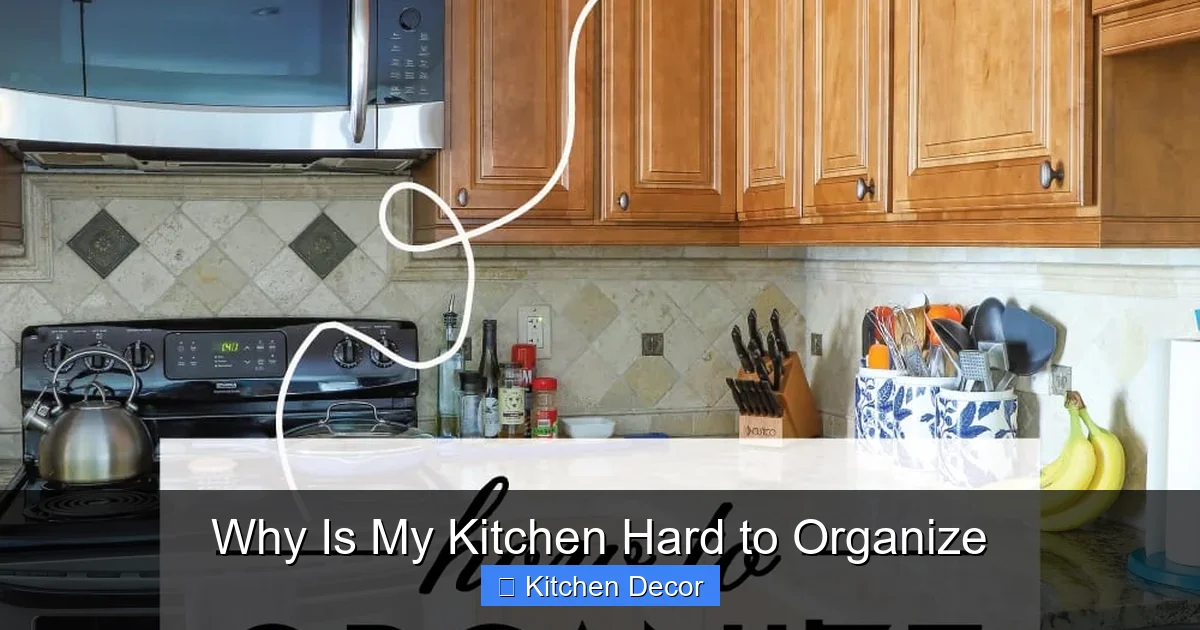
Before you even open a single cabinet, you need to mentally prepare. A positive and realistic mindset is crucial for overcoming the challenge of why your kitchen is hard to organize.
Visual guide about Why Is My Kitchen Hard to Organize
Image source: thehomesihavemade.com
Embrace Progress, Not Perfection
Don’t aim for a magazine-perfect kitchen overnight. That goal is unrealistic and can quickly lead to burnout. Instead, focus on making progress, even small steps. Celebrate each drawer you conquer or each bag of donations you remove. This shift in perspective makes the task less daunting.
Break It Down into Manageable Chunks
Looking at the entire kitchen can be paralyzing. Instead, break the task into small, actionable chunks. Dedicate 15-30 minutes to one drawer, one cabinet, or one shelf. These small victories build momentum and confidence, making the whole process feel achievable.
Visualize Your Ideal Kitchen
Take a moment to close your eyes and imagine your ideal kitchen. How does it look? How does it feel to cook and entertain there? What are its key features? Having a clear vision of the end goal can be a powerful motivator when the going gets tough. It provides a direction for solving why your kitchen is hard to organize.
Step 2: The Essential Purge – Declutter Ruthlessly
This is the most critical step. You cannot organize clutter; you can only move it around. To genuinely solve why your kitchen is hard to organize, you must reduce the sheer volume of items.
Visual guide about Why Is My Kitchen Hard to Organize
Image source: i.ytimg.com
Start Small, One Cabinet at a Time
Following the “manageable chunks” advice, pick one small area to begin. Maybe it’s the notorious tupperware cabinet, or a junk drawer. Empty it completely. Wipe it clean. This small win will motivate you to continue.
Categorize Everything
As you empty an area, group similar items together. All spatulas go together, all measuring cups, all small appliances. This helps you see how many duplicates you have and how much space each category truly needs.
The Four-Box Method: Keep, Donate, Toss, Relocate
For every item you pick up, assign it to one of four categories:
- Keep: You use it regularly, it’s functional, and you love it.
- Donate/Sell: It’s still good, but you don’t use it or need it. Someone else could benefit.
- Toss: Broken, expired, or beyond repair.
- Relocate: It belongs in another room (e.g., a pen for the office, batteries for a utility drawer).
Be honest with yourself. If you haven’t used an item in a year, strongly consider getting rid of it. This simple method is highly effective for solving why your kitchen is hard to organize due to excess.
Tackle Duplicates and Seldom-Used Items
Do you really need three can openers? Five spatulas? Keep the best one or two and let the rest go. For items you use only once a year (like a turkey baster), decide if it’s worth the space it occupies. Could you borrow one, or is it truly essential? These redundant items are often why your kitchen is hard to organize.
Confront Expiration Dates and Food Waste
Go through your pantry, fridge, and freezer. Toss anything expired or stale. This not only frees up space but also ensures you’re eating fresh food. Make a mental note of what you tend to waste to adjust future shopping habits.
Step 3: Optimize Your Kitchen Layout and Zones
Once you’ve decluttered, it’s time to think about how your kitchen functions. An optimized layout makes cooking and cleaning intuitive, addressing a key reason why your kitchen is hard to organize.
Visual guide about Why Is My Kitchen Hard to Organize
Image source: thirtyhandmadedays.com
Define Your Kitchen Work Zones
Think about how you use your kitchen. Create logical zones:
- Prep Zone: Near the sink and cutting boards. Store knives, mixing bowls, measuring cups, and common ingredients here.
- Cooking Zone: Near the stove. Keep pots, pans, cooking utensils, oils, and spices here.
- Storage Zone: Your pantry, fridge, and less-frequently used appliances.
- Cleaning Zone: Under the sink, with dish soap, sponges, and dish towels.
- Dining Zone: Plates, bowls, cutlery, and glasses should be near your dining area or dishwasher.
Placing items where they are naturally used dramatically improves efficiency and reduces the feeling that your kitchen is hard to organize.
Maximize Vertical Space
Don’t let the height of your cabinets go to waste. Add shelf risers or stackable shelves to create more usable layers. Wall-mounted racks for pots, pans, or utensils can free up valuable drawer and cabinet space. Hooks inside cabinet doors are great for measuring cups or oven mitts.
Rethink Cabinet and Drawer Usage
Are your most-used items in the easiest-to-reach places? If not, move them! Heavier items should be stored in lower cabinets, while lighter, less-used items can go higher. Dedicate drawers to specific categories: one for baking tools, one for cooking utensils, one for wraps and foils.
Step 4: Invest in Smart Storage Solutions
After decluttering and zoning, it’s time to invest in tools that help maintain order. These solutions are key to ensuring your kitchen isn’t hard to organize again.
Drawer Organizers and Dividers
These are game-changers for utensil drawers, junk drawers, and even linen drawers. They keep items from sliding around and create clear compartments for different tools. Bamboo, plastic, or adjustable dividers are all great options.
Pantry Bins and Airtight Containers
Transfer dry goods like pasta, rice, flour, and cereals into clear, airtight containers. This not only keeps food fresh but also creates a uniform, aesthetically pleasing look that’s easy to see and manage. Use bins for snacks, baking supplies, or ethnic ingredients to contain clutter.
Shelf Risers and Expandable Shelves
As mentioned before, these are fantastic for maximizing vertical space in cabinets and pantries. They allow you to store more items without stacking them precariously, making everything more accessible.
Wall-Mounted Solutions and Hooks
Don’t forget your walls! Magnetic knife strips free up drawer space, pegboards can customize storage for tools, and wall-mounted spice racks keep spices visible and within reach. Hooks under cabinets are perfect for mugs or kitchen towels.
Under-Sink Savvy
The area under the sink is often a chaotic mess. Use tiered organizers, pull-out drawers, or small bins to contain cleaning supplies, sponges, and dish soap. Make sure to account for pipes!
Step 5: Create and Maintain a Sustainable System
An organized kitchen isn’t a one-time project; it’s an ongoing habit. Building a sustainable system is the ultimate answer to why your kitchen is hard to organize.
The “One In, One Out” Rule
To prevent future clutter, adopt this simple rule: when you buy a new item (e.g., a new spatula), get rid of an old one. This ensures your kitchen inventory remains at a manageable level.
Regular Mini-Declutter Sessions
Don’t wait for your kitchen to become a disaster again. Schedule a quick 10-15 minute tidy-up once a week. This could involve wiping down counters, straightening a drawer, or going through the pantry for expired items. Consistency is key.
Involve Every Family Member
Kitchen organization is a team effort. Teach children where items belong and empower them to put things away. Assign clear roles if necessary. When everyone is on board, the system is much easier to maintain.
Label, Label, Label
Labels are your best friend, especially in the pantry and in drawers. They help everyone know exactly where things go, eliminating guesswork and making cleanup quicker. Clear labels on containers mean you always know what’s inside and how much is left.
Establish a “Home” for Everything
Every single item in your kitchen should have a designated spot. If an item doesn’t have a home, it tends to float around, contributing to the problem of why your kitchen is hard to organize. If an item needs a home but doesn’t fit, it might be time to reconsider if you truly need it.
Step 6: Address Common Kitchen Organization Pain Points
Certain areas of the kitchen consistently pose challenges. Let’s tackle these specific spots that often make your kitchen hard to organize.
The Tupperware Tangle
Ah, the plastic container cabinet! To conquer this, first, purge any lidless containers or containerless lids. Keep only full sets. Stack containers by size, and store all matching lids vertically in a small bin or lid organizer. This prevents the avalanche every time you open the cabinet.
Spice Rack Chaos
Expired spices lose their potency and just take up space. Go through them, tossing anything old. Transfer spices into uniform jars for a cohesive look. Organize them alphabetically or by frequency of use. Options include tiered drawer inserts, wall-mounted racks, or rotating carousels.
Utensil Drawer Deluge
Too many spatulas, whisks, and ladles can make this drawer a nightmare. Declutter duplicates. Use drawer dividers or an expandable utensil tray to give each type of utensil its own section. Store frequently used items at the front.
Cookware Conundrum
Pots and pans can be bulky and awkward. Use pot and pan organizers that allow you to store them vertically or separate lids from bases. Stacking inserts or pull-out shelves in lower cabinets can make accessing them much easier without a noisy clatter. Consider hooks for hanging pots if you have a pot rack or wall space.
Small Appliance Storage
Toasters, blenders, food processors, air fryers – they all take up significant counter space. Keep frequently used appliances on the counter or in an easily accessible appliance garage. Store less-used items in lower cabinets or a pantry. If you have limited space, consider multi-functional appliances.
Step 7: Personalize Your Organization for Your Lifestyle
The best organization system is one that fits your life, not one you saw on a blog that doesn’t account for your specific needs. This customization is vital to truly solve why your kitchen is hard to organize.
Consider Your Cooking Habits
Are you a gourmet chef or a microwave warrior? Do you bake often? Do you entertain frequently? Your organization should reflect how you use your kitchen. For example, if you bake a lot, make sure your baking ingredients and tools are easily accessible in one area.
Factor in Family Dynamics
If you have kids, place their snacks, plates, and cups at a reachable height. If multiple people cook, ensure the system is intuitive and clear for everyone. Storage solutions should be durable enough to withstand daily family use.
Balance Aesthetics with Functionality
While a beautiful kitchen is lovely, functionality should always come first. Don’t sacrifice practical storage for the sake of a perfect look. The goal is a kitchen that works seamlessly for you, even if it’s not always Instagram-ready. A functional kitchen is one that naturally stays organized, addressing the core of why your kitchen is hard to organize.
Conclusion
Asking “Why is my kitchen hard to organize?” is the first step toward creating a truly functional and enjoyable space. By understanding the root causes, shifting your mindset, and systematically decluttering and organizing, you can transform your kitchen from a source of frustration into a hub of efficiency and calm.
Remember, it’s a process, not a one-time event. Be patient with yourself, celebrate small victories, and continually adapt your system to your evolving needs. With these strategies, you’re well-equipped to conquer the clutter and maintain a beautifully organized kitchen that supports your daily life. Enjoy the newfound peace and productivity that comes with an organized space!