Transform your cluttered small kitchen into an efficient and enjoyable space. This guide provides a comprehensive small kitchen organization mistakes checklist, helping you identify common pitfalls from ignoring vertical space to improper decluttering. Learn practical solutions and strategic tips to optimize every inch, ensuring a functional and stress-free cooking environment. Stop struggling with disorganization and start loving your small kitchen today!
Small Kitchen Organization Mistakes Checklist
Ah, the small kitchen! It’s a charming space, full of potential, but often a source of frustration. If you’ve ever felt like your tiny culinary corner is perpetually in a state of chaos, you’re not alone. Many homeowners struggle to make the most of limited square footage, leading to common small kitchen organization mistakes that can hinder your cooking flow, make meal prep a chore, and generally drain your energy.
But what if there was a way to identify these pitfalls and transform your kitchen into a functional, beautiful, and stress-free zone? That’s exactly what this comprehensive guide aims to do. We’ve compiled a detailed small kitchen organization mistakes checklist to help you pinpoint exactly where things might be going wrong and, more importantly, how to fix them. Get ready to reclaim your countertops, conquer your cabinets, and fall back in love with your small kitchen!
By the end of this guide, you’ll have a clear understanding of the common blunders people make in small spaces and a practical action plan to implement smart, sustainable organization strategies. Let’s dive in and start transforming your kitchen, one mistake at a time!
Key Takeaways
- Declutter Ruthlessly: Regularly evaluate and remove items you don’t use, need, or love. This is the foundational step to fixing any small kitchen organization mistakes.
- Utilize Vertical Space Strategically: Don’t overlook walls, cabinet interiors, or the space above appliances. Vertical solutions like shelves, magnetic strips, and stackable containers are game-changers in small kitchens.
- Create Functional Zones: Organize your kitchen into dedicated areas for cooking, prep, baking, and cleaning. This minimizes unnecessary movement and makes your kitchen workflow much more efficient.
- Invest in Smart Storage Solutions: Choose organizers that fit your specific items and space, rather than generic ones. Think drawer dividers, pull-out shelves, lazy Susans, and tiered racks to maximize accessibility and visibility.
- Address Hidden Spaces: Don’t forget often-neglected areas like under the sink, inside cabinet doors, and even toe-kick drawers. These spots offer valuable storage potential if utilized correctly.
- Prioritize Countertop Clarity: Keep countertops as clear as possible by giving every item a home, especially small appliances. A clear counter makes a small kitchen feel larger and more functional.
- Maintain a Routine: Organization isn’t a one-time event. Implement a regular review and decluttering schedule to prevent clutter from creeping back in, ensuring your small kitchen stays organized long-term.
Mistake 1: Overstuffing Cabinets and Drawers
One of the most common small kitchen organization mistakes is simply trying to fit too much into your cabinets and drawers. It’s easy to accumulate kitchen gadgets, dishes, and pantry items over time, and in a small space, this quickly leads to overflowing, inaccessible storage. When every cabinet is packed to the brim, you can’t see what you have, items get buried, and retrieving anything becomes a frustrating ordeal. This not only wastes time but can also lead to items being forgotten and eventually expiring or being repurchased unnecessarily.
The “Just in Case” Mentality
Many of us hold onto items we “might” use someday. That obscure gadget you got as a gift, the extra set of plates for hypothetical dinner parties, or the mismatched containers with missing lids. In a small kitchen, there’s no room for “just in case.” Every item needs to earn its spot.
How to Fix It:
- Declutter Ruthlessly: Pull everything out of one cabinet or drawer at a time. Be honest with yourself. If you haven’t used it in a year, or if it’s broken, donate, sell, or discard it. This is a critical step in addressing any small kitchen organization mistakes checklist item.
- Categorize and Contain: Once you’ve decluttered, group similar items together. Use drawer dividers, small bins, or containers to keep items sorted and prevent them from migrating. For instance, dedicate one drawer to baking tools, another to cooking utensils, and another to everyday cutlery.
- Stack Smart: For plates and bowls, use plate racks or stackable shelves within cabinets to double your vertical storage without creating teetering towers.
Not Utilizing Drawers Properly
Drawers are prime real estate in a small kitchen. Misusing them by simply tossing items in creates a chaotic jumble. This common entry on the small kitchen organization mistakes checklist means wasted space and endless searching.
How to Fix It:
- Invest in Dividers: This is a non-negotiable for small kitchen organization. Use adjustable drawer dividers, cutlery trays, or custom inserts to create compartments for different types of utensils, spices, or small gadgets.
- Vertical Storage for Deep Drawers: For deeper drawers, consider storing items vertically rather than horizontally. Plate organizers or pot lid racks can make deep drawers incredibly efficient for storing pots, pans, or baking sheets on their sides.
Mistake 2: Ignoring Vertical Space
In a small kitchen, the mantra should be “think up, not out.” One of the biggest small kitchen organization mistakes is failing to utilize the often-neglected vertical real estate. Walls, the insides of cabinet doors, and the space between shelves offer untapped potential for storage that can free up precious counter and cabinet space.
Visual guide about Small Kitchen Organization Mistakes Checklist
Image source: homepluscleaning.com
Forgetting Wall Space
Your walls aren’t just for art; they’re valuable storage surfaces. Many small kitchens suffer because homeowners don’t look beyond traditional cabinets.
How to Fix It:
- Install Shelves: Open shelving can provide easily accessible storage for everyday dishes, spices, or cookbooks. It also makes a small kitchen feel more open than solid cabinetry.
- Magnetic Strips: Attach magnetic knife strips to keep knives off the counter and safely stored. You can also use them for small metal spice containers.
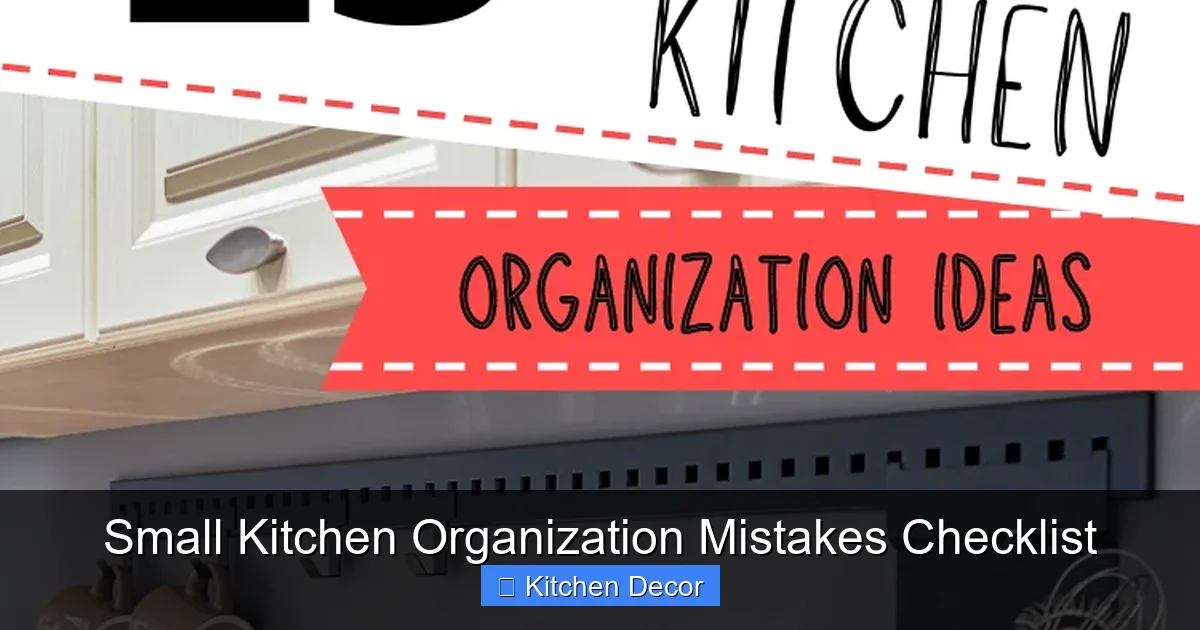
- Pegboards: A pegboard system offers incredible flexibility. You can hang pots, pans, utensils, and even small baskets for spices or cleaning supplies. It’s fully customizable and can be changed as your needs evolve.
- Pot Racks: If you have high ceilings, a hanging pot rack can be a stylish and space-saving way to store cookware, freeing up cabinet space below.
Under-Shelf Opportunities
Even within your cabinets, there’s often unused space beneath shelves.
How to Fix It:
- Under-Shelf Baskets: These wire baskets simply slide onto a shelf, creating an instant extra layer of storage for items like foil, plastic wrap, or dish towels.
- Cup Hooks: Screw cup hooks into the underside of shelves to hang mugs, freeing up shelf space.
Mistake 3: Poor Pantry Management
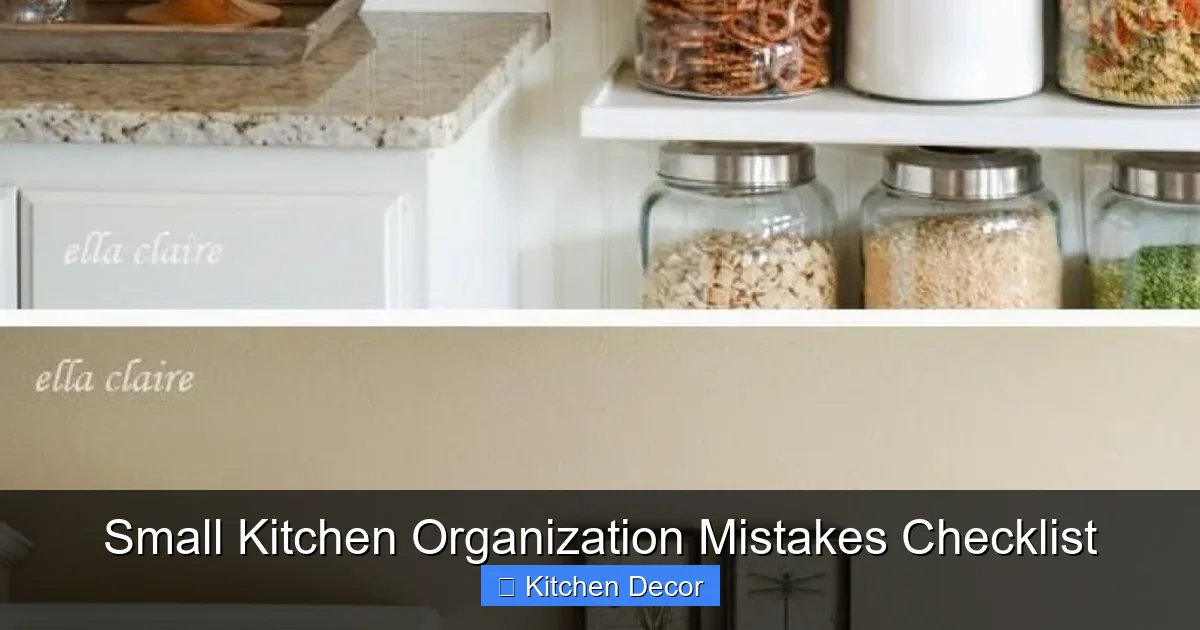
A “pantry” in a small kitchen might just be a single cabinet or a small corner, but managing it poorly is a common small kitchen organization mistake. When items are shoved in haphazardly, it leads to expired food, forgotten ingredients, and repetitive purchases.
Visual guide about Small Kitchen Organization Mistakes Checklist
Image source: i.pinimg.com
The Deep Pantry Trap
Deep cabinets or pantries can become black holes where food items disappear, only to be discovered long past their prime. This is a classic small kitchen organization mistake.
How to Fix It:
- Pull-Out Solutions: Invest in pull-out drawers or sliding shelves that allow you to bring the back of the cabinet to the front. This makes every item accessible.
- Lazy Susans: Turntables (lazy Susans) are brilliant for corner cabinets or deep shelves, allowing easy access to jars, bottles, and spices without having to rummage.
- Bins and Baskets: Use clear bins or baskets to group similar items (e.g., all baking supplies, all breakfast items). This allows you to pull out an entire category of items, see what you have, and put it back easily.
Lack of Labeling
Without clear labels, even the best organization system can fall apart. You won’t know what’s in those opaque containers or baskets.
How to Fix It:
- Label Everything: Label your containers, bins, and even shelves. Use a label maker, chalkboard labels, or simply a marker and tape. Be specific with contents and expiration dates where appropriate.
- First-In, First-Out (FIFO): Practice rotating your food stock. When you buy new groceries, move older items to the front so they are used first. This prevents waste and is a crucial part of an effective small kitchen organization mistakes checklist strategy.
Mistake 4: Neglecting Regular Decluttering
Many people view organization as a one-time event. However, one of the most significant small kitchen organization mistakes is neglecting regular decluttering. Clutter has a way of creeping back in, especially in a busy kitchen. Without consistent maintenance, even the most perfectly organized space will eventually revert to chaos.
Visual guide about Small Kitchen Organization Mistakes Checklist
Image source: homebnc.com
Sentimental Accumulation
It’s natural to have sentimental attachments, but in a small kitchen, every item must earn its place. That chipped mug from college or the rarely used decorative plate might be eating up valuable space.
How to Fix It:
- The “One In, One Out” Rule: When you bring a new item into your kitchen (e.g., a new mug, a new gadget), commit to getting rid of an old, similar item. This prevents accumulation.
- Designated “Sentiment” Spot: If you absolutely must keep sentimental items, consider if they truly belong in the kitchen. Perhaps a decorative plate could be hung on a wall in another room, or the special mug used for display rather than taking up cabinet space.
The “I Might Need It Someday” Hoard
We all have that drawer or cabinet dedicated to things we “might need someday.” Broken appliances, spare parts for things you no longer own, or random bits and bobs. This is a significant entry on our small kitchen organization mistakes checklist.
How to Fix It:
- Set a Time Limit: If you haven’t used an item in 6-12 months, seriously consider letting it go. Be realistic about what “someday” truly means.
- Seasonal Swap: For seasonal items (e.g., holiday cookie cutters, specialized canning equipment), consider storing them outside the kitchen if space is extremely tight, perhaps in a basement or garage storage bin, and bring them in only when needed.
Mistake 5: Failing to Create Functional Zones
A well-organized kitchen, regardless of size, operates on a system of zones. One of the most common small kitchen organization mistakes is scattering items haphazardly, leading to inefficient workflow and wasted time. Imagine making coffee and having to cross the kitchen for mugs, then again for sugar, and yet again for spoons. This is a sign of poor zoning.
Mixing Cooking and Prep Tools
When spatulas are in one drawer, mixing bowls in another, and spices across the room, your cooking process becomes a disjointed dance.
How to Fix It:
- The “Work Triangle”: While a traditional work triangle (fridge, sink, stove) might be difficult in a small kitchen, you can apply the principle to zones.
- Create Dedicated Zones:
- Prep Zone: Near your main cutting surface, store knives, cutting boards, mixing bowls, and frequently used prep tools.
- Cooking Zone: Around your stove, keep pots, pans, cooking utensils (spatulas, ladles), and primary cooking spices.
- Baking Zone: If you bake, consolidate flour, sugar, baking powder, measuring cups, and baking sheets in one area.
- Dish Zone: Near the sink and dishwasher, store dishes, glasses, and cutlery for easy unloading.
- Coffee/Breakfast Zone: Keep your coffee maker, mugs, tea, sugar, and perhaps toaster in one dedicated spot.
- Store at Point of Use: The golden rule for zones is to store items where you use them first. This dramatically improves efficiency and is key to overcoming small kitchen organization mistakes.
Illogical Placement of Items
Storing rarely used items in prime, easily accessible spots, or frequently used items in hard-to-reach places, is another common small kitchen organization mistake.
How to Fix It:
- Prioritize Accessibility: Place everyday dishes, glasses, and frequently used ingredients in cabinets or shelves that are easiest to reach.
- Use High/Low Storage Strategically: Items used less frequently can go on higher shelves or in deeper, less accessible cabinets. Heavy or bulky items that are rarely used can go in lower, sturdy cabinets.
Mistake 6: Allowing Countertop Clutter to Dominate
In a small kitchen, countertop space is a precious commodity. One of the most visible and frustrating small kitchen organization mistakes is allowing countertops to become cluttered with appliances, mail, keys, and miscellaneous items. This not only reduces your workspace but also makes the entire kitchen feel smaller, messier, and more stressful.
Too Many Appliances
The allure of new kitchen gadgets is strong, but a small kitchen simply can’t accommodate every single-purpose appliance. A countertop full of a toaster, blender, coffee maker, stand mixer, and air fryer leaves no room for actual cooking.
How to Fix It:
- Evaluate and Prioritize: Decide which appliances you use daily or almost daily. These might earn a permanent spot on the counter if space allows.
- Store Smartly: For less frequently used appliances (e.g., slow cooker, food processor), find dedicated storage inside cabinets, a pantry, or even an adjacent closet if truly necessary. Look for vertical storage solutions like appliance garages or pull-out shelves if built-in.
- Multi-functional is Key: In a small kitchen, embrace appliances that serve multiple purposes (e.g., an Instant Pot that can pressure cook, slow cook, and sauté).
Everyday Items Without a Home
Keys, mail, phone chargers, random papers, and school notices often find their way to kitchen counters because they lack a designated “home.”
How to Fix It:
- Create a “Landing Strip”: Near the kitchen entrance or a less critical counter area, designate a small basket or tray for incoming mail, keys, and other small items. Make it a rule that these items are processed or moved daily.
- Wall-Mounted Organizers: Use wall-mounted mail holders, key hooks, or small shelves to keep these items off the counter.
- Charging Station: Dedicate one small drawer or a specific outlet to be a charging station for phones and tablets, keeping cords tidy and off the counter.
Mistake 7: Misusing or Not Using Storage Solutions
You might have bought some organizers, but if they’re not working, or if you’re not using them effectively, it’s just another form of small kitchen organization mistakes. Sometimes people buy organizers before truly assessing their needs, or they pick the wrong kind of solution for their specific items and space.
Buying Before Measuring
Impulse buys of storage bins or drawer organizers without precise measurements often lead to ill-fitting solutions that waste more space than they save.
How to Fix It:
- Measure Twice, Buy Once: Before purchasing any storage solution, measure the exact dimensions of your cabinets, drawers, or pantry shelves. Take into account height, width, and depth.
- Consider What You’re Storing: Think about the specific items you want to organize. Do you need something for tall bottles, small packets, or bulky pots? The solution should fit the item, not just the space.
Ineffective Storage Choices
Sometimes the problem isn’t a lack of storage, but using the wrong type. For example, a lazy Susan might be great for spices, but not for stacks of plates.
How to Fix It:
- Clear Containers Are Key: Especially in deep cabinets or pantries, clear containers allow you to see contents at a glance, preventing forgotten items.
- Stackable Solutions: For items like food storage containers, choose stackable options with interchangeable lids to save space and minimize clutter.
- Door Storage: Install over-the-door racks or command hooks on the inside of cabinet doors for spices, cleaning supplies, or small towels. This is an often-missed item on the small kitchen organization mistakes checklist.
Mistake 8: Overlooking Under-Sink and Cabinet Toe-Kick Space
These are the unsung heroes of small kitchen storage, yet they are frequently neglected or become dumping grounds. Failing to optimize these areas is a critical small kitchen organization mistake that wastes valuable square footage.
The “Black Hole” Under the Sink
The area under the kitchen sink is often a chaotic mess of cleaning supplies, sponges, and garbage bags. The plumbing pipes usually complicate organization, leading many to just shove things in.
How to Fix It:
- Clear Out and Clean: Remove everything, clean the area thoroughly, and check for any leaks.
- Utilize Verticality: Install an expandable under-sink shelf that works around the plumbing. These tiered shelves are designed to maximize vertical space in awkward areas.
- Small Bins and Caddies: Use small, stackable bins or a cleaning caddy to hold sponges, dish soap, and other frequently used items. A caddy makes it easy to pull out everything you need for cleaning tasks.
- Door Organizers: Mount a small rail or hooks on the inside of the cabinet door for spray bottles or dishcloths.
Ignoring Toe-Kick Drawers
Many modern cabinets, especially custom ones, can be fitted with toe-kick drawers—shallow drawers built into the space beneath your lower cabinets. These are often completely overlooked.
How to Fix It:
- Install if Possible: If your cabinets allow, consider adding toe-kick drawers. They are perfect for storing flat items like baking sheets, serving platters, or even rarely used holiday linens.
- Creative Storage: Even without dedicated drawers, this space can sometimes be utilized for hidden, flat storage if accessed from the side.
Mistake 9: Sticking to “One Size Fits All” Solutions
The internet is flooded with aesthetically pleasing organization solutions. However, a significant small kitchen organization mistake is trying to force generic solutions into your unique space without considering your specific needs, layout, or cooking habits.
Generic Organizers for Unique Spaces
Buying a beautiful set of matching bins or shelves without first assessing if they truly work for your cabinet dimensions or the items you own can lead to wasted money and continued clutter.
How to Fix It:
- Audit Your Space and Items First: Before you buy anything, take stock of what you have and where it needs to go. Measure everything precisely.
- Customize and Adapt: Look for adjustable shelves, expandable drawer dividers, or modular systems that can be configured to fit your exact space. Sometimes, a simple tension rod can create extra hanging space where a fixed shelf won’t fit.
- DIY Solutions: Don’t be afraid to get creative with DIY solutions that perfectly match your needs, such as repurposing old boxes into drawer organizers or building simple shelves.
Not Adapting to Your Lifestyle
An organization system that doesn’t fit your daily routine or how you actually cook will fail. If you grab a coffee every morning, putting your mugs in a high, hard-to-reach cabinet isn’t practical, even if it looks neat.
How to Fix It:
- Observe Your Habits: Pay attention to how you naturally move and use your kitchen for a few days. What items do you reach for most often? Where do you instinctively put things?
- Design Around You: Place the most frequently used items in the most accessible spots. If you bake often, your baking supplies should be easy to grab. If you entertain, your serving dishes might be more accessible. An effective small kitchen organization mistakes checklist considers your life.
- Flexibility: Build in some flexibility. As your family grows or your cooking habits change, your organization system should be able to adapt.
Mistake 10: Lack of a Maintenance Routine
Finally, perhaps the biggest of all small kitchen organization mistakes is the belief that once you organize, the job is done. Organization is an ongoing process, not a destination. Without a regular maintenance routine, clutter will inevitably creep back in, undoing all your hard work.
The “Set It and Forget It” Trap
It’s wonderful to have a beautifully organized kitchen, but if you don’t incorporate habits to keep it that way, it’s just a matter of time before it’s messy again.
How to Fix It:
- Daily Tidy-Up: Spend 5-10 minutes each evening putting things back in their designated spots, wiping down counters, and dealing with any accumulating clutter. This prevents small messes from becoming big problems.
- The “Container Rule”: If you take something out, put it back immediately after use. If it doesn’t have a home, create one or consider if you truly need it.
Infrequent Reviews
Life changes, and so do your kitchen needs. What worked perfectly six months ago might not be ideal today. Infrequent reviews are a common small kitchen organization mistake.
How to Fix It:
- Monthly Mini-Declutter: Set aside 15-30 minutes once a month to do a quick scan of your kitchen. Check pantry items for expiration dates, tidy up drawers, and re-evaluate appliance placement.
- Seasonal Deep Dive: Twice a year (e.g., spring and fall), dedicate a longer session to a more thorough declutter and re-evaluation. This is an excellent time to tackle that “just in case” drawer or the contents of your under-sink cabinet. Refer back to your small kitchen organization mistakes checklist for a full review.
- Involve the Household: Make organization a shared responsibility. When everyone knows where things belong and helps maintain the system, it’s much easier to keep the kitchen tidy.
Conclusion
Congratulations! You’ve just walked through a comprehensive small kitchen organization mistakes checklist. By identifying these common pitfalls, you’re now equipped with the knowledge and practical strategies to transform your small kitchen from a source of stress into a space of efficiency and joy. Remember, even the tiniest kitchens have immense potential, and with smart organization, you can unlock every inch of it.
Start small, tackle one mistake at a time, and celebrate each victory. You don’t need a massive renovation to have a functional and beautiful kitchen; you just need to be smart about how you use the space you have. So grab your measuring tape, put on some music, and get ready to create the organized small kitchen of your dreams!