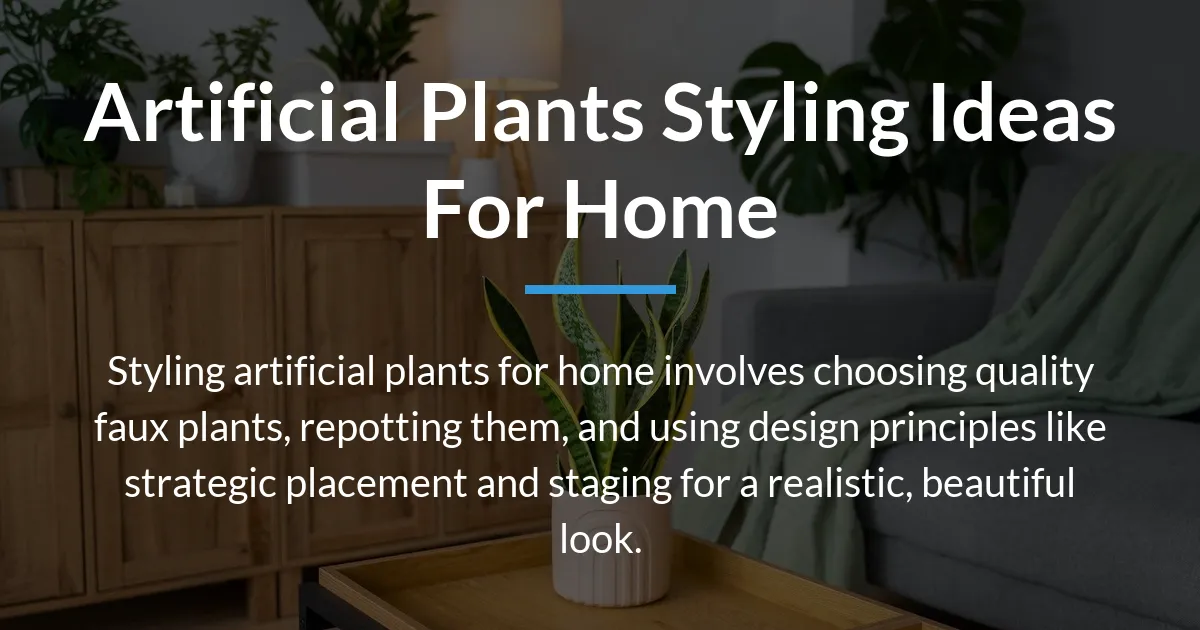
You have made a smart choice looking for artificial plants styling ideas for home. This guide moves beyond basic tips to teach you how to style faux plants with intention. You will learn designer strategies to make them look stunning, real, and perfectly suited to your space.
Artificial Plants Styling Ideas for Home: Start with the Basics
Every great project needs a solid foundation. Before you place a single plant, there are a few non-negotiable steps that set the stage for success. These basics separate a thoughtful design choice from an obvious fake.
Ignoring these steps is the fastest way to make your artificial plants look cheap. Taking the time here makes every styling decision that follows much more effective.
Choosing Plants That Look Real
Quality is the most important factor. A good faux plant has subtle color variations in the leaves, just like a real one. Avoid plants with a flat, uniform green color.
Look closely at the materials. Silk or high-grade plastic blends feel more realistic than stiff, shiny plastic. Check for thick seams on leaves or flowers, as these are a dead giveaway.
Touch the plant before you buy it if you can. The texture should mimic the real thing. A faux fiddle leaf fig should have slightly leathery leaves, while a fern should feel delicate.
Always Give Your Plant a New Home
The first thing you must do is remove the plant from its tiny black plastic nursery pot. This pot is designed for shipping, not for display. Leaving it in this pot instantly looks fake and unfinished.
Rehoming your plant is a simple but transformative act. Choose a planter or basket that is the right scale. The new container should be slightly larger than the root ball to look natural.
Make sure the planter has some weight or a stable base. You can add rocks or sand at the bottom for stability. This prevents the plant from tipping over and adds to the realistic illusion.
Fluffing and Bending for Natural Shape
Artificial plants come packed in a box, so every leaf and stem is compressed. You must carefully unfold and reshape every part of the plant. This process is called fluffing.
Gently separate each leaf and branch from its neighbors. Do not leave them stuck together. Look at pictures of the real plant to see how the leaves naturally fall.
Then, bend the stems and leaves. Nothing in nature is perfectly straight or symmetrical. Curve some stems downward as if they are heavy. Twist others slightly toward an imaginary light source.
This manual shaping breaks the factory mold. It creates the asymmetric, organic volume that makes a plant look alive. Spend at least ten minutes doing this for a medium-sized plant.
Strategic Placement for Spatial Impact
Now that your plant is prepped, think about where it should go. Placement is not random. Use artificial plants as tools to solve design problems and enhance your room’s architecture.
This shifts your thinking from just decorating to designing. A well-placed plant can change how you experience a space.
Defining Areas in an Open Room
In open-plan living areas, you can use plants to create soft borders without walls. A large artificial tree or a group of floor plants can signal a transition from the living room to the dining area.
Place a tall faux tree behind a sofa. This visually anchors the seating area. It creates a gentle barrier that feels more inviting than a blank wall or empty space.
This technique helps organize a large room into cozy, functional zones. It adds structure without closing anything off.
Fixing Room Proportions
Plants can correct visual imbalances in a room. If you have low ceilings, use tall, vertical artificial plants to draw the eye upward. This creates an illusion of height.
A skinny faux olive tree or a large snake plant works well for this. Place it in a corner to emphasize the vertical line.
If you have a large, low-slung sectional sofa, balance it with a substantial plant on the opposite side. This adds visual weight and keeps the room from feeling bottom-heavy.
The plant acts as a counterweight to other furniture. It brings harmony to the space.
Creating Focal Points
Guide the eye to what you want people to see. Place a beautiful artificial plant grouping next to a fireplace, a piece of artwork, or a lovely window.
The greenery frames the feature and makes it more important. It says, “Look here.”
For example, two matching faux topiaries on either side of a front door create a welcoming focal point. A cascading pothos on a bookshelf draws attention to your book collection.
Understanding Negative Space
Sometimes, the best styling idea is to leave a surface empty. Do not feel you must put a plant on every table or shelf. Clutter makes a space feel busy and small.
Choose one or two key spots for your artificial plants. Let them breathe and make a statement. A single, sculptural faux plant on a console table can be more powerful than three small ones.
Negative space, or empty area, allows the eye to rest. It makes the plants you do have stand out more. Be intentional and selective with your placements.
Matching Artificial Plants to Your Interior Design Style
This is where your styling becomes truly personalized. The type of plant and its planter should complement your room’s decor theme. A plant that looks perfect in one style can look out of place in another.
Choose artificial plants that enhance the mood you have created. This ensures everything feels cohesive and curated.
For Minimalist or Scandinavian Styles
These styles celebrate clean lines, simplicity, and natural light. The approach to plants should be “less is more.” Choose one singular plant with a strong, sculptural form.
A faux olive tree, fiddle leaf fig, or zen-style bamboo are excellent choices. They have a quiet, architectural beauty.
Place this plant in a neutral planter. Think concrete, smooth ceramic in white or gray, or a simple linen basket. The goal is to create a calm, focused spot of greenery.
Avoid busy plants with lots of small leaves. Avoid colorful or patterned planters. Everything should feel intentional and serene.
For Bohemian or Maximalist Styles
This style is all about abundance, texture, and a collected feel. You can be much more liberal and playful with your artificial plants styling ideas for home here.
Create lush, layered groupings. Mix different types of faux greenery together. Combine a large faux monstera with a trailing pothos and a fluffy fern.
Use eclectic planters like macrame hangers, woven baskets, or brightly colored ceramic pots. The look should feel organic and full of life.
Do not worry about symmetry. Let the plants spill over and interact with each other. This style embraces a joyful, crowded energy that mimics a real indoor jungle.
For Mid-Century Modern Style
This decor is defined by sleek lines, organic shapes, and warm woods. Your artificial plants should reflect that focus on form.
Choose plants with distinct silhouettes. A faux snake plant, ZZ plant, or birds of paradise are perfect. Their geometric leaves echo the furniture lines.
Planters should be sleek and stylish. Look for terrazzo pots, glossy ceramics, or planters with tapered legs in warm wood tones.
Placement is often asymmetrical but balanced. A single large plant in a corner or a pair of different-height plants on a sideboard works well. The look is curated and slightly graphic.
For Traditional or Classic Styles
Traditional rooms favor symmetry, order, and elegance. Artificial plant styling here should feel refined and somewhat formal.
Think about pairs and symmetry. Two faux boxwood topiaries in classic urns flanking a fireplace is a timeless look. A faux rose topiary in a brass planter adds classic charm.
Plant choices are often more structured. Faux lavender, hydrangeas, or small-leafed ivy are good options. Avoid overly wild or tropical plants that feel too casual.
The planters themselves are part of the decor. Ornate ceramic, brass, or polished stone planters complement traditional furniture and moldings beautifully.
The Art of Staging a Believable Scene
This is the advanced technique that makes people do a double-take. It is about selling the illusion completely by crafting a tiny, believable environment for your plant. You move from placing an object to creating a scene.
It involves details that trick the brain into seeing life. This is where your artificial plants stop being decor and start being art.
Mimicking Natural Growth Patterns
No real plant grows perfectly upright with every leaf facing forward. Observe how plants live. Stems reach for light, so angle some leaves upward.
Others may droop or curl slightly at the edges. Create variation in the direction of every stem and leaf. Avoid the “perfect circle” shape that comes from the box.
If your plant has flowers, make sure they are not all facing the same way. Turn a few to the side or slightly backward. This asymmetry is key to realism.
Building a Micro-Habitat in the Planter
The base of the plant is crucial. Never leave the plastic or foam plug visible. Cover it completely to create a mini landscape.
Start by adding a layer of real dirt or sand on top of the base. This is for looks only, not for growth. Then, add a top layer of decorative material.
Use preserved reindeer moss, small river rocks, pea gravel, or even faux moss. This adds texture and covers any mechanics.
For a truly advanced touch, sprinkle a few realistic-looking fallen leaves or petals on this soil layer. Secure them with a dab of clear glue or museum putty. This implies a natural life cycle.
Curating Groupings, Not Clusters
When placing multiple artificial plants together, think like a curator. Do not just cluster three identical plants. Use the “rule of three” with variation.
Choose three plants of different heights, shapes, and textures. For example, pair a tall grassy plant with a medium bush and a trailing vine.
Use planters that relate to each other but are not matching. They could be the same color but different shapes, or the same material but different sizes.
This tells a story that these plants were chosen over time. It looks intentional and designed, not like a set bought together. Space them slightly apart so each can be appreciated.
Long-Term Care and Evolving Your Look
Your artificial plants are low-maintenance, but they are not no-maintenance. To keep them looking fresh and integrate them into a living home, a little upkeep is needed. You can also refresh them as your style changes.
This ensures your investment lasts for years and continues to bring you joy. It turns a one-time styling project into an ongoing part of your home decor.
A Realistic Dusting Routine
Dust is the enemy of realism. A layer of dust makes even the best faux plant look fake and neglected. Clean your artificial plants every month or two, depending on your home.
For most plants, use a hairdryer on a cool, low setting to blow away loose dust. For more stubborn dust, wipe leaves gently with a slightly damp microfiber cloth.
For delicate silk flowers, use a soft brush like a makeup brush to dust carefully. Never soak artificial plants or use harsh chemicals, as this can damage colors and materials.
Seasonal Refreshes and Updates
One joy of artificial plants is that they never die, so you can change them with the seasons. This keeps your decor dynamic and interesting.
In autumn, tuck a few faux berry branches into your permanent plant arrangements. In winter, add some frosted pinecones or eucalyptus to the planter base.
For spring, swap out a few stems for ones with white blossoms. In summer, you might add a brighter, tropical leaf. These small changes make your home feel current and connected to the time of year.
When to Retire or Refresh a Plant
Even the best artificial plants can fade over time, especially if they are in direct sunlight. If the colors have bleached noticeably or the material has become brittle, it is time to let that plant go.
Do not be afraid to update your planters, too. A new basket or pot can give an old plant a completely new life. Sometimes, simply moving a plant to a different room makes it feel new again.
Your home decor evolves, and your artificial plants should evolve with it. View them as flexible design elements you can edit and rearrange whenever you want a change.
With these principles, you can create artificial plants styling ideas for home that are beautiful, intentional, and surprisingly real. The key is to treat each faux plant as a design element worthy of thought and care. Start with quality, place with purpose, style for your theme, and craft a believable scene. Your home will be filled with gorgeous, green moments that require no watering at all.
Frequently Asked Questions
Can you mix artificial plants with real ones successfully?
Yes, mixing artificial and real plants is a great strategy. Place the faux plants where real ones would struggle, like in a dark corner. The real plants add natural texture and scent, while the fake ones provide permanent greenery where needed. Just ensure the artificial plants are high-quality to blend in seamlessly.
How often and what is the best way to clean artificial plants?
Clean artificial plants every one to two months. Use a hairdryer on a cool setting to blow off dust or a soft, damp cloth to wipe leaves gently. For detailed silk flowers, a soft paintbrush or makeup brush works well. Avoid water immersion or harsh cleaners.
Where is the worst place to put a fake plant in your home?
The worst place is in direct, bright sunlight where people can examine it closely, like on a windowsill. Sunlight can cause fading, and close inspection reveals details. Also, avoid placing a single cheap plant in the center of an empty room with no other decor around it.
What are the tell-tale signs of a cheap artificial plant?
Signs include a single shade of flat, neon green color, thick visible seams on leaves, stiff and shiny plastic material, and a perfectly symmetrical, round shape right out of the box. Poor weight and flimsy pots are also indicators.
Are artificial plants safe for outdoor use like a covered patio?
Only if they are specifically labeled “UV-resistant” or “for outdoor use.” Most indoor artificial plants will fade and degrade quickly outdoors. For a covered patio, look for outdoor-rated faux plants that can handle moisture and indirect sunlight.
How can I make a pre-potted artificial plant look more expensive?
Immediately repot it into a higher-quality planter. Add layers to the base like real dirt, rocks, and moss to hide the plastic pot. Thoroughly fluff and bend every stem and leaf to break the factory shape. These steps add depth and a custom, curated look.
What type of filler should I use in the planter around the base?
Use a combination for realism. First, add real dirt or sand for weight. Then, top it with decorative filler like preserved reindeer moss, smooth river rocks, pea gravel, or bark chips. This creates a natural, layered effect that hides the artificial base.
Do artificial plants fade in direct sunlight?
Yes, most artificial plants will fade over time if placed in direct sunlight. The UV rays break down the dyes in the materials. To prevent fading, keep them out of south-facing windows or use UV-protective spray if they must be in a bright spot.
Where can I find high-quality artificial plants besides big box stores?
Look at specialty home decor stores, online retailers that focus on faux botanicals, and even some thrift stores for vintage planters. Online marketplaces often have reviews and photos that help you assess quality before buying. Designer brands also offer high-end options.
How many artificial plants are too many for one room?
There is no strict number, but avoid clutter. Use plants as accents, not the main event. If every surface has a plant, it can feel overwhelming. Start with a few key pieces and add more only if the space still feels balanced. Remember the power of negative space.