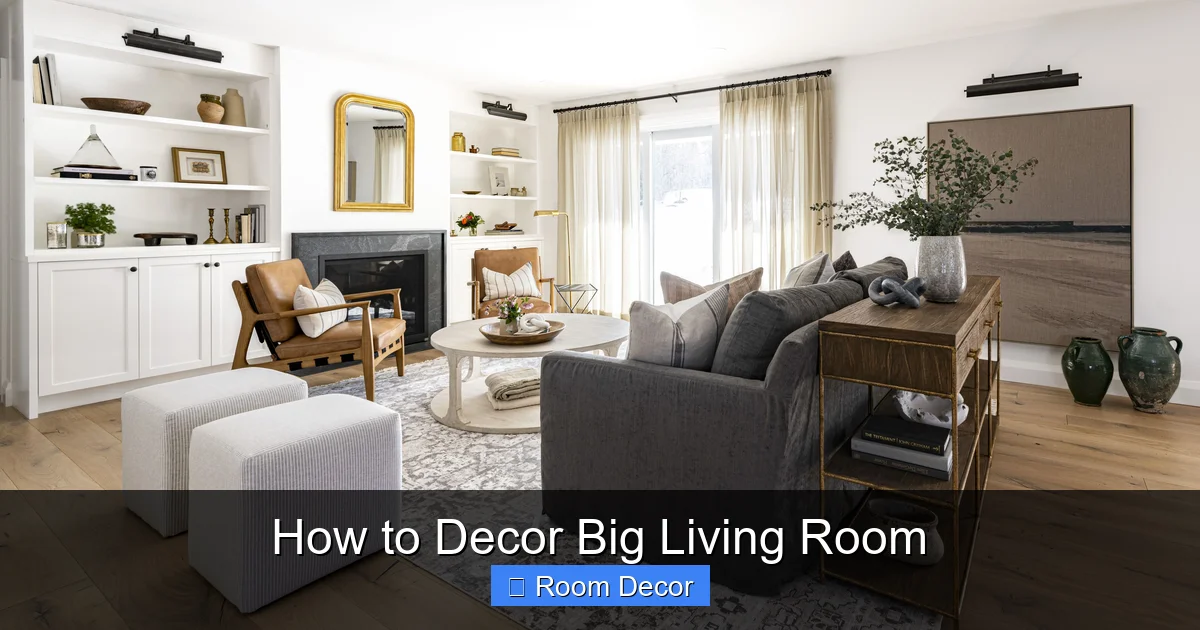
Transforming a large living room can seem daunting, but with the right approach, you can create a space that is both functional and inviting. This guide will walk you through the process of breaking down your large space into smaller, more intimate zones. We’ll cover essential steps from planning your layout and selecting the right furniture to choosing colors and incorporating decorative elements that bring warmth and personality to your expansive room.
## How to Decor Big Living Room
A big living room can be a dream space, offering ample room for entertaining, family gatherings, and relaxing. However, it can also feel overwhelming, empty, or impersonal if not decorated correctly. The key to decorating a big living room is to create a sense of warmth, intimacy, and purpose. This guide will provide you with a step-by-step approach to transform your expansive living area into a beautifully styled and functional sanctuary. We’ll cover everything from planning your layout to choosing the perfect decorative touches.
## Step 1: Assess Your Space and Define Your Needs
Before you even think about furniture or paint colors, take a good look at your big living room. What are its unique features? What are its limitations? Most importantly, how do you want to use this space?
### Understanding Your Room’s Architecture
* **Natural Light:** How much natural light does the room receive? Are there large windows or not? This will influence your color choices and the need for artificial lighting.
* **Architectural Features:** Does your big living room have a fireplace, built-in bookshelves, or interesting ceiling details? These can serve as focal points.
* **Traffic Flow:** Where are the main entry and exit points? You need to ensure clear pathways throughout the room.
### Determining Your Lifestyle and Usage
* **Primary Use:** Is this room mainly for formal entertaining, casual family time, watching movies, reading, or a combination of these?
* **Number of Occupants:** How many people typically use the space at once? This will help determine the amount of seating needed.
* **Hobbies and Activities:** Do you need space for a home office, a play area, or a dedicated gaming zone?
By understanding your room and your lifestyle, you can create a decorating plan that is both beautiful and practical for your big living room.
## Step 2: Plan Your Layout and Create Zones
One of the biggest challenges with a big living room is making it feel cozy and not like a vast, empty hall. The solution is to break it down into smaller, defined zones. This creates a more intimate and functional atmosphere.
### Creating Distinct Areas
Think about the different activities you identified in Step 1 and assign them to specific zones within your large living room. Common zones include:
* **Conversation Zone:** This is the heart of your living room, where people can comfortably chat. Arrange seating pieces like sofas and armchairs to face each other or in a U-shape or L-shape.
* **Entertainment Zone:** If you have a TV, designate an area for viewing. This might involve placing a media console and comfortable seating facing the screen.
* **Relaxation/Reading Zone:** A cozy corner with a comfortable armchair, a side table, and a good reading lamp can be a perfect escape.
* **Play Zone (if applicable):** If children use the space, create a designated area with toy storage that’s still accessible but visually contained.
### Arranging Furniture for Flow and Intimacy
* **Don’t Push Everything Against the Walls:** This is a common mistake in large rooms. Pull your furniture away from the walls to create a more inviting feel and establish your zones.
* **Use Area Rugs to Define Zones:** Rugs are excellent for visually separating different areas. A large rug can anchor a conversation zone, while a smaller one can define a reading nook.
* **Consider Furniture Placement for Traffic:** Ensure there’s a clear path between zones and entryways. Aim for at least 3 feet of clearance for comfortable walking.
* **Create Multiple Seating Arrangements:** In a very large living room, you might have two distinct seating areas. This allows for simultaneous activities or larger gatherings.
**Practical Tip:** Before moving heavy furniture, use painter’s tape on the floor to outline your planned furniture placements. This allows you to visualize the layout and make adjustments easily.
## Step 3: Select Furniture with the Right Scale
Furniture scale is paramount in a big living room. Too small, and the pieces will look lost. Too large, and they can overwhelm the space.
### Choosing Larger Pieces
* **Sofas and Sectionals:** Opt for sofas and sectionals that are substantial in size. A long, deep sofa or a generously sized sectional can anchor your main seating area effectively.
* **Armchairs and Accent Chairs:** Choose chairs that have a good presence. Avoid delicate or overly petite chairs unless they are meant to be accent pieces in a smaller, defined zone.
* **Coffee Tables and Side Tables:** Larger rooms can accommodate larger coffee tables. Consider a round or rectangular table that complements the size of your sofa. Side tables should be proportionate to the seating they are placed next to.
### Balancing Furniture with the Room Size
* **Avoid Gaps:** If you have a very long sofa, consider adding a console table behind it. This fills the space and provides a surface for lamps or decorative items.
* **Use Risers (if needed):** If you have a favorite piece that feels a bit too small, consider placing it on a slightly raised platform or using furniture risers to give it more presence.
* **Consider Multi-functional Furniture:** Ottomans that double as storage and seating, or nesting tables, can be practical in a large space where you might need flexibility.
**Example:** In a 20×30 foot living room, a small loveseat and two small chairs will look swallowed. Instead, opt for a sectional or a large sofa paired with two substantial armchairs. A 5×3 foot coffee table would be appropriate, not a small 3×2 foot one.
## Step 4: Master Color and Walls
Color plays a significant role in how a large space feels. You can use color to make a big living room feel cozier or more dramatic.
### Choosing Your Color Palette
* **Warm and Earthy Tones:** Colors like deep blues, greens, terracotta, and warm grays can create a sense of coziness and intimacy. They absorb light and make walls feel closer.
* **Strategic Dark Colors:** Don’t shy away from darker colors for accent walls or even an entire room if you want to create a dramatic and enveloping feel. This can make a vast space feel more comfortable.
* **Lighter, Brighter Colors:** If your goal is to keep the room feeling airy and open, use lighter, neutral colors. However, be sure to balance this with other elements to prevent it from feeling sterile.
### Utilizing Wall Space
* **Accent Walls:** A strategically placed accent wall in a bolder color or a textured wallpaper can draw the eye and break up large wall expanses.
* **Wall Art and Galleries:** Large-scale artwork is your friend in a big living room. Don’t be afraid to go big! A single large piece or a well-curated gallery wall can fill empty wall space beautifully.
* **Tall Furniture:** Bookshelves, display cabinets, or even decorative screens that reach towards the ceiling can fill vertical space and add visual interest.
**Tip:** Test paint colors on different walls and observe them at various times of the day before committing. What looks good on a small swatch might appear very different on a large wall.
## Step 5: Layer Your Lighting for Ambiance
Lighting is crucial for setting the mood and making a big living room feel inviting rather than cavernous. Layering different types of lighting is key.
### Types of Lighting
* **Ambient Lighting:** This is the general overhead lighting that illuminates the entire room. Think ceiling fixtures, recessed lighting, or a large chandelier.
* **Task Lighting:** This is focused light for specific activities, such as reading lamps next to armchairs, desk lamps, or lighting over a game table.
* **Accent Lighting:** This type of lighting is used to highlight architectural features, artwork, or decorative objects. Wall sconces, picture lights, and spotlights fall into this category.
### Strategic Placement
* **Dimmer Switches:** Install dimmer switches on as many lights as possible. This allows you to control the intensity and mood of the lighting throughout the day and evening.
* **Floor and Table Lamps:** Distribute floor and table lamps strategically throughout your big living room to add warmth and eliminate dark corners. Place them at the ends of sofas, next to armchairs, and on console tables.
* **Statement Lighting:** Consider a dramatic chandelier or pendant light as a focal point, especially over a central seating area or dining space (if combined).
**Troubleshooting:** If your big living room feels too dark, even with overhead lights, it’s likely a lighting issue. Add more lamps, especially in corners, and ensure you have enough ambient and task lighting where needed.
## Step 6: Accessorize to Add Personality and Warmth
Accessories are the finishing touches that bring your big living room to life. In a large space, you need accessories that have presence.
### Choosing the Right Accessories
* **Area Rugs:** As mentioned, rugs are vital for defining zones and adding warmth. Choose large rugs that can accommodate the main furniture grouping in each zone.
* **Throw Pillows and Blankets:** These are budget-friendly ways to add color, texture, and coziness. Don’t be afraid to use a generous number of pillows on your sofas and chairs.
* **Large-Scale Artwork:** Invest in or create large pieces of art that can command attention and fill significant wall space. This is far more effective than many small pieces.
* **Mirrors:** Large mirrors can reflect light, making the space feel larger and brighter, and they also serve as decorative elements.
* **Plants and Greenery:** Tall plants in decorative pots can fill empty corners and add life and color to your big living room.
* **Decorative Objects:** Groupings of decorative items on coffee tables, console tables, or mantels can add personality. Think sculptural pieces, vases, or interesting trays.
### Filling Empty Spaces
* **Console Tables:** Place console tables behind sofas or against longer walls. Style them with lamps, plants, art, and decorative objects.
* **Bookcases and Shelving:** Tall, well-styled bookcases can fill vertical space and provide a place for books, art, and personal mementos.
* **Ottomans and Poufs:** These can serve multiple purposes—extra seating, a footrest, or a surface for a tray.
**Key Principle:** In a big living room, think “less is more” in terms of quantity but “more is more” in terms of scale. One large statement piece is often better than several small, cluttered items.
## Conclusion: Creating Your Dream Big Living Room
Decorating a big living room doesn’t have to be a struggle. By approaching it with a clear plan, focusing on creating defined zones, and choosing furniture and decor that are appropriately scaled, you can transform your spacious area into a warm, inviting, and functional heart of your home. Remember to prioritize your needs, embrace the scale of your room, and layer your lighting and accessories to create a truly comfortable and stylish living space. With these steps, your big living room will become a place where memories are made and relaxation is always at hand.
Key Takeaways
- Define Zones: Divide your big living room into distinct areas for conversation, entertainment, and relaxation to make the space feel more intimate and functional.
- Furniture Scale is Crucial: Choose larger, appropriately scaled furniture pieces to avoid the room feeling empty or like a hallway.
- Create Conversation Areas: Arrange furniture in clusters to encourage interaction, rather than placing everything against the walls.
- Embrace Vertical Space: Utilize the height of your big living room with tall bookshelves, statement lighting, and art hung higher on the walls.
- Layer Lighting: Combine ambient, task, and accent lighting to create warmth, depth, and atmosphere in your large living room.
- Accessorize Wisely: Use large-scale artwork, rugs, and decorative items to fill empty spaces and add personality without cluttering.