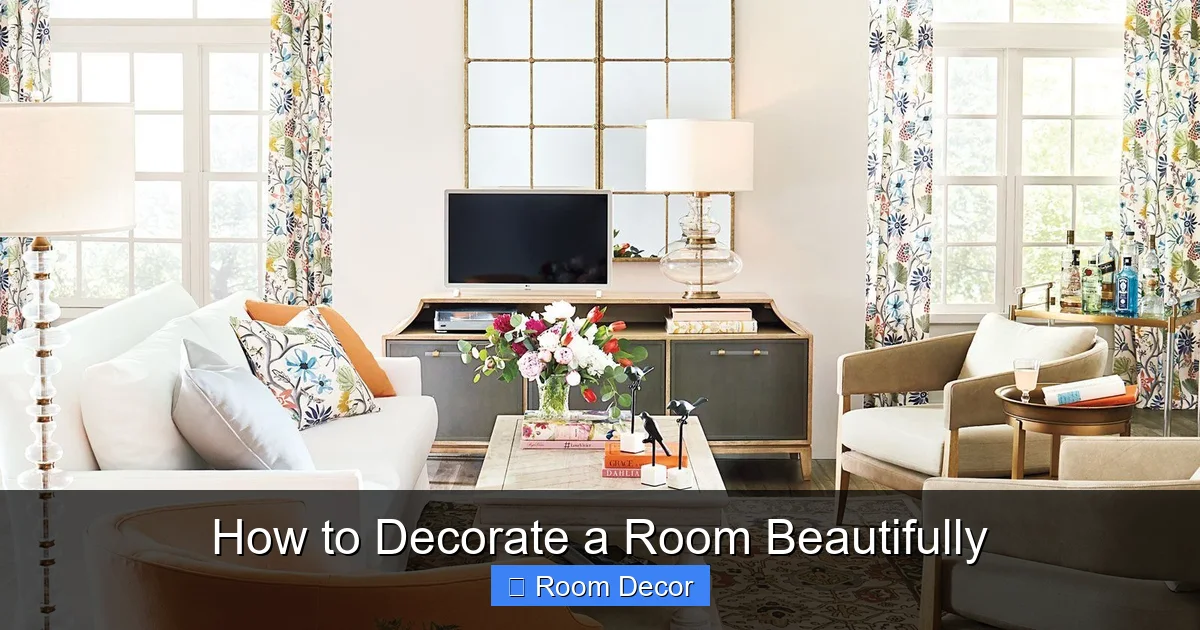
Decorating a room beautifully is achievable with a thoughtful approach. This guide walks you through creating a cohesive and stylish space, from planning your color palette to selecting furniture and adding finishing touches. Discover how to define your style and layer textures and patterns for a truly inviting atmosphere.
Key Takeaways
- Understand Your Style: Before you buy anything, identify your personal aesthetic. This ensures a cohesive and harmonious room design that reflects your personality.
- Master the Color Palette: Choose a color scheme that evokes the desired mood. Use the 60-30-10 rule to balance your colors effectively.
- Prioritize Functionality and Flow: Arrange furniture to create comfortable pathways and maximize the room’s usability. Consider how you will use the space daily.
- Layer Lighting for Ambiance: Combine ambient, task, and accent lighting to create depth, warmth, and functionality. Don’t rely on a single overhead light.
- Incorporate Texture and Pattern: Mix different textures and patterns to add visual interest and warmth. This makes a room feel richer and more inviting.
- Accessorize Thoughtfully: Select decorative items that complement your style and color palette. Less is often more when it comes to accessorizing.
- Don’t Forget the Walls: Walls are a blank canvas. Consider paint, wallpaper, art, or mirrors to add personality and visual appeal.
How to Decorate a Room Beautifully
Dreaming of a home that feels like a magazine spread? Decorating a room beautifully isn’t about having an unlimited budget; it’s about having a plan and knowing how to bring it to life. Whether you’re starting from scratch or giving an existing space a refresh, this guide will equip you with the knowledge to create a room that is both stunning and functional. We’ll take you through each step, from finding your unique style to adding those all-important finishing touches. Get ready to transform your room into a space you’ll love spending time in!
Step 1: Define Your Style and Vision

Visual guide about How to Decorate a Room Beautifully
Image source: thespruce.com
The first and most crucial step in decorating beautifully is understanding what you like. What feeling do you want your room to evoke? Is it calm and serene, energetic and vibrant, or cozy and inviting? Think about your lifestyle and how you use the room.
Explore Different Design Styles
There are many popular design styles to draw inspiration from. Don’t feel you need to stick to just one. You can blend elements to create something uniquely yours.
- Modern: Clean lines, minimalist approach, neutral colors, and sleek finishes.
- Bohemian (Boho): Eclectic, layered, globally inspired, with lots of plants and patterns.
- Farmhouse: Rustic charm, natural materials, comfortable and welcoming. Think wood, shiplap, and vintage accents.
- Mid-Century Modern: Organic shapes, a mix of natural and man-made materials, and a focus on functionality.
- Scandinavian: Light, airy, minimalist, with a focus on comfort (hygge) and natural elements.
- Traditional: Classic furniture, rich colors, elegant details, and a sense of formality.
Gather Inspiration
Use resources like Pinterest, Instagram, home décor magazines, and even your favorite cafes or hotels to collect images of rooms you love. Create a mood board, either physically or digitally, by pinning images of furniture, color palettes, textures, and art that catch your eye. This will help you see recurring themes and refine your vision.
Consider Your Lifestyle
A room that looks beautiful but isn’t practical for your life won’t be a joy to live in. If you have pets and kids, you might want more durable fabrics and fewer delicate accessories. If you work from home in that room, prioritize a comfortable and inspiring workspace.
Step 2: Plan Your Color Palette

Visual guide about How to Decorate a Room Beautifully
Image source: eleganceechoes.com
Color is one of the most powerful tools in your decorating arsenal. It sets the mood and influences how a space feels.
Understand Color Theory Basics
The color wheel is a great starting point.
- Complementary colors: Opposite each other on the wheel (e.g., blue and orange). They create high contrast and energy.
- Analogous colors: Next to each other on the wheel (e.g., blue, blue-green, green). They create a harmonious and calming effect.
- Monochromatic: Different shades and tints of a single color. This creates a sophisticated and unified look.
Use the 60-30-10 Rule
This is a classic guideline for balancing colors in a room:
- 60% Dominant Color: This is your main color, often used on walls and large furniture pieces. It sets the overall tone.
- 30% Secondary Color: This color supports the dominant color and is used on medium-sized pieces like accent chairs or curtains.
- 10% Accent Color: This is your pop of color! Use it for small accessories like throw pillows, vases, or artwork.
Test Your Colors
Paint is more unpredictable than it looks. Always buy sample pots and paint large swatches on different walls in your room. Look at them at different times of the day, as natural light can significantly change how a color appears.
Step 3: Select Your Furniture

Visual guide about How to Decorate a Room Beautifully
Image source: thespruce.com
Furniture is the foundation of your room. It needs to be both functional and aesthetically pleasing.
Measure Your Space
Before you even think about buying furniture, measure your room. Note the dimensions of walls, windows, and doors. This will help you choose pieces that fit comfortably without overwhelming the space or leaving it feeling empty.
Create a Floor Plan
Sketch out your room on paper or use an online tool to plan furniture placement. Consider traffic flow – you don’t want to be constantly bumping into things. Ensure there’s enough space to move around easily.
Choose Key Pieces Wisely
Start with the largest, most important pieces. This is often a sofa in a living room, a bed in a bedroom, or a dining table in a dining room. These pieces will anchor your design.
Balance Scale and Proportion
Don’t put a massive sofa in a tiny room, or a tiny armchair in a cavernous space. Furniture should be proportionate to the size of the room and to other pieces of furniture.
Mix and Match (Carefully)
While a matching furniture set can look cohesive, mixing and matching can add more personality and visual interest. For example, pair a modern sofa with a vintage coffee table. Just ensure the pieces have a common thread, whether it’s color, style, or material.
Step 4: Layer Your Lighting
Good lighting is essential for creating a beautiful and inviting atmosphere. Don’t rely solely on an overhead light fixture. Layering different types of lighting adds depth and functionality.
Ambient Lighting
This is the general, overall illumination of the room. Think ceiling fixtures, recessed lighting, or wall sconces. It provides the basic light needed to move around safely.
Task Lighting
This is focused light for specific activities. Examples include reading lamps beside a sofa or armchair, desk lamps for a workspace, or pendant lights over a kitchen island.
Accent Lighting
This type of lighting highlights specific features or objects, such as artwork, plants, or architectural details. Think spotlights or picture lights. Accent lighting adds drama and visual interest.
Consider Dimmers
Install dimmers on as many light fixtures as possible. This gives you incredible control over the mood of the room. You can brighten it up for tasks or dim it down for a cozy evening.
Think About Natural Light
Maximize natural light by keeping windows unobstructed. Use sheer curtains or blinds that can be easily adjusted. Mirrors can also be strategically placed to reflect light and make a room feel brighter and larger.
Step 5: Add Texture and Pattern
Texture and pattern are what take a room from flat to fabulous. They add warmth, depth, and visual interest, making a space feel more inviting and sophisticated.
Introduce Different Textures
Think beyond just smooth surfaces. Combine different materials like soft velvet, chunky knit throws, smooth leather, natural wood grain, woven baskets, and metallic accents.
- Soft Textures: Throws, pillows, rugs, upholstered furniture.
- Hard Textures: Wood, metal, glass, stone.
- Natural Textures: Rattan, jute, linen, cotton, plants.
Layer Patterns Thoughtfully
Pattern can be introduced through wallpaper, rugs, pillows, curtains, and artwork.
- Start Small: If you’re new to pattern, begin with smaller prints or more subtle designs.
- Vary Scale: Mix large-scale patterns with smaller ones to create balance and avoid overwhelming the eye.
- Use a Common Color: If you’re mixing patterns, try to ensure they share at least one color from your chosen palette. This helps them feel cohesive.
- Don’t Fear Solids: Patterns look best when balanced with solid colors and textures.
Step 6: Accessorize with Intention
Accessories are the jewelry of your room. They are the details that express your personality and complete the look.
Curate Your Collection
Don’t just fill your shelves with random items. Choose accessories that have meaning or that you truly love. This could include art, photographs, decorative objects, plants, books, and more.
Consider the Rule of Three
Grouping items in odd numbers, particularly threes, is often more visually appealing than even numbers. Arrange them at different heights and depths for a dynamic display.
Add Greenery
Plants bring life, color, and freshness to any room. They also improve air quality. Choose plants that suit the light conditions in your room and your ability to care for them.
Incorporate Personal Touches
Displaying family photos, travel souvenirs, or handmade items makes your room feel unique and personal.
Don’t Overcrowd
It’s tempting to fill every surface, but negative space (empty areas) is just as important as positive space. Too many accessories can make a room feel cluttered and chaotic.
Step 7: Enhance Your Walls
Your walls are a large, blank canvas that can make a significant impact on your room’s overall beauty.
Paint Power
A fresh coat of paint can completely transform a room. Consider accent walls with a bold color or wallpaper to add personality.
Art and Mirrors
Hang artwork that you love. Create a gallery wall with a mix of prints and photos, or opt for one large statement piece. Mirrors are fantastic for reflecting light and making a room feel larger and more open.
Shelving and Displays
Floating shelves or well-styled bookcases can add both storage and decorative elements. Display your favorite books, plants, and decorative objects.
Troubleshooting Common Decorating Dilemmas
* My room feels too small.
* Use lighter paint colors on walls and ceilings.
* Incorporate mirrors to create the illusion of more space.
* Choose furniture with visible legs to create an airy feel.
* Avoid large, bulky furniture.
* Maximize natural light.
* My room feels boring or bland.
* Introduce more color through pillows, throws, or artwork.
* Add texture with rugs, baskets, or upholstered pieces.
* Incorporate plants for a touch of life.
* Experiment with patterns.
* Consider statement lighting or a unique piece of furniture.
* My room feels cluttered.
* Declutter ruthlessly. Get rid of anything you don’t need or love.
* Invest in stylish storage solutions.
* Try the “rule of three” for displays to avoid overcrowding.
* Ensure furniture is spaced appropriately for easy movement.
* I can’t seem to get the furniture arrangement right.
* Start with a focal point (fireplace, TV, large window).
* Arrange seating around the focal point.
* Ensure pathways are clear.
* Consider conversation areas.
* Don’t push all furniture against the walls; pull it forward to create zones.
Conclusion
Decorating a room beautifully is a journey, not a destination. It’s about creating a space that reflects your personality, suits your lifestyle, and brings you joy. By following these steps—defining your style, planning your color palette, selecting furniture wisely, layering lighting, incorporating texture and pattern, accessorizing with intention, and enhancing your walls—you can transform any room into a beautiful and functional sanctuary. Remember to have fun with the process, trust your instincts, and don’t be afraid to experiment. Your perfectly decorated room awaits!