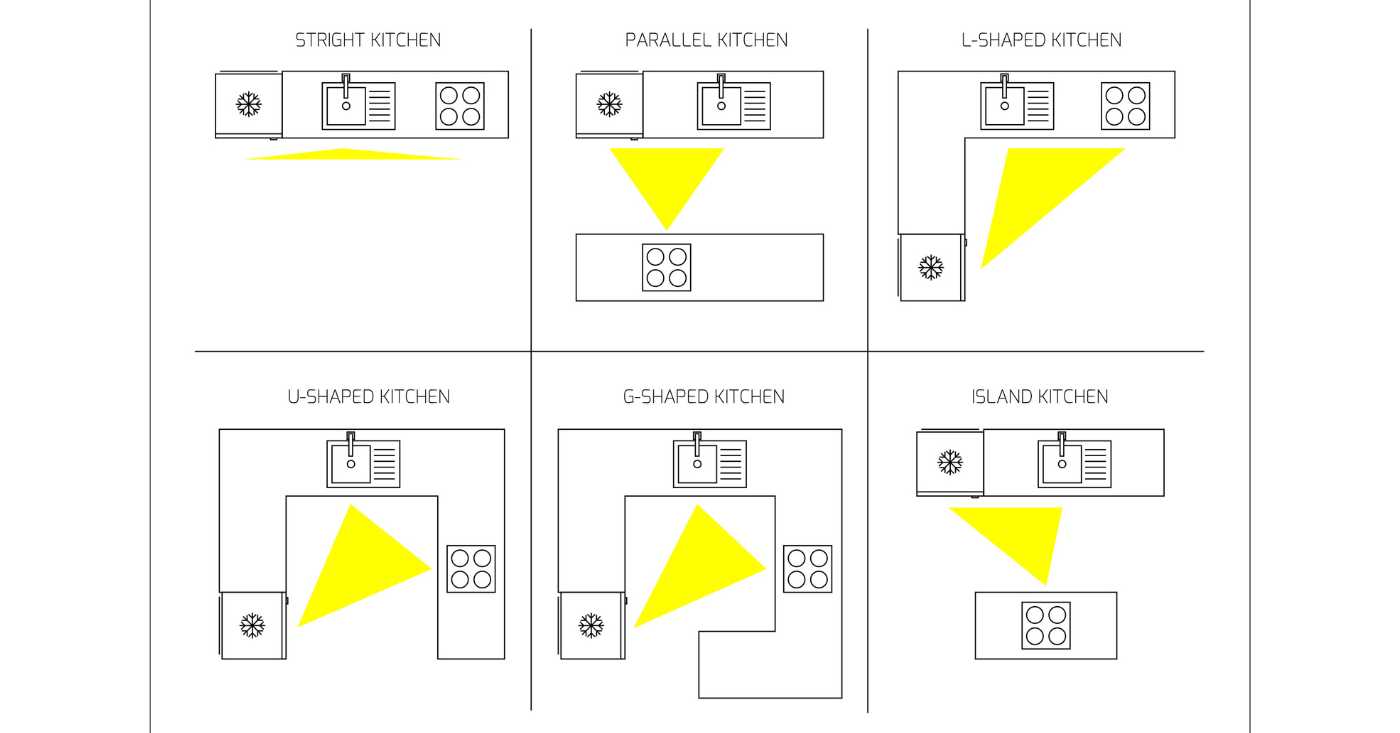
To optimize your kitchen workflow using the triangle layout, focus on positioning your stove, sink, and fridge at optimal distances to minimize movement. Keep these three key areas easily accessible and well-connected, ensuring smooth transitions between cooking, cleaning, and food storage. By thoughtfully arranging these zones, you’ll make your kitchen more efficient and enjoyable to work in.
A well-designed kitchen triangle directly improves your cooking experience by reducing unnecessary steps and clutter. This layout emphasizes balanced spacing between the three main work areas, making meal prep faster and less tiring. With a few strategic adjustments, your kitchen can become a more functional, streamlined space that saves time and energy.
Imagine a kitchen where everything you need is at your fingertips, and moving between tasks feels natural and effortless. If your current setup feels disorganized or cluttered, it might be time to rethink your layout. Properly implementing the kitchen triangle can dramatically boost your workflow, helping you cook with less hassle and more joy. Whether you’re renovating or reorganizing, small tweaks can make a big difference in how smoothly your kitchen operates.

How to Improve Workflow with Kitchen Triangle Layout
Understanding the Kitchen Triangle Concept
The kitchen triangle connects three main work areas: the sink, the stove, and the refrigerator. These points form an imaginary triangle that helps create an efficient kitchen layout. The goal is to minimize walking distance and prevent congestion when cooking or cleaning.
A well-designed triangle can make your kitchen much easier to use. It ensures that everything you need is within arm’s reach. This setup can save time and reduce frustration during meal preparation.
Why the Kitchen Triangle Matters
The kitchen triangle is important because it improves workflow. When the distances between the three points are just right, movement becomes smooth and natural. If the triangle is too large, it wastes steps. Too small, and it can cause clutter and traffic jams.
A good kitchen triangle increases safety. It prevents overcrowding, so you avoid accidents when multiple people are cooking together. Plus, it keeps the space organized and more enjoyable to work in.
Ideal Dimensions for the Kitchen Triangle
The best measurement for each side of the triangle is between 4 and 9 feet. This range balances accessibility and space.
- The total perimeter of the triangle should be no more than 26 feet.
- Each individual side should be at least 4 feet and no more than 9 feet long.
These measurements ensure that movement is efficient without making the kitchen feel cramped.
Designing Your Kitchen Around the Triangle
Start by identifying the most-used appliances and work zones. Place the refrigerator, stove, and sink according to the ideal measurements discussed. This forms your basic triangle.
Next, consider the kitchen’s shape—galley, L-shape, U-shape, or open plan. Each layout needs adjustments to optimize the triangle. For example, in a U-shaped kitchen, position the three points along the three walls for easy access.
Optimizing Counter Space Near Key Areas
Countertop space is crucial near the sink, stove, and refrigerator. Add ample workspace around these points to avoid clutter. Keep frequently used items within reach to make cooking smoother.
For example, store cooking utensils near the stove and dishware close to the sink. This minimizes movement and makes cleaning and cooking more efficient.
Incorporating Storage Solutions
Maximize storage without crowding the triangle. Use cabinets, drawers, and pantry space wisely. Keep seldom-used items in storage farther from the main work zones.
Use vertical storage options to free up counter space. Install shelves or hooks for utensils, pots, and pans. Efficient storage keeps the kitchen tidy and workflow seamless.
Thinking About Traffic Flow
Design your kitchen to accommodate multiple users. Arrange the layout to prevent bottlenecks during busy times. Keep pathways clear of obstacles and furniture.
Ensure there’s enough space for people to pass each other comfortably. A good rule is to keep walkways at least 36 inches wide. This allows for safe and easy movement.
Adjusting the Layout for Your Needs
Every kitchen is different. Customize the triangle to suit your cooking habits and family size. For example, if you bake often, consider placing your oven near the prep areas.
Evaluate how you use your kitchen daily. Make small changes, like repositioning appliances or adding extra countertop space, to boost efficiency.
Using Technology and Modern Features
Add smart appliances that can be controlled remotely or offer quick access. Use pull-out shelves and lazy Susans in cabinets for easy reach.
Good lighting also enhances workflow. Install task lighting over work zones and under cabinets. Well-lit areas make cooking safer and more enjoyable.
Maintaining and Updating Your Layout
Regularly assess how your kitchen functions. If you notice bottlenecks or inconveniences, make adjustments. Keep the space clean and organized for optimal performance.
Invest in quality fixtures and appliances that fit your layout. Upgrading can further improve the workflow and make your kitchen more enjoyable to use.
Additional Tips for Better Kitchen Workflow
- Design a designated prep zone with cutting boards and storage for utensils.
- Keep trash and recycling bins tucked away but accessible for quick cleanup.
- Use movable islands or carts to add flexible workspace when needed.
These small changes can make a big difference in everyday kitchen tasks.
Related Topics for a More Efficient Kitchen
- Choosing the Right Cabinets and Storage Solutions
- Lighting Tips for Culinary Spaces
- Eco-Friendly Appliances and Sustainable Kitchen Design
- Creating a Family-Friendly Kitchen Layout
- Innovative Kitchen Accessories to Boost Efficiency
Exploring these topics can give you ideas to further improve your kitchen’s workflow and overall functionality.
Improving your kitchen workflow with a well-structured triangle layout can make cooking easier, faster, and safer. Focus on the ideal measurements, proper storage, and efficient traffic flow to optimize your space. Adjust the design to fit your needs and keep evaluating to maintain a functional and pleasant kitchen environment. With these tips, you will enjoy a more organized and enjoyable cooking experience every day.
Kitchen Workflow Triangle – Home & Family
Frequently Asked Questions
How can I ensure proper spacing between the kitchen work zones?
To optimize the workflow, it is essential to maintain adequate space between the refrigerator, stove, and sink. Aim for at least 4 to 5 feet of clearance in pathways to allow comfortable movement. This spacing prevents congestion and makes it easier to navigate when multiple people are working in the kitchen simultaneously.
What are the best practices for arranging storage within the kitchen triangle?
Place frequently used items within easy reach of each zone to reduce unnecessary movement. For example, keep utensils and cookware near the stove, fresh ingredients close to the refrigerator, and dishware nearby the sink and dishwasher. Organizing storage based on usage frequency enhances efficiency and keeps the workflow seamless.
How can I incorporate additional appliances without disrupting the kitchen triangle?
Add extra appliances in designated areas that do not interfere with the main work zones. For instance, consider a dedicated coffee station or a microwave shelf away from the core triangle. This setup maintains smooth movement between primary areas while providing convenient access to appliances.
What layout adjustments help in small kitchens to maximize workflow?
In compact spaces, consider a linear or galley layout that aligns the three main zones along a single wall or corridor. Use vertical storage and minimize clutter to create clear pathways. This approach keeps the central work areas accessible without crowding the space, improving overall functionality.
How can lighting improve the efficiency of the kitchen triangle?
Install focused lighting over each of the three key areas—sink, stove, and refrigerator. Proper illumination ensures that you can work safely and accurately in each zone. Good lighting reduces the need for unnecessary movements to check visibility, making the workflow smoother and safer.
Final Thoughts
Optimizing your kitchen layout can significantly enhance your cooking experience. Proper placement of the sink, stove, and refrigerator creates efficiency and reduces unnecessary movement.
Arrange these key areas to form the classic kitchen triangle, ensuring each zone is within easy reach.
How to improve workflow with kitchen triangle layout involves thoughtful planning and consideration of your space. This setup minimizes effort and maximizes productivity, making cooking more enjoyable.