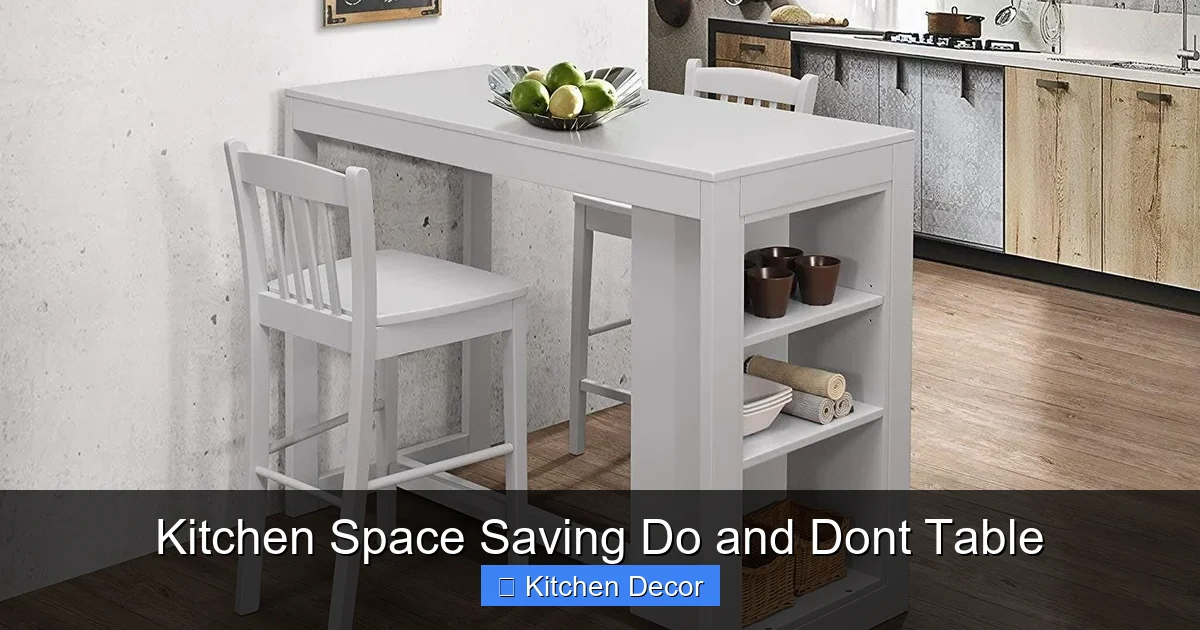
Transform your kitchen from cluttered to functional with our ultimate guide. This Kitchen Space Saving Do and Dont Table provides actionable advice on optimizing every corner, from smart cabinet organization to vertical storage solutions. Learn to declutter effectively and implement practical strategies to maximize your kitchen space, ensuring a more organized and enjoyable cooking environment.
Key Takeaways
- Embrace Vertical Space: Look up! Walls, cabinet interiors, and backs of doors are prime real estate for storage.
- Declutter Ruthlessly: Less truly is more. Regularly purge unused, duplicate, or broken items to free up valuable space.
- Optimize Cabinet & Drawer Interiors: Don’t just stack. Use dividers, risers, and pull-out shelves to make every cubic inch accessible and efficient.
- Keep Countertops Clear: A clean, uncluttered countertop not only looks bigger but also provides more functional prep space.
- Invest in Smart Storage Solutions: Think multi-purpose, stackable, and modular items that adapt to your needs and maximize capacity.
- Regularly Review & Purge: Kitchens accumulate items quickly. Schedule regular reviews to prevent clutter from creeping back in.
- Prioritize Accessibility: Store frequently used items within easy reach, and less common items higher up or further back.
Introduction: Reclaim Your Kitchen
Do you ever feel like your kitchen is shrinking? Is finding a matching lid a daily treasure hunt? You’re not alone! Many of us struggle with limited kitchen space, leading to cluttered countertops, overflowing cabinets, and a general sense of chaos. But what if we told you there’s a better way? What if you could transform your kitchen into an efficient, enjoyable, and surprisingly spacious hub, no matter its size?
Welcome to our comprehensive guide, designed as your ultimate kitchen space saving do and dont table. We’ll walk you through practical strategies and clear advice on how to optimize every inch of your culinary domain. Forget expensive renovations; this guide focuses on smart organization, clever storage solutions, and a mindful approach to what you keep. By the end, you’ll have a clear roadmap to a more functional, beautiful, and less stressful kitchen. Let’s dive in and unlock your kitchen’s true potential!
The Golden Rules of Kitchen Space Saving
Before we get into specifics, let’s establish a foundational mindset for any successful kitchen organization project. This sets the stage for our detailed kitchen space saving do and dont table.
DO: Think Vertically
When you look at your kitchen, don’t just see horizontal surfaces. Look up! Walls, the insides of cabinet doors, and the often-ignored space between shelves are all opportunities. Utilizing vertical space is perhaps the most impactful strategy for making a small kitchen feel much larger. Think hooks, shelving, and stackable solutions.
DON’T: Waste Any Surface
Every square inch has potential. Don’t leave blank wall space if you need storage. Don’t let the back of a pantry door remain empty. Don’t allow gaps between items in a drawer if a divider could optimize it. Every neglected space is a missed opportunity for organization.
Cabinets and Drawers: The Hidden Potential
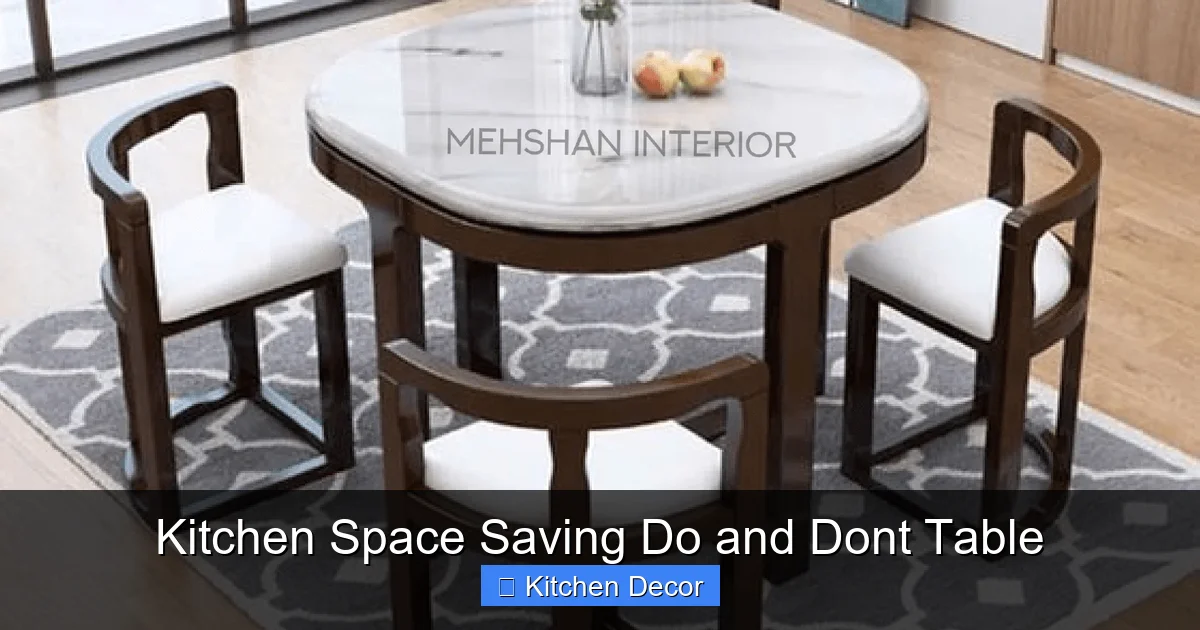
Visual guide about Kitchen Space Saving Do and Dont Table
Image source: mehshaninteriors.com
These are the workhorses of your kitchen storage. Optimizing them is crucial for a tidy and efficient space. Our kitchen space saving do and dont table for cabinets and drawers focuses on making everything accessible.
DO: Implement Smart Organizers
- Use shelf risers: Double your cabinet space by adding risers to store plates, bowls, or cans on two levels instead of one.
- Install pull-out shelves: For deep lower cabinets, pull-out shelves or drawers bring items at the back right to you, preventing forgotten items and wasted space.
- Add drawer dividers: Keep cutlery, utensils, and gadgets neatly separated. Customizable dividers are best for odd-shaped items.
- Utilize door backs: Attach spice racks, small shelves, or hooks to the inside of cabinet doors for extra storage. This is excellent for spices, measuring cups, or foil/wrap boxes.
- Categorize and zone: Group similar items together. All baking supplies in one area, all plastic containers in another. This makes finding things easy and ensures efficient use of space.
DON’T: Stack Without Strategy
- Don’t just haphazardly stack items: Piling up pots and pans without thought makes it hard to retrieve the one you need, leading to unstable stacks and potential damage.
- Don’t let dead space remain: Avoid large empty gaps between items. If there’s room, add a small basket or divider to hold smaller things.
- Don’t store things you don’t use: Cabinets and drawers are not graveyards for forgotten gadgets or expired food. Regularly purge.
- Don’t mix categories: Resist the urge to toss random items into a drawer just because there’s “space.” Maintain your zones.
Countertops: Your Prime Workspace
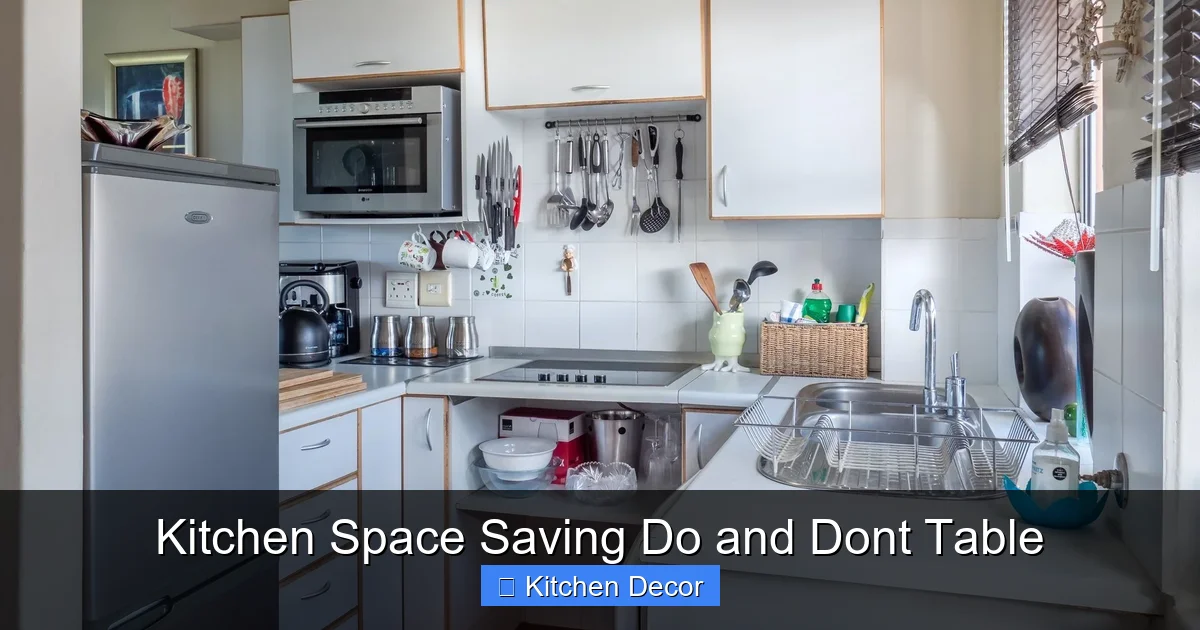
Visual guide about Kitchen Space Saving Do and Dont Table
Image source: images.squarespace-cdn.com
Countertops are not storage units; they are workspaces. Keeping them clear is vital for a functional kitchen and contributes greatly to the “spacious” feeling. This part of our kitchen space saving do and dont table is about clear surfaces.
DO: Keep It Clear and Functional
- Store only essentials: Limit countertop items to things you use daily, like your coffee maker, toaster, or a knife block.
- Use vertical organizers: If you must have items on the counter, choose vertical options like a sleek utensil holder, a compact dish rack, or a fruit bowl with multiple tiers.
- Embrace small, contained zones: Have a small tray for oils and spices near the stove if space allows, but ensure it’s easy to clean around.
- Clean as you go: Wiping down counters regularly helps prevent accumulation and keeps the space feeling fresh and ready for use.
DON’T: Treat It as a Storage Dump
- Don’t let clutter accumulate: Avoid leaving mail, keys, electronics, or anything not kitchen-related on the counters. Find dedicated homes for these items elsewhere.
- Don’t display rarely used appliances: If you use your stand mixer once a month, it doesn’t earn permanent counter space. Store it in a cabinet or pantry.
- Don’t rely on decorative clutter: While a plant or a nice cookbook can add charm, too many decorative items will quickly make your counter feel crowded.
- Don’t let dirty dishes linger: This quickly consumes counter space and creates a feeling of disarray. Wash or load them immediately.
Pantry and Food Storage: Edible Efficiency
A well-organized pantry (or even a single pantry cabinet) saves time, reduces waste, and makes cooking much easier. This section of our kitchen space saving do and dont table focuses on edible items.
DO: Categorize and Containerize
- Use clear containers: Store dry goods (pasta, rice, flour, sugar) in airtight, clear containers. This keeps them fresh, makes it easy to see stock levels, and creates a uniform, tidy look.
- Group like items: Keep all baking supplies together, snacks together, breakfast items together. Label shelves or containers clearly.
- Utilize pantry door storage: Hang an over-the-door organizer for lighter items like spices, seasoning packets, or small snacks.
- Employ tiered shelving: For canned goods, use tiered risers so you can easily see and access items at the back.
- Decant when possible: Remove bulk items from their bulky original packaging and transfer them to uniform containers.
DON’T: Overbuy or Hide What You Have
- Don’t overbuy: Resist the urge to stock up excessively, especially on perishable items, if you don’t have the space. Buy what you need.
- Don’t use opaque containers for everything: While some opaque bins are great for hiding clutter, ensure frequently used or perishable items are visible.
- Don’t let items get lost at the back: Implement a “first-in, first-out” system for perishables to prevent food waste.
- Don’t forget to regularly check expiration dates: Get rid of old food to free up space.
Small Appliances and Cookware: Storage Solutions
Small appliances and cookware can be bulky. Smart storage is key to preventing them from taking over your kitchen. This part of our kitchen space saving do and dont table is about dedicated homes.
DO: Find Dedicated Homes
- Nest pots and pans: Store pots with their lids nested inside them, or use a pot and pan organizer rack in a deep drawer or cabinet.
- Use vertical lid storage: A simple lid rack can prevent lids from tumbling out of cabinets.
- Hang frequently used items: Install a pot rack above an island or stove (if suitable for your kitchen design) or use S-hooks on a wall-mounted rail for frequently used utensils.
- Store small appliances together: Dedicate one cabinet or pantry shelf for smaller appliances like blenders, food processors, and slow cookers. Group their accessories with them.
- Consider multi-functional tools: Opt for tools that serve multiple purposes to reduce the number of items you own.
DON’T: Clutter Valuable Real Estate
- Don’t leave appliances on the counter if rarely used: Put them away! Your counter space is too precious.
- Don’t store duplicate items: Do you really need three spatulas or two potato mashers? Keep the best one and donate or discard the others.
- Don’t keep damaged or unused cookware: If a pot is burnt, a pan is scratched beyond repair, or a gadget never gets used, it’s time for it to go.
- Don’t create tangles: Avoid throwing all your utensils into one deep drawer where they tangle. Use drawer organizers.
Walls and Doors: Unconventional Storage Heroes
Beyond cabinets, your walls and doors offer incredible potential for space saving. This is a critical component of our kitchen space saving do and dont table for smaller kitchens.
DO: Utilize Every Available Inch
- Install floating shelves: These are great for displaying attractive dishes, cookbooks, or decorative items, freeing up cabinet space.
- Use magnetic knife strips: Free up drawer space and keep knives safely and visibly accessible on the wall.
- Add pegboards: A pegboard can be customized with hooks and small shelves for frequently used tools, small pots, or even cutting boards.
- Hang over-the-door organizers: For the pantry door or even the kitchen entrance door, these can hold wraps, cleaning supplies, or snacks.
- Install a rail system: A simple rail with S-hooks can hold towels, oven mitts, or a collection of frequently used utensils.
DON’T: Ignore Unused Surfaces
- Don’t leave blank walls: If you have vertical space, use it! Blank walls in a small kitchen are wasted potential.
- Don’t shy away from drilling: Sometimes a few strategically placed screws for shelves or hooks can make a huge difference.
- Don’t let aesthetics completely override function: While beauty is important, if a wall solution helps massively with storage, integrate it tastefully.
Under the Sink and Specialty Areas: Maximizing Nooks
The space under your sink and other awkward nooks often become dumping grounds. Let’s make them work for you. Our kitchen space saving do and dont table includes these often-overlooked spots.
DO: Organize for Accessibility
- Use pull-out organizers: For under the sink, a pull-out shelf or a sliding caddy with two tiers can neatly hold cleaning supplies, sponges, and dish soap.
- Install tension rods: A tension rod under the sink can hold spray bottles by their nozzles, keeping the bottom clear.
- Store vertically: Utilize narrow spaces with rolling carts for canned goods, spices, or wine bottles if they fit the aesthetic.
- Use corner units: If you have a corner cabinet, a lazy Susan or corner pull-out system can make items at the back accessible.
DON’T: Create a Black Hole of Cleaning Supplies
- Don’t just pile everything: Avoid creating a chaotic mess where you can’t find anything or where bottles tip over.
- Don’t store food under the sink: It’s generally not hygienic due to potential leaks and chemical storage.
- Don’t forget safety: If storing chemicals, ensure they are in their original, child-safe containers and out of reach if you have kids or pets.
The Decluttering Mindset: An Ongoing Process
Organization isn’t a one-time event; it’s a lifestyle. Maintaining your optimized kitchen is just as important as the initial setup. This final part of our kitchen space saving do and dont table is about habits.
DO: Regular Purges and Reviews
- Schedule regular decluttering sessions: Mark it on your calendar, even if it’s just 15 minutes once a month.
- Adopt the “one in, one out” rule: When you buy a new item, commit to donating or discarding an old, similar item.
- Re-evaluate your needs: Your cooking habits change. Periodically assess if your current kitchen setup still meets your needs.
- Label everything: Clear labels help everyone in the household know where things belong, making cleanup easier.
DON’T: Let Sentimental Clutter Take Over
- Don’t hold onto items “just in case”: If you haven’t used it in a year (or two for seasonal items), chances are you won’t.
- Don’t let sentimental items consume valuable space: If a gadget has sentimental value but isn’t functional, consider displaying it elsewhere or taking a photo.
- Don’t ignore the “junk drawer”: This drawer needs regular attention! Empty it, sort it, and put things back in their proper homes.
Maintaining Your Optimized Kitchen: Troubleshooting and Tips
Even with the best intentions and a solid kitchen space saving do and dont table, challenges can arise. Here’s how to troubleshoot common issues and maintain your streamlined space.
Troubleshooting Common Space-Saving Challenges
- “My kitchen is truly tiny, what’s the first step?” Start with decluttering your countertops. Then, focus on one cabinet or drawer at a time. Multi-functional items (e.g., an Instant Pot that replaces several appliances) are your best friends.
- “I have too many sentimental items.” Consider a rotating display system, or create a small “memory box” outside the kitchen for non-functional items. Remember, photographs can capture memories without taking up physical space.
- “My family struggles with keeping things organized.” Involve everyone! Make organization a team effort. Clearly label everything, and make sure “homes” for items are logical and easy to access. A family meeting to discuss the new system can help.
- “I keep accumulating clutter.” Implement a daily 5-minute tidy-up routine. Before bed, spend a few minutes putting things back in their place. This prevents small messes from becoming overwhelming clutter.
Tips for Long-Term Organization
- Regular review: Set a calendar reminder every few months to do a quick “audit” of your kitchen.
- Invest in quality: Good quality, durable organizers last longer and often fit better, maximizing space.
- Be realistic: Don’t try to achieve a magazine-perfect kitchen overnight. Small, consistent efforts yield the best results.
- Embrace technology: Use apps for grocery lists or recipe management to reduce paper clutter.
Conclusion: Your Efficient, Enjoyable Kitchen Awaits
Congratulations! You’ve navigated our comprehensive kitchen space saving do and dont table. By applying these practical strategies, you’re well on your way to transforming your kitchen into a highly efficient, beautifully organized, and incredibly enjoyable space. Remember, it’s not about having a perfect kitchen, but about having a kitchen that works perfectly for *you*.
Start small, celebrate your wins, and be consistent. With a little effort and a lot of smart thinking, you can reclaim your countertops, tame your cabinets, and fall in love with your kitchen all over again. Happy organizing!