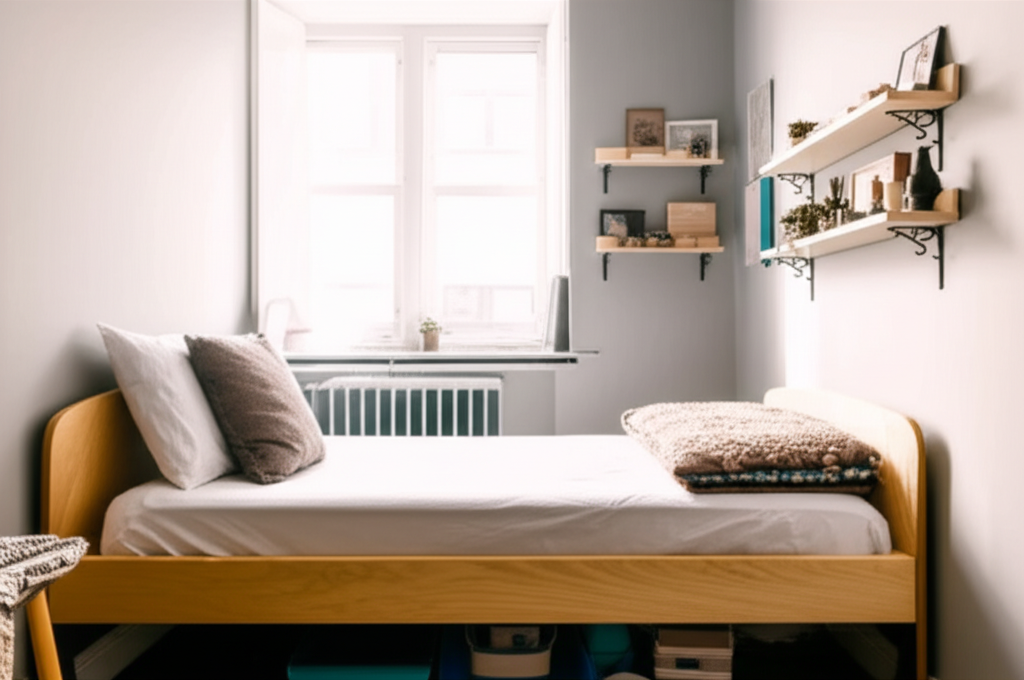
Quick Summary:
The best place for a bed in a small room is typically against the longest wall, but smart placement involves considering window and door access, creating zones, and using vertical space. Experiment with corner placements or even floating the bed if space allows for a surprisingly functional layout.
Feeling like your bed is eating up your entire small room? You’re definitely not alone! It’s a common puzzle for many of us, whether you’re in a cozy apartment, a student dorm, or just a room with a bit less square footage. The good news is, with a few clever tricks, you can make your bed fit beautifully without making the room feel cramped.
We’ll walk through easy-to-understand solutions to help you find the perfect spot. Get ready to transform your small space into a comfy, functional haven!
Finding the Perfect Spot for Your Bed in a Small Room
The bed is usually the largest piece of furniture in a bedroom, making its placement absolutely crucial, especially when space is at a premium. Getting it wrong can lead to a room that feels cluttered and awkward. Getting it right, however, can make even the tiniest bedroom feel spacious and well-organized.
Let’s explore some tried-and-true strategies for where to put a bed in a small room, focusing on maximizing both comfort and style. We’ll break down the options so you can choose what works best for your unique space.
1. The Classic: Against the Longest Wall
This is often the go-to for a reason. Placing your bed against the longest wall in the room is a fundamental principle of small space design. It tends to create the most natural flow and leaves the most open floor space in the center of the room.
- Why it works: It utilizes the room’s natural proportions and often allows for easier access to both sides of the bed, which is great for making it up or for sharing.
- Considerations: Make sure this wall doesn’t directly face a door in a way that feels too exposed, or block a key pathway.
Imagine walking into your room. Usually, the longest wall is the first thing you see or the most dominant feature. Putting the bed here allows it to anchor the room without feeling like it’s blocking your entrance or exit.
2. Corner Placement: Cozy and Functional
Tucking your bed into a corner can be a fantastic solution for very small rooms. It frees up valuable wall space and can make the room feel more intimate and less like a hallway.
There are a couple of ways to approach corner placement:
- One Wall Flush: Push the headboard and one side of the bed directly against the two walls. This is super space-saving.
- Slightly Offset: Pull the bed out a few inches from the walls. This can make it easier to change linens and allows for a small bedside table on the exposed side.
This method is especially effective if your room has an awkward layout or if you have a lot of windows that limit other options. It creates a defined sleeping zone.
Pros and Cons of Corner Placement
Every design choice has its upsides and downsides. Here’s a quick look at corner placement:
| Pros | Cons |
|---|---|
| Maximizes floor space by using often-underutilized corners. | Can make it difficult to access one side of the bed for making it or for partners. |
| Creates a cozy, defined sleeping nook. | May limit the size of your bedside table or require a very slim one. |
| Frees up wall space for other furniture like a desk or dresser. | Can feel a bit “cramped” if the room is exceptionally narrow. |
3. The “Floating” Bed: Maximizing Flow
This might sound counterintuitive in a small room, but “floating” the bed – meaning placing it away from any walls, often in the center of the room or closer to the foot of the bed – can actually improve the sense of space.
How can this work? If you have a slightly wider small room, positioning the bed in the middle of the floor can create clear pathways around it. This “openness” can trick the eye into perceiving more space.
- Ideal for: Rooms that are more square than rectangular.
- Key Benefit: Allows for bedside tables on both sides and easier movement around the bed.
This approach works best when you have enough space to walk comfortably on at least two sides of the bed. It breaks up the monotony of pushing everything against the walls.
4. Facing the Door: A Matter of Comfort
Some people prefer to have their bed positioned so they can see the door when lying down. This can contribute to a feeling of security and control within the space.
If you choose this, consider placing the headboard against a wall that allows you to see the entrance. This might mean it’s not on the longest wall, but it prioritizes your personal comfort and sense of space.
- Tip: If the wall opposite the door is too short or has a window, try placing the bed on an adjacent wall that still allows a clear view of the entrance.
Remember, the best layout is one that feels right for you. Don’t be afraid to prioritize your personal comfort and how you feel in the space.
5. Utilizing Alcoves and Nooks
Does your small room have a built-in closet, an odd alcove, or a bay window area? These architectural features can be your best friends in a small room!
Treating an alcove like a natural frame for your bed can make it feel like a deliberate, cozy retreat. You can even add curtains or a headboard that extends slightly to enhance this feeling.
- Benefits: It defines the sleeping area, can provide a sense of enclosure, and keeps the rest of the room feeling open.
- DIY Idea: Even if you don’t have a deep alcove, a strong headboard can help create the illusion of one.
This is a fantastic way to make a potentially awkward architectural feature work to your advantage. It’s like having a custom-built bedroom nook!
6. The Headboard Wall Strategy
Instead of just thinking about the bed itself, consider which wall would best accommodate the headboard and any accompanying nightstands. This wall often becomes the focal point of the room.
If you have a window on the longest wall, for example, you might opt for the second-longest wall. The goal is to find a wall that is clear enough to accommodate the bed and bedside furniture without feeling cramped or blocking essential elements like windows or doors.
- Pro Tip: Measure your headboard and nightstands carefully. Ensure they fit comfortably on the chosen wall with enough space to maneuver.
This strategy helps you visualize the “bed wall” as a complete unit, making placement decisions easier.
Clever Solutions to Maximize Space Around Your Bed
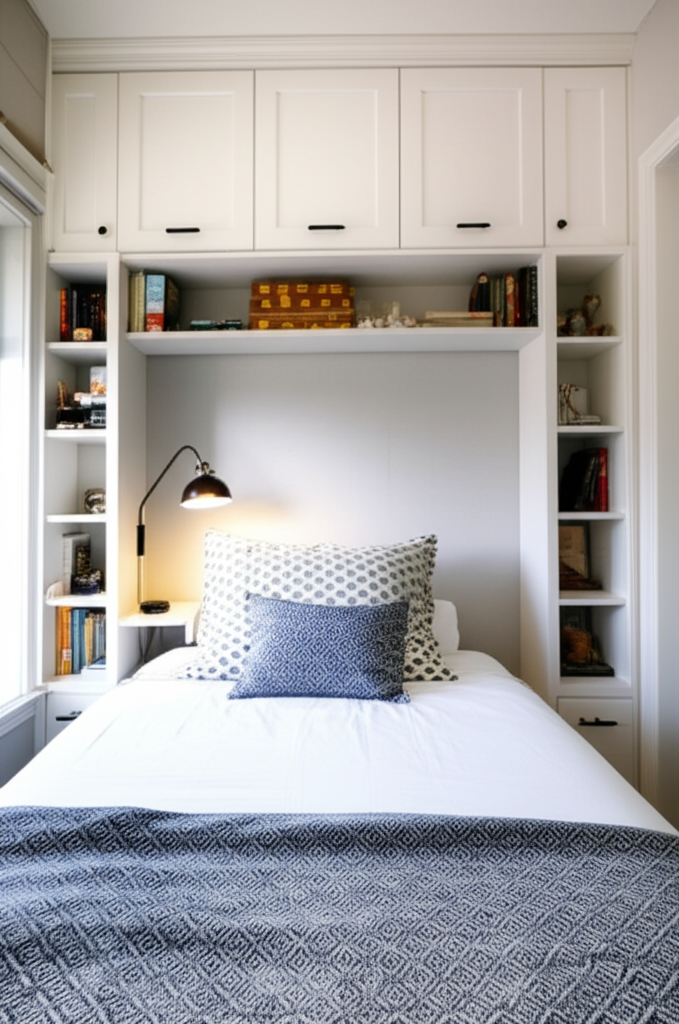
Once you’ve decided on the best spot for your bed, the next step is to make sure the rest of the room feels functional and airy. Small rooms require smart furniture choices and strategic placement.
Here are some ideas to make your small bedroom feel bigger and more organized, no matter where you put the bed.
7. Vertical Space is Your Friend
When floor space is limited, look up! Utilizing vertical space is key to storage and can make a room feel larger.
- Tall, Slim Bookcases: Instead of wide, short ones, opt for tall, narrow bookcases. They draw the eye upward and provide ample storage without taking up much floor area.
- Wall-Mounted Shelves: These are fantastic for displaying decor, storing books, or even holding a small lamp, freeing up your nightstand.
- Loft Beds or Elevated Beds: For the ultimate space-saver, consider a loft bed. The space underneath can be used for a desk, a seating area, or storage.
Think about how you can use the walls from floor to ceiling. This is especially useful for storing clothes, books, and other essentials.
8. Smart Furniture Choices
The type of furniture you choose can make a world of difference in a small room.
- Bed Frame: Opt for a bed frame with built-in storage drawers or a platform bed that allows for under-bed storage bins. A minimalist frame with no footboard can also make the room feel less cluttered.
- Nightstands: Instead of bulky nightstands, consider floating shelves, small wall-mounted tables, or even a small stool. If you need more storage, a slim, tall chest of drawers can double as a nightstand.
- Multi-functional Furniture: A storage ottoman can serve as a bench, extra seating, and a place to store blankets or linens.
Choosing furniture that serves more than one purpose is a hallmark of smart small-space living.
9. Mirrors: The Illusion of Space
Mirrors are a designer’s secret weapon for making small rooms feel larger and brighter. They reflect light and create the illusion of depth.
- Placement: Position a large mirror opposite a window to maximize the reflection of natural light. A floor-length mirror leaning against a wall can also add a sense of height.
- Mirrored Furniture: Mirrored closet doors or drawer fronts can also contribute to the expansive feel.
Even a small strategically placed mirror can make a significant impact on how spacious your room feels. For more on using mirrors, check out this guide from the U.S. Department of Energy, which touches on how light can affect perceptions of space.
10. Light and Bright Colors
While not strictly about where to put the bed, the color palette of your room plays a huge role in how spacious it feels. Lighter colors make a room feel more open and airy.
- Walls: Opt for whites, creams, light grays, or soft pastels for your walls.
- Bedding: Choose bedding in lighter tones. You can add pops of color with accent pillows or throws.
- Furniture: Lighter-colored furniture will also contribute to a more open feel.
Think of light colors as visually expanding the room, making your chosen bed placement feel even more effective.
11. Keep Pathways Clear
No matter where you place your bed, ensure there are clear, unobstructed pathways. This is crucial for both function and the feeling of spaciousness.
- Minimum Clearance: Aim for at least 2 feet (about 60 cm) of walking space around the sides and foot of the bed that you need to access.
- Door Swing: Make sure your bedroom door can open fully without hitting the bed or any furniture.
A room that’s easy to navigate will always feel larger and more comfortable than one that’s cluttered.
12. Consider the Window and Door Placement
When deciding where to put a bed in a small room, always pay attention to the windows and doors.
- Windows: You don’t want to block natural light or a beautiful view if possible. Placing the headboard against a wall that doesn’t have a window is often ideal, but if you must place it near a window, ensure you can still open and close curtains easily.
- Doors: Avoid placing the bed directly in the path of the door’s swing. Also, consider whether you want the first thing you see when entering to be the foot of your bed or the side of it.
A great resource for understanding room layouts and furniture placement is found on sites like North Carolina State University’s design resources, which offer insights into functional spacing.
Specific Layout Ideas for Small Bedrooms
Let’s get more specific with some popular and effective layouts for small bedrooms. These are just starting points, and you can adapt them to your room’s unique shape and features.
Layout A: The Long Wall Standard
This is the most common and often the easiest to implement.
- Identify: The longest wall in your room.
- Place: Position the headboard of your bed against this wall.
- Sides: If space allows, place a nightstand on one or both sides. If not, a wall-mounted shelf or a slim table works well.
- Result: This typically leaves a good amount of open floor space in the center and opposite the bed for a dresser or seating area.
This layout maximizes the room’s length and creates a balanced feel.
Layout B: The Corner Cozy
Perfect for square rooms or rooms with an awkward window/door configuration.
- Identify: A corner that feels natural to use.
- Place: Push the headboard and one side of the bed snugly into the corner.
- Access: You’ll have access to one side of the bed and potentially a small bedside table on that side.
- Result: This frees up an entire wall for a desk, dresser, or even a small armchair.
This makes the bed feel like a built-in, cozy nook.
Layout C: The Foot-of-the-Door Approach
This layout is great if you want to maximize your view when entering the room.
- Identify: The wall opposite the main door.
- Place: Position the headboard against this wall.
- Consider: Ensure there’s enough space to walk comfortably between the door and the bed.
- Result: This layout allows you to see the bed as a central feature upon entering and can feel very welcoming.
It’s a classic layout that prioritizes the entry experience.
Layout D: The “Floating” in the Middle
Best for slightly wider, more square-shaped small rooms.
- Identify: The center of the room or a space about a third of the way down from the head of the room.
- Place: Position the bed here, away from all walls.
- Walkways: Ensure there are clear pathways on at least two sides of the bed.
- Result: This can create a dramatic effect and surprisingly good flow, making the room feel less confined by walls.
This is a bold choice that can pay off with a sense of spaciousness.
Comparing Bed Placement Strategies
To help you decide, here’s a quick comparison of common placement strategies:
| Strategy | Best For | Key Benefit | Considerations |
|---|---|---|---|
| Longest Wall | Rectangular rooms, maximizing flow | Opens up floor space, balanced feel | Can feel exposed if facing door directly |
| Corner Placement | Very small rooms, square rooms, awkward layouts | Maximizes floor space, creates cozy nook | Limited access to one side, small nightstand |
| Floating Bed | Wider, more square rooms | Improves flow, can feel more open | Requires more floor space, needs clear pathways |
| Facing Door | Prioritizing security and view upon entry | Comfortable, welcoming feel | May not be on the longest wall, requires careful wall selection |
FAQs About Bed Placement in Small Rooms
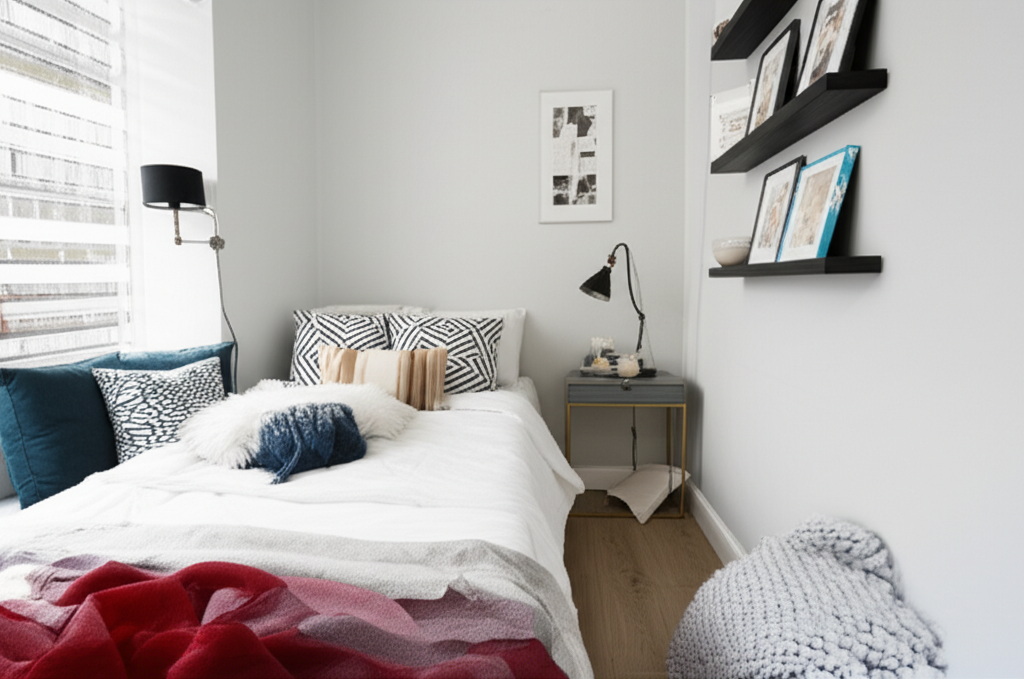
Q1: Should my bed touch the wall in a small room?
A: It’s often best for the headboard to be against a wall. You can push one side of the bed against a wall (corner placement) or the entire back. Pushing the bed completely away from all walls (floating) works if you have enough space to walk around it easily.
Q2: Is it okay if my bed blocks a window in a small room?
A: Ideally, no. Blocking a window reduces natural light, which makes a room feel smaller and gloomier. If you must place the bed near a window, try to position it so the headboard is against the wall, and the bed doesn’t obstruct the window opening or your ability to use curtains.
Q3: What’s the best way to have bedside tables in a small room?
A: In tight spaces, consider wall-mounted shelves, small floating nightstands, or slim console tables. A small stool can also work as a makeshift nightstand. If you have a corner bed, you might only be able to fit a table on one side.
Q4: Can I put my bed in the middle of the room if it’s small?
A: Yes, you can! This is called “floating” the bed. It works best if your room is more square than rectangular and you have enough space to walk around at least two sides of the bed. This can actually make the room feel more open by creating clear pathways.
Q5: How much space do I need around my bed in a small room?
A: Aim for at least 2 feet (about 60 cm) of clearance on the sides and foot of the bed where you need to walk. This ensures easy access for making the bed, cleaning, and simply moving around the room without feeling cramped.
Q6: What if my small room has a radiator under the window?
A: If a radiator is under the window, you’ll likely want to place the bed’s headboard against a different wall to avoid obstructing it. Radiators need airflow to function efficiently. Consider placing the bed on the longest clear wall or in a corner.
Q7: Should I use a headboard in a small room?
A: Yes, a headboard can be a great way to define the bed area and add style. In a small room, opt for a slim headboard or one that is visually light (like an upholstered panel or a simple metal frame). Some headboards also offer built-in storage or lighting, which is a bonus!
Conclusion
Finding the perfect spot for your bed in a small room is all about smart planning and creative thinking. By considering the longest wall, utilizing corners, or even trying a “floating” bed arrangement, you can create a functional and beautiful space.
Remember to think about the flow of your room, the placement of windows and doors, and how you use your space daily. With clever furniture choices, a good understanding of vertical space, and the magic of mirrors, you can make even the tiniest bedroom feel like a spacious sanctuary. Don’t be afraid to experiment a little – the best layout is the one that works perfectly for you! If you’re looking for more small-space inspiration, explore our guide on 10 Cozy Small Kitchen Ideas: Amazing Makeovers for clever design tricks that translate well to bedrooms.