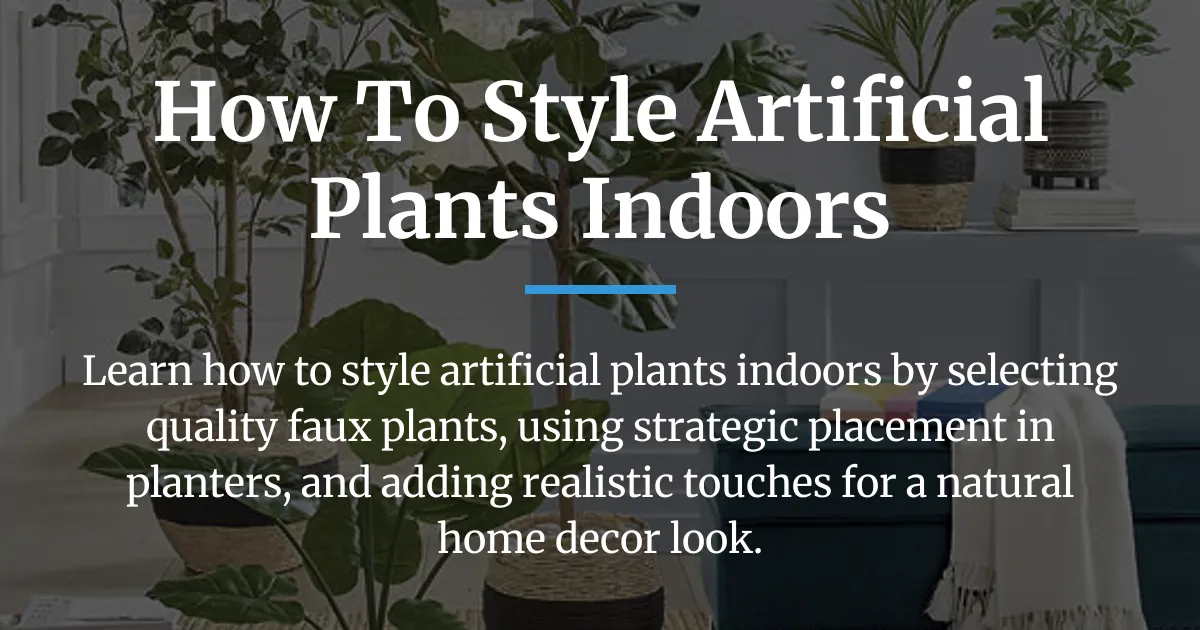
Learning how to style artificial plants indoors well means moving beyond basic decor tips. It is about using faux greenery as a design tool to add life and texture to your home without the upkeep of real plants. This guide walks you through the entire process, from choosing believable pieces to placing them with purpose, ensuring your artificial plants enhance your space seamlessly.
The Principles of Convincing Artificial Plant Design
Great styling starts with a shift in perspective. You must see artificial plants not as fake substitutes, but as flexible design elements that require thoughtful integration. This mindset is the foundation for everything that follows.
Understand Scale and Empty Space
Look at your room with a critical eye. Notice the empty corners, bare walls, and flat surfaces. A large artificial tree can anchor a living room corner, while a small faux succulent can add a pop of green to a bookshelf. The goal is to match the plant’s size to the void it fills.
Consider the furniture and architecture around it. A tall plant behind a sofa adds height and interest, and a low, bushy plant under a window softens hard lines. Always measure the area first to avoid a plant that overwhelms or gets lost.
Judge Quality by the Details
Price does not always mean realistic. Examine the plant closely before you buy. Look for color variation in the leaves, just like in nature. Check for realistic textures, such as matte finishes and visible veins on the foliage.
Feel the materials. High-quality faux plants often use silk, linen, or blended fabrics that mimic the feel of real leaves. Avoid anything overly shiny or perfectly symmetrical, as these are dead giveaways. The stem should have natural bends and a sturdy build.
Every Placement Needs a Reason
Do not just put a plant where there is space. Think about what you want it to achieve. Is it meant to draw the eye toward a piece of art, cover an ugly outlet, or add warmth to a sterile office? This intentionality makes the difference between decor and design.
For example, a trailing artificial ivy on a high shelf can lead your gaze across the room. A pair of identical faux topiaries can frame a doorway elegantly. Always link the plant’s role to the room’s function and mood.
Strategic Placement and Arrangement Techniques
With the right mindset, you can now focus on the actionable steps. How you position and group your artificial plants determines how real and integrated they appear.
Select a Planter That Complements Your Style
The container is what connects the plant to your room. Ditch the cheap plastic pot it comes in. Choose a planter that matches your interior design theme. A sleek ceramic pot suits modern spaces, a rustic basket fits farmhouse decor, and a classic black urn adds formal elegance.
Ensure the planter is the correct size. It should be proportionate to the plant, not too tall or too wide. The color of the planter should either blend with your palette or provide a deliberate contrast. This single change elevates the plant instantly.
Use the Rule of Thirds for Balance
This simple design rule helps avoid awkward placements. Mentally divide your shelf, table, or wall into a grid of nine equal parts. The points where the lines intersect are ideal spots for key items, including your artificial plants.
Place a statement artificial plant at one of these intersections. For instance, on a console table, position a medium-sized faux orchid at the left or right third, not dead center. This creates a more dynamic and naturally pleasing composition than perfect symmetry.
Layer Plants to Create Depth
Depth makes a room feel lived-in and interesting. Achieve this by using artificial plants of different heights, shapes, and textures together. Place a tall fiddle leaf fig tree in the background, a mid-height fern in the middle, and some small faux herbs in the foreground.
Do not cluster them all in one spot. Spread them out to guide the eye through the space. Mixing different types, like a grassy plant with a broad-leaf variety, adds visual richness and mimics the diversity of a real garden.
Integrate Plants on Shelves and Tables
Styling artificial plants on surfaces requires curation. On a bookshelf, alternate plants with books, vases, and picture frames. Let some greenery spill over the edge of a stack of books to soften the arrangement.
For mantels or long console tables, create a rhythm. Try a pattern like plant, object, lamp, then another plant. Vary the heights, using stands or stacked books to lift some plants. This prevents a flat, monotonous look and feels collected over time.
Advanced Methods for Realism and Cohesion
These next steps are what separate good styling from great styling. They involve fine-tuning and adding layers of authenticity to make your artificial plants truly belong.
Enhance the Planter’s Base
The point where the plant meets the pot often looks fake. Cover the faux soil with real materials. Add a layer of preserved moss, small river rocks, or even real bark chips. This adds legitimate texture and hides any plastic base or mechanics.
For a more advanced illusion, you can carefully add a thin top layer of real potting soil or sand. This is especially effective for larger plants like artificial trees. It makes the plant look potted and cared for, not just placed.
Create a Curated Vignette
An artificial plant alone can look isolated. Build a small scene around it. Group your faux plant with other objects that share a common color, texture, or theme. Think of a tray holding a faux olive tree, a terracotta vase, a leather-bound book, and a ceramic bowl.
This tells a story and makes the plant part of a larger design narrative. The vignette should look intentional, as if each item was chosen to complement the others. Change elements with the seasons to keep the display fresh and engaging.
Shape the Plant Deliberately
Out of the box, most artificial plants are compressed and uniform. Your job is to reshape them to look alive. Do not just fluff randomly. Look at photos of the real plant species and mimic its growth pattern.
Gently bend branches downward for a weeping look, or spread leaves outward to catch light. Twist stems slightly to create a natural, asymmetrical shape. Take your time to separate each leaf and branch, removing any factory-perfect symmetry.
Harness Light and Shadow
Lighting can betray an artificial plant or sell the illusion. Avoid placing them under harsh, direct overhead lights that cast unnatural shadows or create glare on plastic leaves. Instead, use ambient or side lighting.
Position a floor lamp so it grazes the side of a large faux plant, casting soft, realistic shadows behind it. In daytime, use sheer curtains to diffuse sunlight. This creates gentle highlights and shadows on the leaves, enhancing their three-dimensional quality.
Caring for Your Artificial Plant Display
Proper maintenance ensures your beautifully styled artificial plants continue to look their best for years, protecting your investment and the illusion you’ve created.
Dust Gently and Regularly
Dust is the enemy of realism. It dulls colors and makes leaves look flat. Establish a simple routine. Every few weeks, use a soft paintbrush, microfiber cloth, or a hairdryer on the cool setting to remove dust from leaves and stems.
For intricate plants like artificial ferns, use a small, soft-bristled brush to get between the fronds. Regular dusting maintains the plant’s vibrant color and detailed texture, keeping it looking fresh.
Perform Simple Repairs
Over time, a leaf may detach or a stem may sag. Keep a small kit with clear floral wire, low-temperature hot glue, and wire cutters. You can reattach leaves discreetly at the stem. For bent stems, gently warm them with a hairdryer to make them pliable, then reshape.
If colors fade slightly on sun-exposed sides, you can use acrylic paints to touch up small areas. Match the color as closely as possible. These quick fixes extend the life of your plants dramatically.
Refresh or Retire When Needed
Even the best artificial plants have a lifespan. If a plant becomes severely faded, damaged, or no longer fits your evolving decor, do not hesitate to replace it. Styling is an ongoing process.
Consider storing some plants seasonally. Rotate a faux spring bouquet for a richer autumnal branch arrangement. This keeps your space dynamic and prevents your decor from becoming static or unnoticed.
Frequently Asked Questions
Can you mix artificial plants with real ones successfully?
Absolutely. Mixing real and artificial plants is a smart way to have greenery everywhere. Use realistic faux plants in dark corners or high shelves where real plants would die. Let your live plants take center stage in sunny spots. The mix adds depth and ensures you always have green without constant worry.
How do you keep artificial plants from fading in sunny rooms?
Choose artificial plants labeled as UV-resistant to minimize fading. Place them away from direct sunlight where possible, using blinds or curtains to filter strong rays. If they are in a bright spot, rotate them every few months so that all sides get equal exposure, preventing one-sided fading.
What is the best way to clean and maintain artificial plants?
The best way is gentle, regular dusting with a soft brush or a blast of cool air from a hairdryer. For a deeper clean, wipe leaves with a damp cloth. Always avoid harsh chemicals or soaking the plant, as this can damage materials. Check any care instructions from the manufacturer first.
Are artificial plants safe for homes with pets or allergies?
Yes, they are generally safe. Artificial plants do not produce pollen, making them excellent for allergy sufferers. For pet owners, ensure the plants are made from non-toxic materials and are placed securely where pets cannot easily knock them over or chew on the leaves, which could pose a choking risk.
How often should you rearrange or update your artificial plant styling?
Aim to review and refresh your styling with the changing seasons or when you update other room decor. Moving plants to new spots or swapping them between rooms prevents them from becoming invisible background items and keeps your home feeling lively and thoughtfully designed.